
Australian flooring guide · Reviewed September 2026
Cheapest Vinyl Flooring Options in Australia
The cheapest vinyl flooring in Australia is sheet vinyl, which starts around $15 per square metre supplied.

The cheapest vinyl flooring in Australia is sheet vinyl, which starts around $15 per square metre supplied. Peel-and-stick tiles run a bit lower per m² but cost more in labour to lay properly. Click-lock luxury vinyl plank (LVP) and entry-level SPC hybrid sit higher — $25 to $45 per m² — but last longer and look closer to real timber. This guide walks through what each option actually costs, where the savings are real, and where a cheap floor turns into an expensive one two years in.
Sheet vinyl: the genuine bargain
Sheet vinyl comes off a roll, typically 2 m or 4 m wide, and is loose-laid or glued to the subfloor. Material cost sits between $15 and $25 per m² for residential-grade, with commercial-grade sheet vinyl pushing to $40 per m². Because it’s a single sheet, there are no plank-to-plank joints to wick water — it’s still the most water-resistant vinyl format you can buy at this price.
The trade-offs: it looks like sheet vinyl. The print and emboss have improved, but in daylight you can still tell. If a section gets damaged you can’t replace one plank — you replace the whole room. And it needs a flat, dry subfloor or every dip telegraphs through.
Peel-and-stick vinyl tiles: cheap to buy, expensive to live with
Peel-and-stick tiles start around $10 per m² at the big-box hardware stores. The adhesive backing is the whole appeal — lift the film, press down, done. For a laundry, a rental refresh, or a temporary fix over old tile, they make sense.
What the upfront price doesn’t tell you: the adhesive is sensitive to subfloor moisture and temperature. Lay it on a slab without checking moisture and edges curl within 12 months. The wear layer is thin (typically under 0.3 mm), so traffic lanes show in two to three years in a busy household. We see plenty of these floors come up for replacement before the kitchen renovation they were meant to outlast.
Click-lock luxury vinyl plank (LVP): the mid-tier sweet spot
Click-lock LVP is the format most renovators end up at. Planks lock together over an underlay, no glue, no nails. Entry-level click-lock LVP starts around $25 per m² supplied, with mid-tier ranges sitting between $30 and $45 per m². Wear layers in this band are 0.3 mm to 0.5 mm — thick enough for residential use, with warranties typically 15 to 25 years.
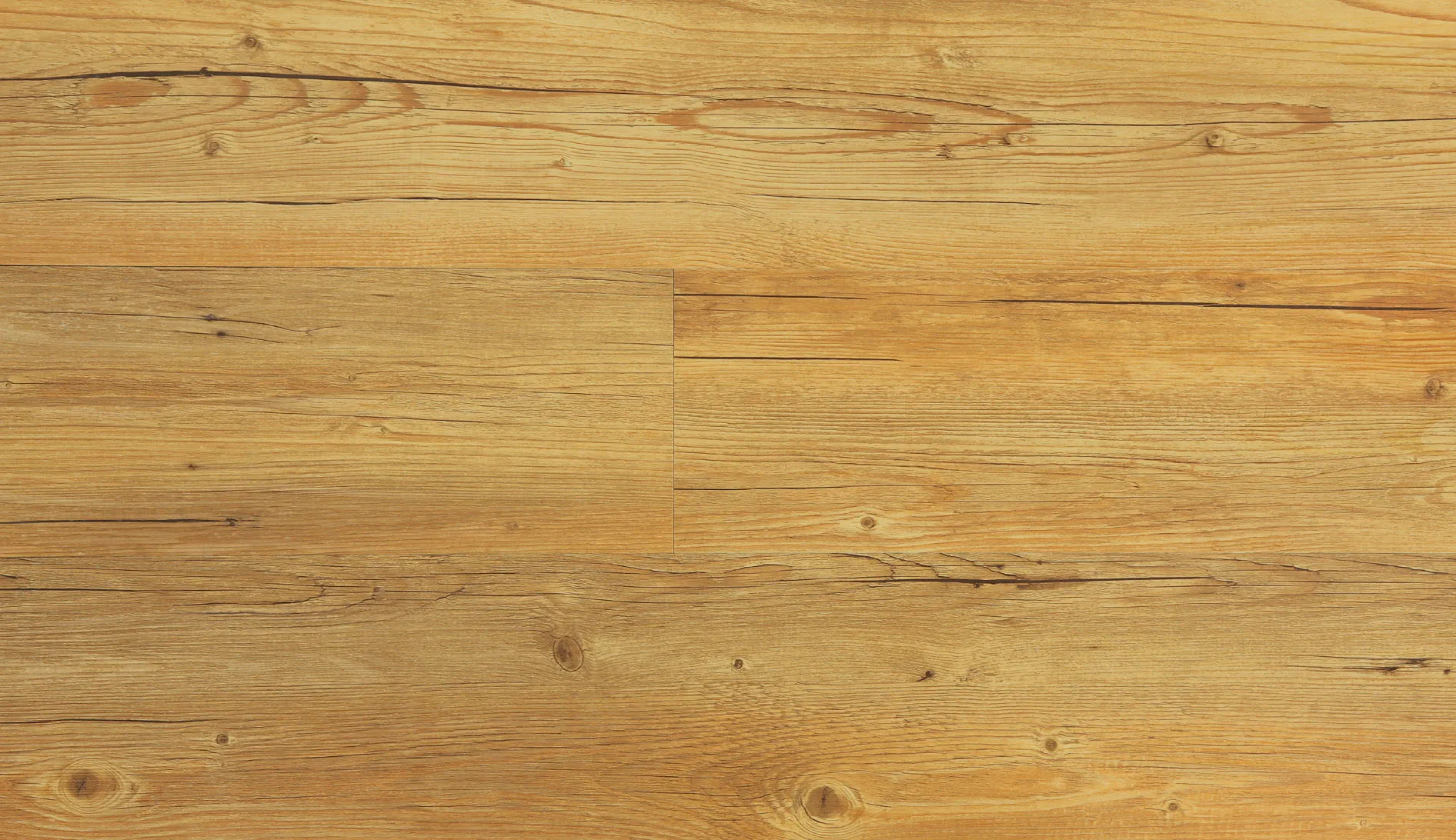
The savings against engineered timber are real — you’re paying less than half the per-m² cost — and the install is faster because there’s no sanding or finishing on site. Most click-lock LVP comes with pre-attached underlay, so you skip that line item too. If you’re putting it on a slab, our guide on how to lay vinyl on a concrete floor covers the moisture-barrier and prep side, and the do you need underlay for vinyl flooring piece spells out when you can skip a separate underlay.
Entry-level SPC hybrid: cheap insurance for wet zones
SPC (stone-plastic composite) hybrid is technically a step up from standard LVP because the core is rigid and designed to resist ordinary water exposure at product level rather than flexible PVC. Entry-level 6 mm SPC starts around $35 per m²; 8 mm with a thicker wear layer sits in the $45 to $60 per m² band. For kitchens, laundries and pet households the extra $10 to $15 per m² over basic LVP is the cheapest insurance on the market.
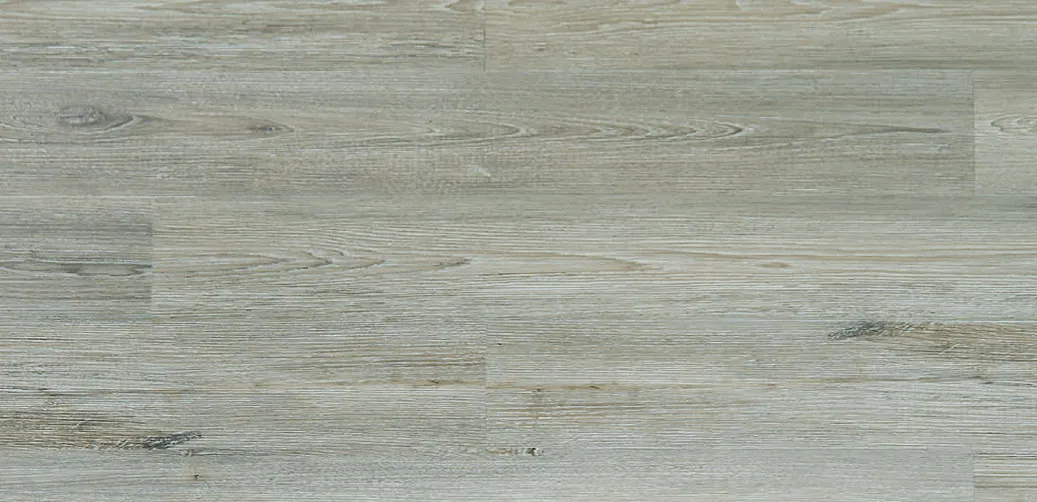
If you’re weighing SPC against rigid-core builds, the SPC vs RCB flooring explainer covers how the two cores compare on dent resistance and acoustic performance.
What’s actually driving the price
- Wear layer thickness. Anything under 0.3 mm is rental-grade. 0.3 to 0.5 mm is the residential band. 0.55 mm and above is rated for light commercial use.
- Plank thickness and core type. 4 mm flexible LVP is cheaper than 6-8 mm SPC. The thicker rigid core still requires a subfloor within the selected manufacturer’s written tolerance and feels more solid underfoot.
- Click-system. 2G click is cheaper but fiddlier to install; 5G drop-lock costs more but installs faster and handles future replacement of a damaged plank.
- Underlay. Pre-attached IXPE underlay saves $5 to $8 per m² over buying separate underlay rolls.
Where the cheap option costs you later
The two scenarios where buying the cheapest vinyl backfires: high-traffic open-plan living areas, and wet zones. A 0.2 mm wear layer in a kitchen-living room with a dog and two kids will be visibly worn in three years. Sheet vinyl or peel-and-stick in a laundry where the washing machine ever overflows means lifting the whole floor. Spend the extra $10 to $15 per m² on a thicker wear layer or an SPC core in those rooms and the floor outlasts the renovation.
For a broader view of what holds up against water, our guide on what flooring is waterproof covers the format-by-format comparison.
The short answer
For a tight budget on a low-traffic room, sheet vinyl at $15-$25 per m² is honestly hard to beat. For most renovations, mid-tier click-lock LVP at $30-$45 per m² is the sweet spot — looks good, lasts 15-plus years, installs fast. For kitchens, laundries and pet households, an entry-level SPC hybrid at $35-$45 per m² is the cheapest peace of mind. Skip peel-and-stick anywhere you actually live in the room. We carry every format above across our Sydney and Brisbane showrooms — happy to walk you through the spec sheets in person.
What to verify before you buy
Match the exact range
Check the current data sheet, warranty, care guide and room-suitability statement for the product code you will receive.
Inspect the substrate
Measure moisture and flatness, confirm access and finished height, and price any preparation before installation begins.
Compare complete quotes
Include removal, preparation, waste, trims, stairs, doors, furniture and warranty responsibilities—not only the material rate.
Any prices retained from the original article are indicative examples, not a current project quote. Dated examples may be historical; current product availability, warranties, pricing and approval requirements should be rechecked. Words such as “best” describe a decision for a particular room and budget, not one universally superior product.
Sources and verification
- The Flooring Guys: Vinyl flooring articles — related guides and current product questions.
- Flooring installation cost estimator — indicative project inputs and installation scope.
Choose the floor around the room and the complete installation.
Bring room dimensions, subfloor details and any apartment or access requirements. We can help shortlist products and prepare an itemised quote.