
Blackbutt is one of the three Australian hardwoods most people shortlist for a timber floor, alongside spotted gum and Tasmanian oak. The short answer is yes, it is a very good flooring timber, and the longer answer is about knowing what you are getting: a hard, pale, slightly variable timber that suits coastal and contemporary homes and that changes colour in the sun.
Hardness and durability
Blackbutt (Eucalyptus pilularis) has a Janka hardness of about 9.1 kN. That puts it below spotted gum (about 11 kN) and ironbark (about 14 kN) but well above European oak (around 6 kN) and Tasmanian oak. In practice that means it resists dents from dropped pans and chair legs well and wears slowly in hallways. It is a Class 1 durability timber above ground, termite-resistant, and one of the seven species deemed to comply for bushfire-prone construction up to BAL-29, which matters if you build in a bushfire zone.
What it looks like
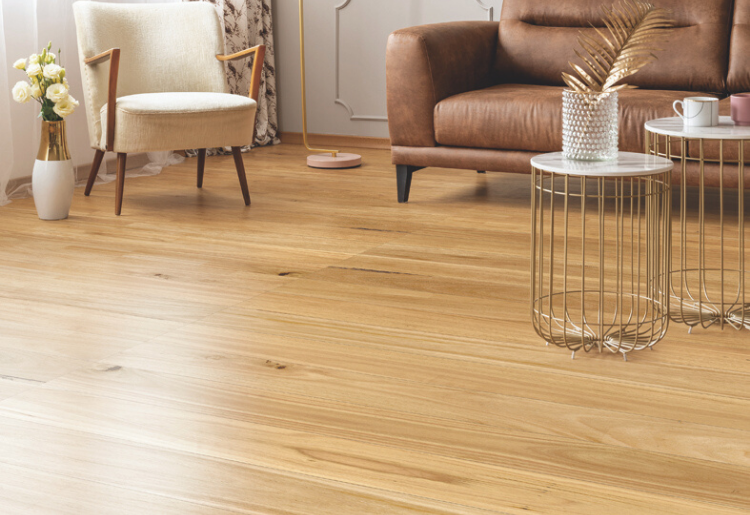
Fresh blackbutt is pale cream to light honey with a straight, even grain and occasional pin holes and gum veins. It is one of the lighter Australian hardwoods, which is why it dominates coastal and Hamptons-style interiors. Expect some pink and grey tones across a floor, especially in select grades from mixed forests; that variation is part of the look. It matches well with white walls, pale cabinetry and light stone.
Solid or engineered?
Solid blackbutt boards are nailed to joists or glued to plywood and sanded and coated on site. Engineered blackbutt gives the same face timber on a stable plywood core, pre-finished, and can be floated or glued down over a slab. For most renovations engineered is the practical choice: it costs less to install, is far more stable through Queensland humidity, and the good ranges use a 3mm to 4mm lamella that can still be re-sanded. Hurford Australian Native and HM Walk are the engineered blackbutt boards we sell most.
What to watch
- Sunlight. Blackbutt darkens noticeably under direct sun, from pale honey towards a warmer amber. Rugs left in one place leave a lighter patch. Use blinds on north and west windows and move rugs occasionally.
- Surface checking. Solid boards can show fine surface cracks in very dry conditions. Engineered boards largely avoid this.
- Finish choice. A matte or satin water-based coating keeps the pale colour. Oil-based polyurethane yellows it within a year or two.
- Water. Like every timber floor it is not for bathrooms or laundries.
Cost
Engineered blackbutt sits in the $120 to $160 per square metre range for the board, with installation on top; see our flooring installation cost guide for labour rates. Solid blackbutt boards are cheaper to buy but more expensive to lay, sand and coat. Browse the current ranges in our engineered timber flooring range, or look at blackbutt-look hybrid and laminate if the budget is tighter.
Frequently asked questions
No. Spotted gum rates around 11 kN on the Janka scale against blackbutt’s 9.1 kN. Both are hard enough for family homes.
No more than any hardwood. Felt pads under furniture, mats at doors and a matte finish keep it looking good.
Yes. It is one of the species deemed to comply for BAL-12.5 to BAL-29 construction under AS 3959, which is why it is common in decking and cladding as well as flooring.