

Australian flooring guide · Reviewed September 2026
Can You Lay Vinyl on a Concrete Floor?
Short answer: yes — vinyl is one of the best floor coverings to lay over a concrete slab, provided the slab is dry, flat and clean.

Short answer: yes — vinyl is one of the best floor coverings to lay over a concrete slab, provided the slab is dry, flat and clean. Click-lock SPC hybrid and luxury vinyl plank (LVP) float straight over a prepared slab without nailing or screwing. Glue-down LVT bonds directly to it. The work is in the prep, not the install: moisture testing, flatness, and a clean surface decide whether the floor lasts five years or twenty-five.
Why concrete is actually the easiest subfloor for vinyl
Concrete is dimensionally stable. It doesn’t squeak, doesn’t move with humidity the way particleboard does, and once a slab is fully cured it’s the flattest, most predictable substrate you’ll ever lay over. That’s why almost every modern vinyl product — sheet, plank, tile, hybrid — lists concrete as a recommended subfloor on the install spec sheet.
The catch is that concrete holds moisture, and moisture vapour rising through a slab will lift a glue-down floor, swell an MDF-core laminate, or grow mould under sheet vinyl. So the rule isn’t “can you lay vinyl on concrete” — it’s “is this particular slab ready for vinyl yet?”
Is the slab ready? Three checks before you order flooring
1. Slab age and curing
A new concrete slab needs a minimum of 60 days, ideally 90, before any resilient floor goes down. Manufacturers’ warranties almost universally require this. Laying vinyl over a slab that’s still releasing curing moisture is the single most common reason for a failed install on a new build.
2. Moisture test
Even a 90-day-old slab can read high in moisture if it sits on damp ground or in a humid coastal climate. There are two tests that matter:
- Calcium chloride (anhydrous CaCl) test — measures moisture vapour emission rate. Most vinyl manufacturers cap this at 2.27 kg per 92 m² per 24 hours (5 lb per 1000 ft²) for direct install.
- In-situ relative humidity probe (ASTM F2170) — drilled into the slab, gives a relative humidity reading. The common cut-off is 75-80% RH for resilient floors without a vapour barrier.
If the slab fails either test, you’ve got two options: wait longer, or apply a liquid-applied moisture barrier (epoxy or polyurethane) and let it cure before flooring goes down. A cheap polyethylene sheet under floating vinyl is a budget alternative for click-lock products, but it’s not a substitute for a real moisture remediation system on a wet slab.
3. Flatness
The Australian standard most installers work to is 3 mm variance over a 2 metre straight edge, with no abrupt steps or trowel ridges. SPC hybrid and click-lock LVP are unforgiving — a hump or hollow over that tolerance will make the click joints flex, and the joints will eventually fatigue and pop. Glue-down LVT is more tolerant of mild dips because the adhesive fills small gaps, but obvious unevenness will still telegraph through.
Run a long aluminium straight edge across the slab in several directions. Mark the high spots and the low spots. Grind the highs, fill the lows with a cementitious self-levelling compound rated for the chosen vinyl system, and recheck before you lay a single plank.
Three install methods over concrete
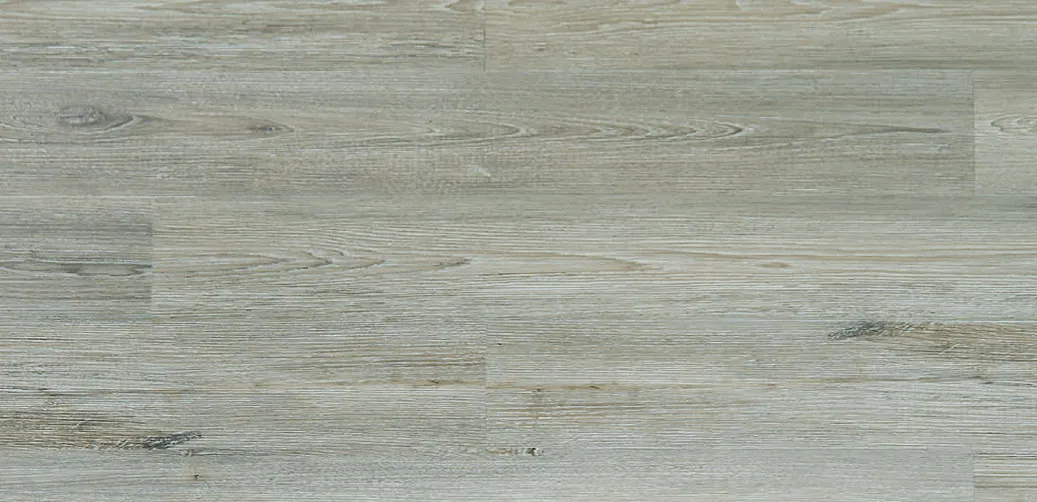
Click-lock SPC hybrid or LVP (floating)
The default for residential renovations. Planks click together edge-to-edge on a 5G or 2G click system and float over the slab without adhesive. Most products come with a pre-attached IXPE acoustic underlay, which doubles as a thin moisture buffer. If yours doesn’t, lay a 0.2 mm polyethylene sheet first and tape the seams. Leave a 10-12 mm expansion gap at every wall and around every fixed object — covered later by skirting or scotia.
For more on click systems and which one suits which subfloor, see our 5G vs 2G click systems explainer. The expansion gap rule applies to all floating vinyl over concrete — see our expansion gap for loose-lay vinyl guide for the same principle on heavier loose-lay product.
Glue-down LVT or LVP
The right call for commercial fitouts, wet areas, and any room over 100 m² where movement needs to be controlled. Each plank or tile is troweled into a pressure-sensitive or hard-set adhesive. The slab needs to be cleaner and flatter than for a floating install, because the adhesive transfers every imperfection through to the wear surface. No expansion gap is needed because the floor is bonded — but the moisture test is stricter, since trapped vapour will lift the bond.
Loose-lay LVP
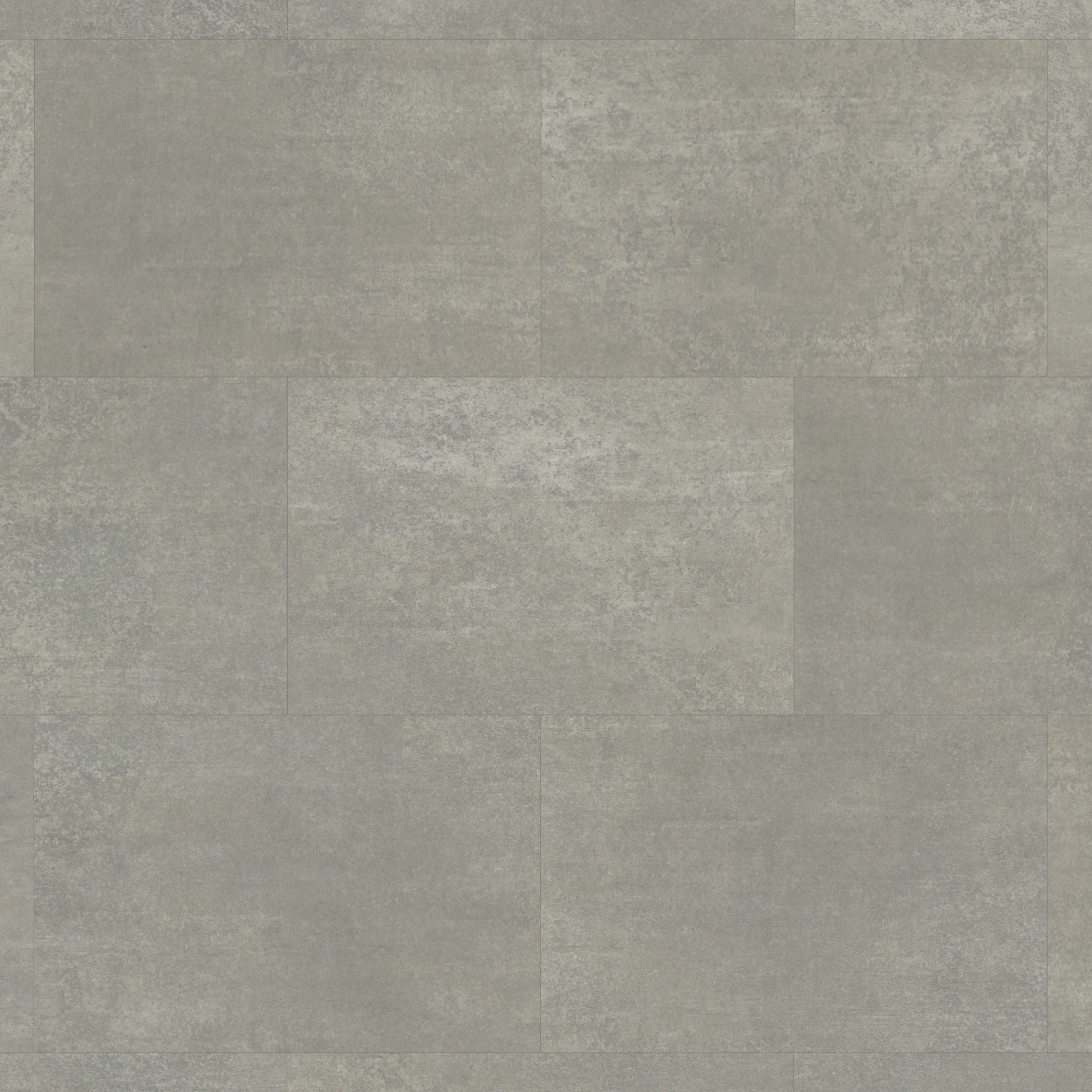
Heavier, thicker planks (typically 5 mm-plus with a fibreglass-reinforced backing) that sit on the slab under their own weight, sometimes with a perimeter adhesive. Easier to lift and replace than glue-down, no click system to fatigue, no underlay needed. Best suited to over-slab installs where you might want to pull the floor up later.
Underlay: do you need it on concrete?
For SPC hybrid and most modern click-lock LVP, the answer is usually no — the pre-attached IXPE pad on the back of the plank is the underlay. Adding a second layer underneath voids most warranties because it makes the floor too soft and overloads the click joints. For glue-down LVT, never use underlay; the adhesive needs the slab. For older click-lock LVP with no attached pad, a thin acoustic underlay rated for resilient floors is fine. Full breakdown in our do you need underlay for vinyl flooring guide.
Step-by-step: laying click-lock vinyl on a concrete slab
- Sweep and vacuum the slab. Any grit left under the plank backing will telegraph through and accelerate wear.
- Run a moisture test. If the slab fails, stop and either wait or apply a moisture remediation coating.
- Check flatness with a 2 m straight edge. Grind highs, fill lows with self-levelling compound, recheck once cured.
- Acclimatise the planks in the room — boxes flat, unopened — for 48 hours at the room’s normal living temperature.
- Lay a polyethylene moisture barrier if the product calls for one and there’s no pre-attached pad.
- Snap a working line and start the first row along the longest wall, leaving the 10-12 mm expansion gap with spacers.
- Click each plank in. Stagger end-joints by at least 300 mm row to row. Tap with a tapping block, never a bare hammer.
- Cut around door jambs by undercutting the jamb instead of scribing the plank — looks cleaner and gives the floor room to expand.
- Pull the spacers, fit skirting or scotia to cover the expansion gap, install transition strips at doorways.
When concrete isn’t the right surface for vinyl
Some slabs need other treatment first. A polished or sealed slab with a glossy finish needs to be mechanically abraded before glue-down vinyl will bond. A slab with active rising damp — visible salt deposits, persistent dark patches — needs the moisture source addressed at the structural level, not just a coating on top. Slabs with old adhesive residue from previous floors need to be ground or shot-blasted back to clean concrete; you can’t reliably bond new vinyl adhesive over old.
If you’re laying in a kitchen, laundry, or any room that sees water regularly, also have a look at our waterproof flooring options guide and our best flooring for kitchens pillar — vinyl is usually the right call, but the install detail matters.
The bottom line
Vinyl on concrete is the right combination for most Australian ground-floor renovations. Click-lock SPC hybrid is the easiest install, glue-down LVT is the most durable in commercial or wet zones, and loose-lay sits between the two. Spend the time on prep — moisture, flatness, cleanliness — and the install itself is straightforward. We carry SPC hybrid, LVP, LVT and loose-lay across our Sydney and Brisbane showrooms; come in with a slab measurement and the room’s exposure to water and sunlight, and we’ll help you match the product to the substrate.
Comparing options? Browse the full vinyl plank flooring range at The Flooring Guys — loose lay, glue-down and click, with samples available.
What to verify before you buy
Match the exact range
Check the current data sheet, warranty, care guide and room-suitability statement for the product code you will receive.
Inspect the substrate
Measure moisture and flatness, confirm access and finished height, and price any preparation before installation begins.
Compare complete quotes
Include removal, preparation, waste, trims, stairs, doors, furniture and warranty responsibilities—not only the material rate.
Words such as “best” describe a decision for a particular room and budget, not one universally superior product.
Sources and verification
- The Flooring Guys: Vinyl flooring articles — related guides and current product questions.
- Flooring installation cost estimator — indicative project inputs and installation scope.
Choose the floor around the room and the complete installation.
Bring room dimensions, subfloor details and any apartment or access requirements. We can help shortlist products and prepare an itemised quote.