
“Durable” means two different things in timber flooring, and they get confused constantly. Hardness (the Janka rating) is resistance to denting from impact. Durability class is resistance to rot, decay and termites, which matters outdoors and under the house more than on a living room floor. For a floor you walk on, hardness is the number to compare, and Australia produces some of the hardest commercial timbers in the world.
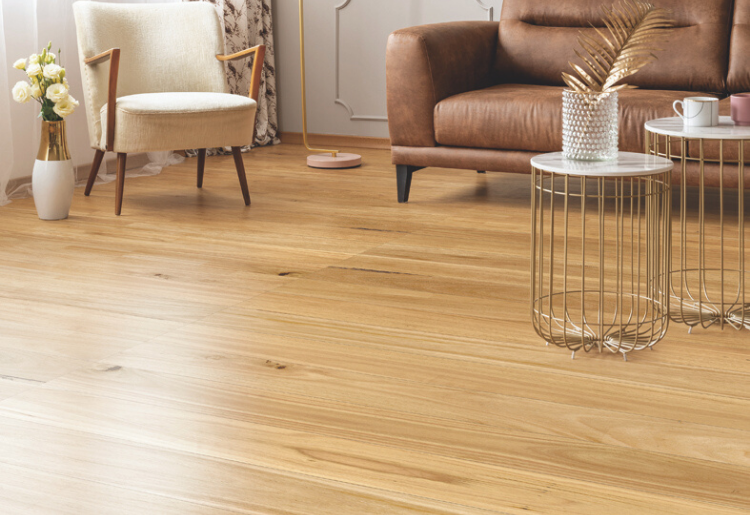
Ranked by hardness
- Ironbark, about 14 kN. The hardest commonly available Australian flooring timber. Deep red-brown, very dense, expensive and harder to work.
- Spotted gum, about 11 kN. The best combination of hardness, availability and price. Caramel to chocolate with strong colour variation.
- Blackbutt, about 9.1 kN. Pale honey, even grain, the most popular species in Queensland and coastal New South Wales.
- Sydney blue gum, about 9 kN. Pink to red-brown with a quieter grain than spotted gum.
- Jarrah, about 8.5 kN. Rich red, Western Australian, ages to a deeper burgundy.
- European oak, about 6 kN. Softer than the Australian species but stable, available in every colour and the basis of most engineered flooring.
- Tasmanian oak, about 5.5 kN. The softest of the common choices, pale and affordable.
Durability class matters less than you think
Ironbark, spotted gum, blackbutt and jarrah are all Class 1 durable above ground and naturally termite resistant. That is genuinely useful for decking, stumps and bearers. On an interior floor that stays dry and is coated, decay resistance is almost irrelevant, so do not pay a premium for it in a living room.
Why the finish matters as much as the species
Most of the damage a floor accumulates is surface scratching from grit, not denting. A hard species with a soft or glossy finish will look worse after five years than a softer species with a tough matte factory coating. If durability is the goal, choose a pre-finished board with a multi-coat UV-cured aluminium-oxide finish, and read our note on the most durable timber floor finish.
Construction matters too
A 14mm engineered board with a 4mm lamella of spotted gum is more stable than a solid spotted gum board in a humid climate, and it will stay flat where the solid board cups. For Queensland and coastal homes, engineered construction is usually the more durable choice in practice, even though the timber is identical.
The practical answer
For a family home with children and a dog, spotted gum or blackbutt in an engineered board with a factory matte finish is the combination that lasts. Ironbark is harder but costs considerably more, and the difference is rarely visible after a few years. Compare the options in our engineered timber flooring range, where every product lists species, thickness and coating.
Frequently asked questions
A measure of the force needed to press a steel ball halfway into the timber. Higher numbers resist denting better. Australian ratings are given in kilonewtons.
Not necessarily. Hardness resists denting; scratch resistance comes mostly from the coating.
Strand-woven bamboo rates very high on Janka, often 15 kN or more, but it is less stable in humid conditions and cannot be re-sanded as often.