
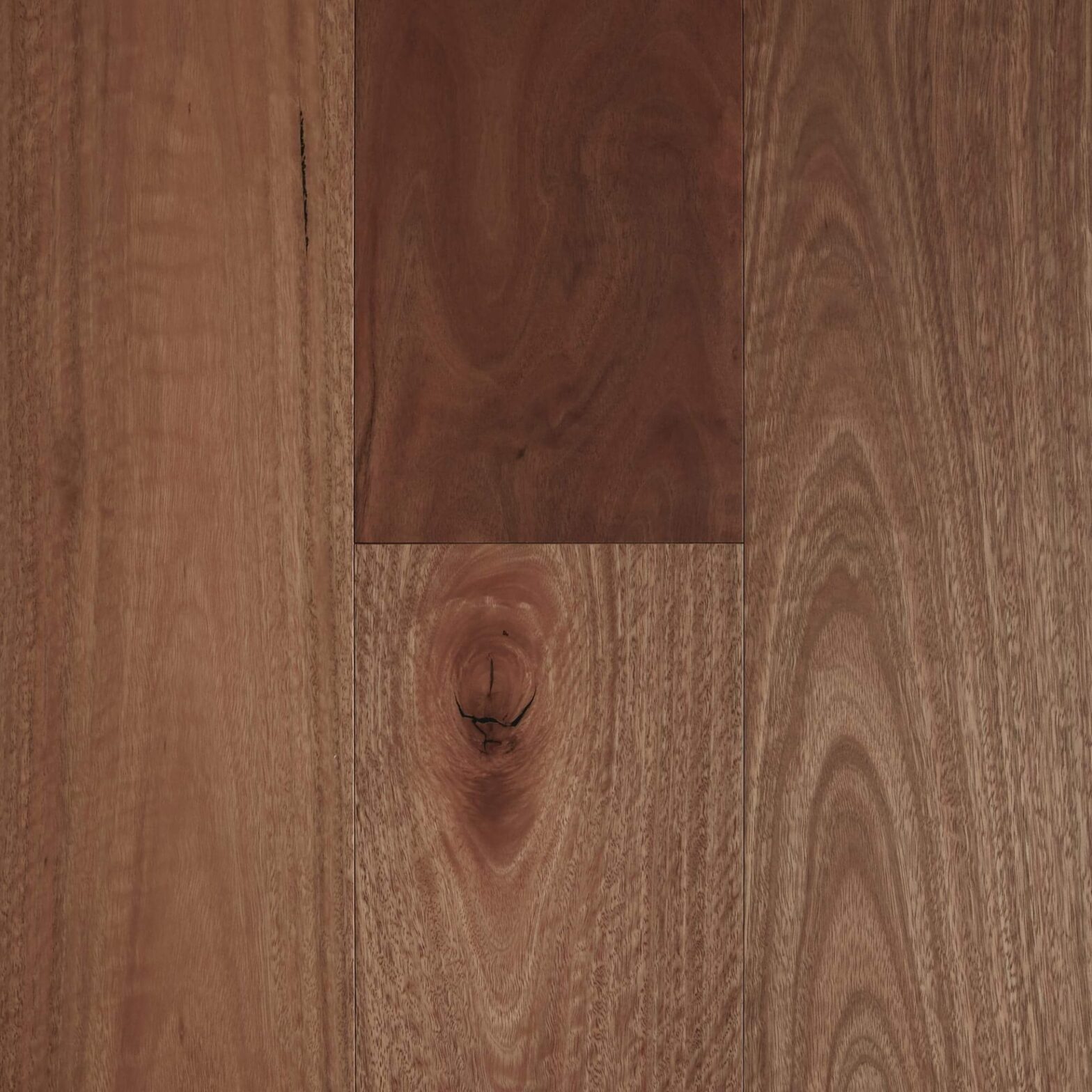
The finish on a timber floor does all the work. The timber underneath decides how it looks and how it handles a dropped pan; the coating decides how it handles shoes, sand, chair legs and mopping for the next fifteen years. Here are the options used in Australia, ranked by how well they actually hold up.

Factory UV-cured coatings: the toughest
Pre-finished engineered boards are coated in a factory with multiple layers of UV-cured lacquer, usually with aluminium oxide added to the top coats. Seven to thirteen coats is typical. Nothing applied on site comes close for abrasion resistance, because the curing process and the ceramic additive cannot be replicated with a brush. The trade-off is that damage cannot be spot-repaired: a deep scratch means replacing a board or re-sanding the whole floor. This is what you get on ranges like Hurford Genuine Oak, Terra Mater WildOak and Preference Floors.
Water-based polyurethane: the site-applied standard
Two or three coats of a modern water-based poly is what most Australian floor sanders now apply. It is hard-wearing, low odour, dries in hours rather than days, and crucially it does not yellow, so pale timbers like blackbutt and Tasmanian oak keep their colour. Commercial-grade two-pack water-based systems are harder again. Expect to re-coat a busy floor every eight to twelve years.
Solvent-based polyurethane: hard but yellowing
Oil-modified solvent poly is slightly harder and cheaper than water-based, and builds a thicker film. It is also higher in odour and VOCs, takes days to cure, and ambers noticeably within the first year and continues to darken. On a warm timber like jarrah that can be attractive; on blackbutt it turns a pale floor orange. It is losing ground for that reason.
Hardwax oil: beautiful and repairable
Hardwax oils such as Osmo and Rubio penetrate the timber rather than forming a film, giving the most natural look and feel, with the grain still readable underfoot. It is the only finish you can genuinely spot-repair: scuff the damaged area, wipe on more oil, and it blends. In exchange it is less resistant to scratching and water than a polyurethane and needs re-oiling in traffic areas every two to five years. Choose it if you want a natural look and will maintain it.
What about epoxy?
Epoxy is a commercial and industrial coating for concrete, not a residential timber floor finish. It is extremely hard but goes cloudy under UV and cannot be re-coated easily, so it has no place on a domestic timber floor.
Which to choose
- Buying a new floor: a pre-finished board with a factory UV-cured matte coating gives the hardest surface with no site work.
- Sanding an existing floor: two-pack water-based polyurethane in a matte or satin sheen.
- Want a natural look and will maintain it: hardwax oil.
- Pale timber: avoid solvent-based poly, which will yellow it.
Every board in our engineered timber flooring range lists its coating system and sheen level on the product page.
Frequently asked questions
A factory coating lasts the life of the board in most homes. Site-applied polyurethane needs re-coating every 8 to 12 years in busy areas; hardwax oil every 2 to 5.
The coating hardness is identical. Matte simply hides scratches better because there is no reflective surface to interrupt.
Not without a full sand back to bare timber. The two systems are not compatible.