
Australian flooring guide · Reviewed September 2026
Best Flooring for Old Houses in Australia
The best flooring for an old Australian house is whatever handles a moving timber subfloor, looks right next to the period detail you're keeping, and survives the next 20 years of family life.

The best flooring for an old Australian house is whatever handles a moving timber subfloor, looks right next to the period detail you’re keeping, and survives the next 20 years of family life. For most character homes that means engineered timber in the main rooms and a hybrid or vinyl product in the wet zones — but the right call depends on what’s under the existing floor and what era the house is from. This guide walks through the practical decision.
Start with what’s under the floor
Before you pick a product, lift a board or a vent grille and see what you’re dealing with. Older Australian houses generally have one of three setups:
- Tongue-and-groove pine or hardwood on bearers and joists. Common in Federation, Californian Bungalow and post-war weatherboards. The boards move with humidity and the joists are rarely dead-flat.
- Particleboard sheet flooring on joists. Common from the 1970s onwards. Flatter than T&G, but particleboard hates moisture — check for soft spots near wet areas before laying anything over it.
- Concrete slab. Found in mid-century brick veneers and ground-floor extensions. Usually the easiest to lay over, provided the slab is dry and within tolerance.
Once you know the substrate, the product shortlist gets shorter quickly.
Restoring the original timber, if it’s there
If the house has its original Tasmanian Oak, Blackbutt or Cypress Pine boards and they’re not too far gone, sanding and refinishing is almost always cheaper than replacing them and looks more authentic than any new product. A floor sander can typically take 1-2 mm off the surface, fill the gaps, and recoat in oil or polyurethane. The catch: if the boards have been sanded two or three times already, or there’s heavy water damage near the laundry, you may be looking at partial replacement with reclaimed boards in the same species. That’s a specialist job, but it preserves the character.
Engineered timber for the main rooms
If the original boards are gone, or the house never had timber to start with, engineered timber is the closest you’ll get to the look of a real timber floor without the install headaches of solid hardwood. The lamella is real oak (or sometimes Spotted Gum or Blackbutt), bonded to a multi-ply core that’s far more stable across seasonal humidity than solid timber. That stability matters in old houses where the subfloor breathes more than a modern slab.
Look for a 3 mm or 4 mm wear layer if you want the option to sand and refinish later. Plank widths around 180-220 mm sit comfortably in most period rooms — anything wider can fight with narrow Federation hallways. We’ve broken down the spec-vs-price trade-offs in the engineered timber flooring prices guide.
Hybrid or SPC for kitchens, laundries and high-traffic areas
Old houses leak. Kitchens get spilt on, laundries flood, and that one bathroom tap drips for six months before anyone gets around to it. Hybrid (SPC) flooring has a waterproof rigid core and a click-lock install that floats over the subfloor with a pre-attached IXPE underlay. It handles spills, copes with the slight movement of an older timber subfloor, and most ranges are rated for both residential and light commercial use.

The trade-off: SPC is hard underfoot and won’t hide a wavy subfloor. We’d recommend self-levelling anything outside a 3 mm tolerance over a 2 m span before install, and using a thicker acoustic underlay if the floor is upstairs. The best hybrid flooring brands in Australia guide covers the ranges worth shortlisting.
Vinyl plank where budget is tight
Luxury vinyl plank sits a step below hybrid on price and durability, but it’s still designed to resist ordinary water exposure at product level and easier on the feet thanks to a softer build. For a granny flat, a rental refurb, or a back room of an older house where you want something practical without spending engineered-timber money, vinyl is a reasonable pick. Look for a wear layer of at least 0.5 mm in residential rooms.
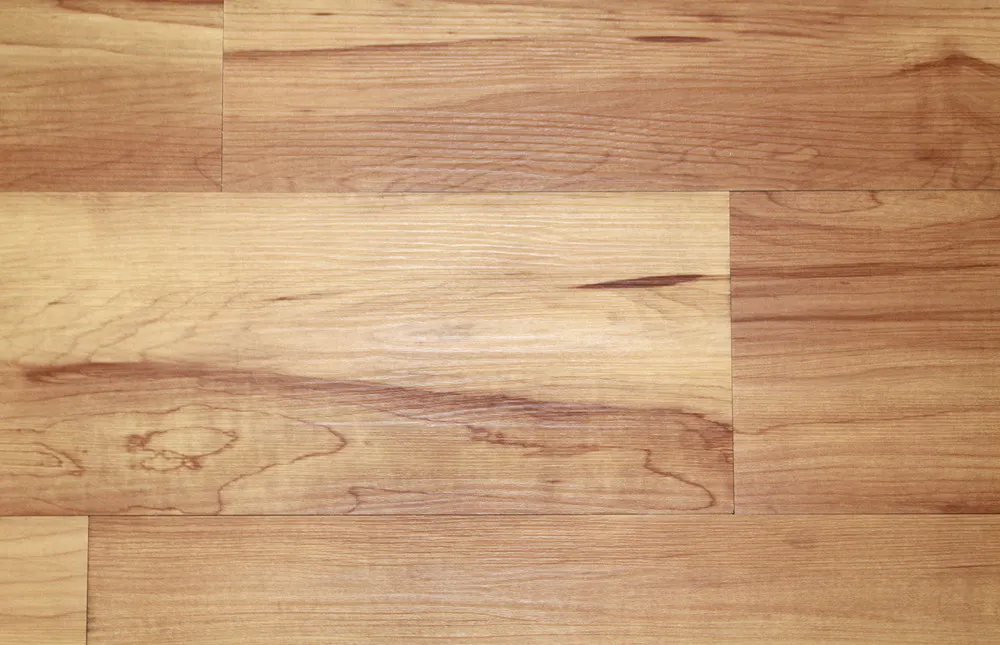
If the old house has a concrete slab — common in mid-century extensions or downstairs in a two-storey — vinyl lays directly over it with the right preparation. The laying vinyl on concrete guide covers moisture testing and underlay choice.
Tiles in heritage wet zones
For period bathrooms, entry vestibules, and verandahs, encaustic-style or geometric tiles are the historically correct choice in a lot of Federation and Edwardian houses. They’re cold underfoot in winter, which matters in Melbourne more than Brisbane, but they outlast every other product on this list. If you’re restoring rather than renovating, getting the tile pattern right does more for the look of the room than any other single decision.
A simple way to plan the whole house
Most renovated character homes we work on end up with two or three flooring products, not one. Engineered timber across living, dining and bedrooms; hybrid or vinyl through the kitchen, laundry and any rumpus that opens to outside; tile in the wet bathroom and entry. The look ties together if the timber tone is consistent and the transitions are flush. For a deeper read on what passes the wet test, see our guide to waterproof flooring options.
We carry engineered timber, hybrid and vinyl ranges across our Sydney and Brisbane showrooms. Bring a photo of the room, a sample of the existing skirtings, and a piece of the original board if you’ve got one — easier to match a tone in person than from a phone screen.
What to verify before you buy
Match the exact range
Check the current data sheet, warranty, care guide and room-suitability statement for the product code you will receive.
Inspect the substrate
Measure moisture and flatness, confirm access and finished height, and price any preparation before installation begins.
Compare complete quotes
Include removal, preparation, waste, trims, stairs, doors, furniture and warranty responsibilities—not only the material rate.
Dated examples may be historical; current product availability, warranties, pricing and approval requirements should be rechecked. Words such as “best” describe a decision for a particular room and budget, not one universally superior product.
Sources and verification
- The Flooring Guys: Timber flooring articles — related guides and current product questions.
- Flooring installation cost estimator — indicative project inputs and installation scope.
Choose the floor around the room and the complete installation.
Bring room dimensions, subfloor details and any apartment or access requirements. We can help shortlist products and prepare an itemised quote.