
Old floorboards make a good base for engineered timber, and laying over them is far cheaper than lifting them. Whether it works comes down to three checks: are the boards sound, are they flat, and is there enough height at the doors. Get those right and the rest is a straightforward install.
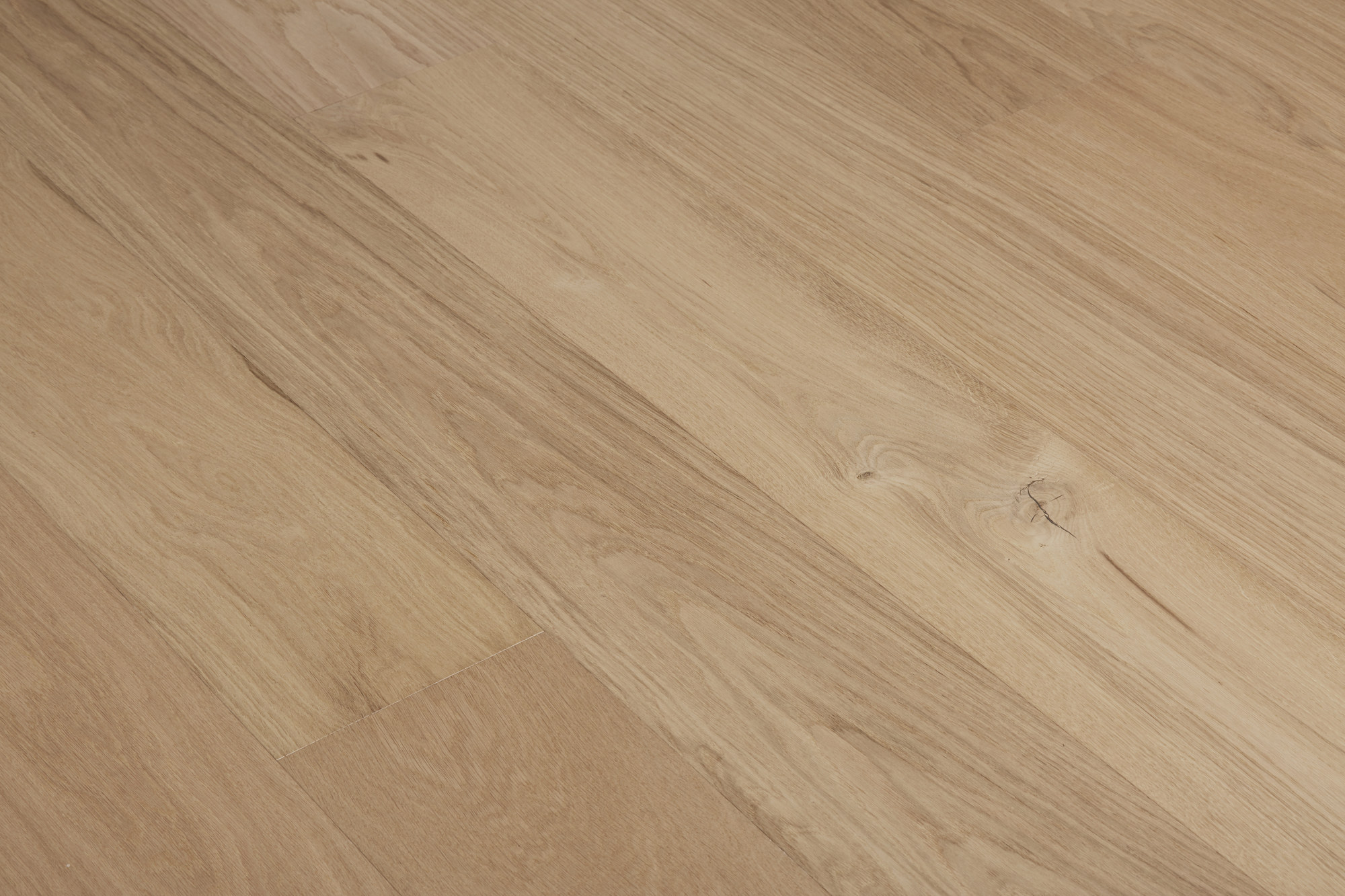
Check 1: are the boards sound?
Walk the whole floor and mark any board that flexes, squeaks or has cupped edges. Screw loose boards down into the joists with 50mm countersunk screws, not nails, because nails work loose again. Replace boards that are split, rotten or borer-damaged. Check underneath the house for damp, blocked subfloor vents or plumbing leaks, because a new floor will trap that moisture rather than fix it.
Check 2: are they flat?
Lay a 2 metre straight edge across the floor in several directions. The gap under it should not exceed 3mm. Old boards usually fail this test at the edges, where they cup, and along joists that have settled. Belt-sand the high edges, or if the whole floor is uneven, sheet it with 12mm structural plywood screwed at 300mm centres. Sheeting also stops individual boards moving independently, which is the most common cause of squeaks under a new floor.
Check 3: is there height?
A 14mm engineered board plus a 2mm underlay adds 16mm, and plywood sheeting adds another 12mm. Measure the clearance under every door, at the top of any stairs, and where the floor meets tiles or an external threshold. Doors can be taken off and planed; a stair nosing or a taller transition trim handles the rest.
Float or glue?
Over floorboards you can do either. Floating over a 2mm acoustic underlay is faster, cheaper and forgiving of minor unevenness, and it is what most people choose. Direct-sticking with a flexible MS or polyurethane adhesive gives a more solid, quieter floor but demands a very flat, screwed-down base, and it is the better choice if you are sheeting the floor with plywood anyway.
Which direction?
Run the new boards at 90 degrees to the old floorboards, or at 45 degrees. Running them in the same direction lets the new boards follow any dips between the old ones and telegraphs every joint. If you are sheeting with plywood first, direction no longer matters and you can run the boards towards the main window.
Moisture barrier
Over a ventilated timber subfloor in a Queenslander or an older home, a breathable underlay is better than a sealed plastic barrier, which can trap moisture against the old boards. Over a timber floor on a concrete slab, use a moisture barrier. Check what the board manufacturer requires, because the warranty depends on it.
The install itself
From there it follows the standard floating-floor sequence: acclimatise the boards for 48 hours, leave an 8 to 10mm expansion gap at every wall, stagger end joints by at least 300mm, and finish with skirting or scotia fixed to the wall and never through the floor. Our step-by-step installation guide covers the method, and boards are in our engineered timber flooring range.
Frequently asked questions
Usually not. Sound, flat boards make an excellent base. Remove them only if they are rotten, badly cupped or you need the height.
Yes. Particleboard sheet flooring is a good base if it is dry, well fixed and flat. Check for swollen edges near wet areas.
Only if the old boards move. Screwing every loose board down before you start is what prevents it.