

Hybrid flooring is the most common timber-look product we lay across our Sydney and Brisbane showrooms, and the brand you choose matters more than most retailers will tell you. This review covers the hybrid ranges we actually stock, what’s inside each plank, where each one suits, and how the prices line up. If you want the broader category guide, our best hybrid flooring brands in Australia hub has the full lineup.
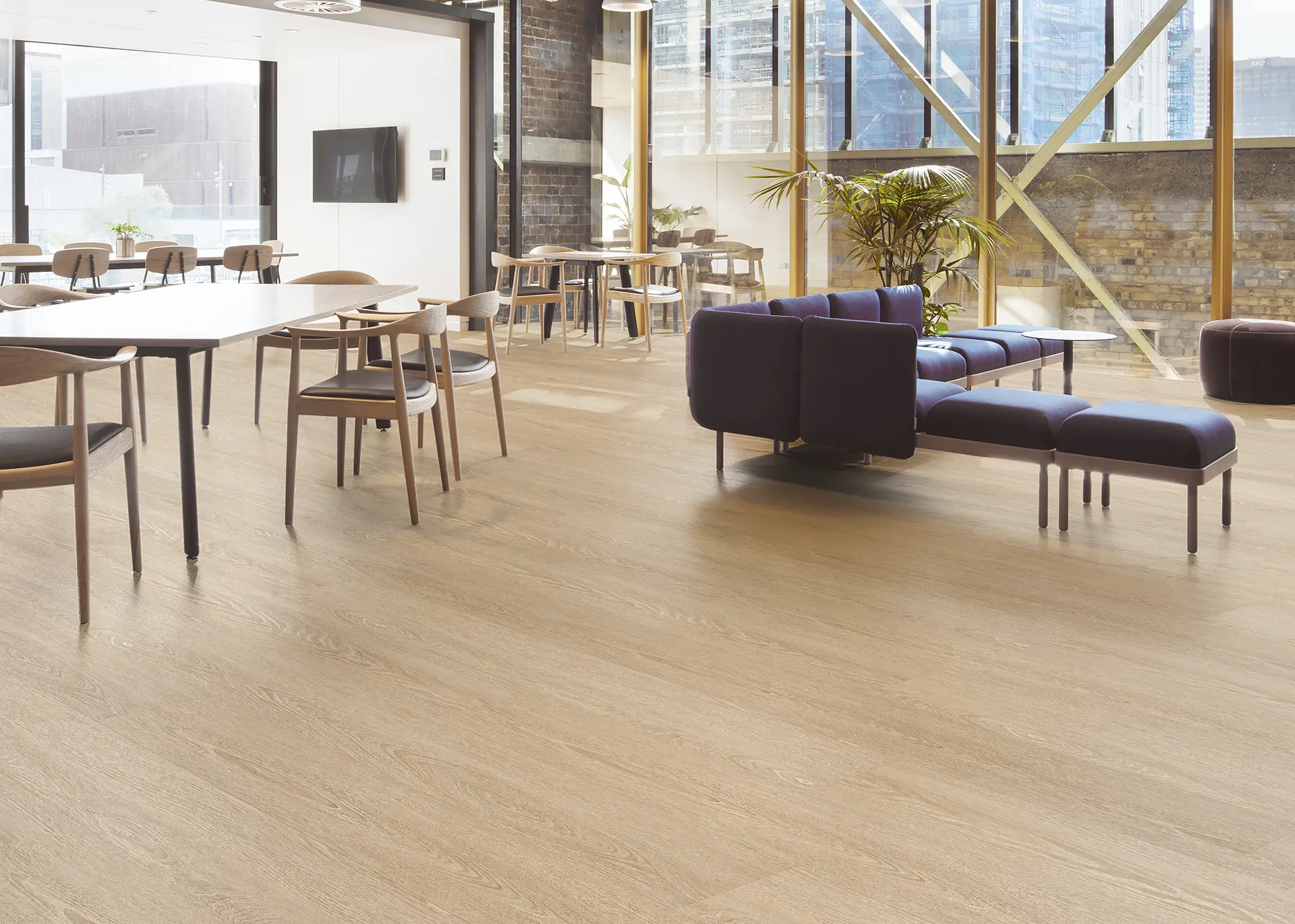
What separates a good hybrid plank from a cheap one
Before we get into brand names, here’s what we’d check on the spec sheet first. Most of the price difference between hybrid ranges comes down to four numbers:
- Wear-layer thickness. 0.3 mm is rental-grade and won’t last in a kitchen. 0.5 mm is the residential sweet spot for most Australian homes. 0.7 mm and above is built for hallways, busy households and light commercial.
- Core type. SPC (stone polymer composite) is denser, more stable in heat, and the right call over concrete slab. WPC (wood plastic composite) is softer underfoot but moves more in Queensland and northern climates.
- Click system. 5G drop-lock systems install faster and lock tighter than older 2G angle-lock joints. Worth checking on the box. We’ve covered the differences in our 5G and 2G click systems guide.
- Underlay. Most quality hybrid planks ship with a pre-attached IXPE acoustic underlay. If a brand doesn’t include one, factor a separate underlay into your quote.
Two planks at the same retail price can have wildly different specs. A 6 mm SPC plank with 0.3 mm wear layer is not the same product as an 8 mm SPC plank with 0.5 mm wear layer, even if the colour photos look identical online.
Hybrid ranges we’d recommend
Aqua Stone 8.5 SPC Hybrid
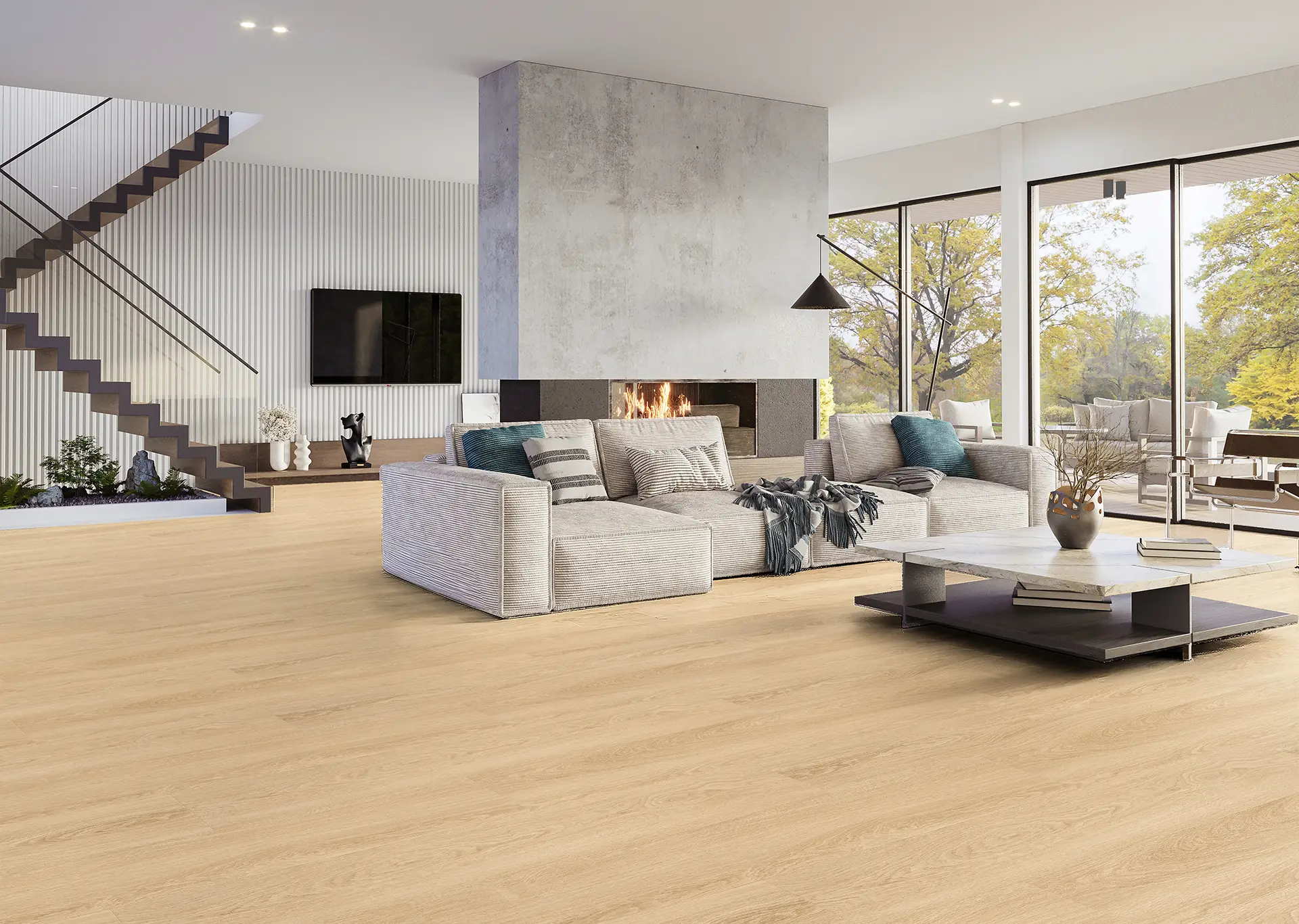
Aqua Stone 8.5 is one of the SPC ranges we steer most renovators toward when they want a stable, fully waterproof floor without going to the top of the budget. The 8.5 mm overall thickness includes the pre-attached IXPE acoustic underlay, the wear layer is rated for residential plus light commercial, and the colour palette covers the looks Australian buyers ask for most often. Shore reads as a clean grey-oak, Dune is the warmer mid-tone, Brighton sits at the lighter end, and Harvest is the deepest, most character-grade colour in the range.
Easi-Plank SPC Hybrid
Easi-Plank is the SPC range we recommend for buyers who want recognisably Australian timber tones — Spotted Gum, Blackbutt, Smoked Spotted Gum — rather than the European oak palette. Same SPC core construction as Aqua Stone, same pre-attached IXPE underlay, but the print layer leans into native Australian hardwood looks. It’s a sensible pick for renovations where the rest of the home already has timber detailing in those species.
Where the mid-tier brands fit
Several mid-range hybrid brands sit around the $40-$60/m² supply price point and consistently deliver good value. What separates the reliable performers from the rest is the consistency of their core thickness, the accuracy of their click-lock tolerances, and the after-sales warranty support when something goes wrong on a job. We’d ask three questions of any mid-tier brand: confirmed wear-layer thickness on the box, warranty term in years (20 is the benchmark for quality product), and whether underlay is genuinely included or quoted as an extra.
SPC vs WPC: which core suits your home
Hybrid flooring splits into two main core technologies. SPC uses a limestone and PVC core that’s denser and more dimensionally stable in heat — the right call for Queensland, Northern New South Wales, and any installation over a concrete slab. WPC uses a foam-infused wood-fibre core that feels softer and warmer underfoot, with better acoustic absorption. WPC suits bedrooms or upstairs apartments where comfort matters more than rigidity. For most Australian buyers, particularly across Sydney and Brisbane, SPC is the safer pick. If you’re cross-shopping SPC against RCB rigid-core boards, our SPC vs RCB guide covers the practical differences.
What hybrid actually costs in Australia
As a working guide for 2026, hybrid flooring sits in three rough tiers in Australia:
- Budget ($25-$38/m² supply). 0.3 mm wear layer. Suits rental fit-outs and low-traffic bedrooms. We wouldn’t put it in a kitchen.
- Mid-range ($39-$60/m² supply). 0.5 mm wear layer. The right call for most family homes — kitchen, living, hallway, laundry.
- Premium ($61-$90+/m² supply). 0.7 mm wear layer or thicker. Built for high-traffic homes, light commercial, and statement spaces.
Installation typically adds another $30-$50/m² depending on subfloor prep, door trimming, and skirting work. Most homes in the 100-200 m² range come in around $6,500-$20,000 all-in. Our hybrid flooring cost guide breaks down the full quote line by line.
Where hybrid flooring suits, and where it doesn’t
Hybrid is the right pick for kitchens, laundries, hallways, living rooms, and bedrooms across Australian homes. The SPC core is fully waterproof at the plank level, the wear layer handles dropped pans and dog claws, and the pre-attached underlay keeps the install simple. It’s also the safer choice for ground-floor rooms where flood risk is a factor — for the broader options there, see our guide to waterproof flooring options.
Where hybrid doesn’t suit: outdoor decks, saunas, pool surrounds, and anywhere with prolonged direct UV exposure. The wear layer holds up to indoor sunlight, but it isn’t an outdoor product.
Install pitfalls to budget for
Three things go wrong on hybrid installs more often than anything else, and all three are avoidable.
- Subfloor that isn’t level. SPC needs a flat subfloor — anything outside 3 mm tolerance over a 2 m span needs self-levelling before install. High spots telegraph through and pop the click joint apart over time.
- No expansion gap. Even SPC moves slightly with temperature. Leave 8-10 mm around the perimeter, under door frames, and around fixed cabinetry. Cover with skirting or scotia.
- Skipping acclimatisation. Let the planks sit in the room for 48 hours before laying so they settle to ambient temperature and humidity. It’s the cheapest and most-skipped step in the install.
Frequently asked questions
Is hybrid flooring fully waterproof?
Yes — quality SPC and WPC hybrid planks are waterproof at the plank level and won’t swell or warp from spills or steam. Standing water left for days can still seep through the joins if the install is poor or the perimeter silicone in a wet area has failed, so wet-area installs need to be done carefully.
How long does hybrid flooring last?
15-25 years is the realistic residential range. Premium 0.7 mm-plus wear layers in moderate-traffic homes can run longer than that. Budget 0.3 mm planks in busy kitchens won’t.
Can I lay hybrid over existing tiles?
Yes, provided the tiles are flat, firmly bonded, and the surface is within the 3 mm over 2 m tolerance. Loose or cracked tiles need to be re-bedded or removed first. Hybrid is a floating floor — no glue or nails needed.
Are rubber-backed mats safe on hybrid?
No. Rubber and some latex backings react with the PVC in the plank and can leave a permanent stain. Use woven rugs, felt-backed mats, or felt furniture pads.
The short answer
For most Australian homes, an SPC hybrid with a 0.5 mm wear layer, a pre-attached IXPE underlay, and a 5G click system is the sweet spot. Aqua Stone 8.5 covers the European-oak palette, Easi-Plank covers Australian hardwood tones, and the mid-tier brands cover the budget end of the market — provided you check the wear-layer number on the box. Bring a swatch home, look at it under your own daylight against your kitchen joinery and skirtings, and ask the showroom for the install spec sheet before you commit. We carry these ranges across our Sydney and Brisbane showrooms.
Ready to shop? Browse our full vinyl plank range online, or drop into our Sydney or Brisbane showroom to see the range in person.