
Australian flooring guide · Reviewed September 2026
Best Laminate Flooring Brands in Australia
The honest answer: there isn't one single best laminate flooring brand in Australia.
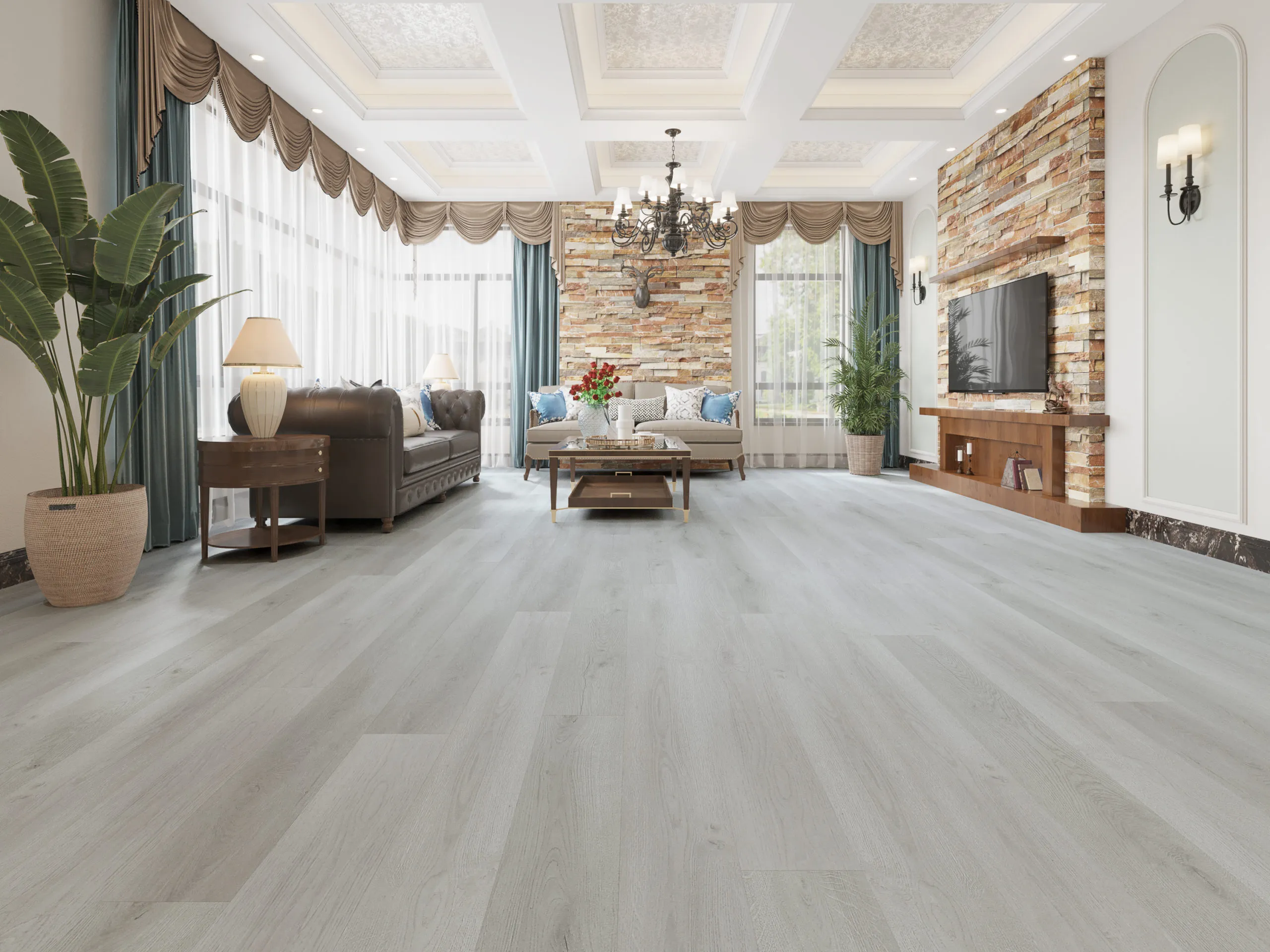
The honest answer: there isn’t one single best laminate flooring brand in Australia. There are a handful of ranges that consistently hold up in real homes, and the right pick depends on the AC rating you actually need, the core type, and how realistic you want the timber look to be. This guide walks through what to check on the spec sheet before you even look at colour, then names the laminate ranges we stock at The Flooring Guys and where each one fits.
What you’re actually paying for in laminate
Laminate is a printed decor layer fused to a fibreboard core, sealed under a clear wear layer and finished with a backing balance. The price difference between brands almost always comes down to four things, in this order:
- AC rating. AC3 is rated for general residential use. AC4 handles heavier residential and light commercial. AC5 is commercial-grade. For a busy Australian family home with kids and pets, AC4 is the sensible floor — pun intended.
- Core type. Standard HDF cores are fine for living, dining and bedrooms. Water-resistant or hydro-treated cores (sometimes branded as Aqua, Hydro or similar) are the ones to specify if you want laminate in a kitchen or near a laundry. They swell less if a spill sits before you mop it up.
- Embossing and bevel. The cheapest laminates have a flat printed surface and square edges. Mid and upper-tier ranges have an embossed-in-register texture that lines up with the printed grain, plus a micro-bevel that hides minor subfloor movement at the joints. The realism difference is significant.
- Click system and plank size. 5G drop-lock joinery installs faster and pulls apart cleaner if you ever need to lift a board. 2G angle-angle is also reliable but slower. Wider, longer planks (around 240 mm by 1.8 m and up) look better in open-plan rooms but need a flatter subfloor to lay well. We’ve covered the joinery in our 5G and 2G click systems explainer.
Laminate ranges we’d recommend
Swish Aqua
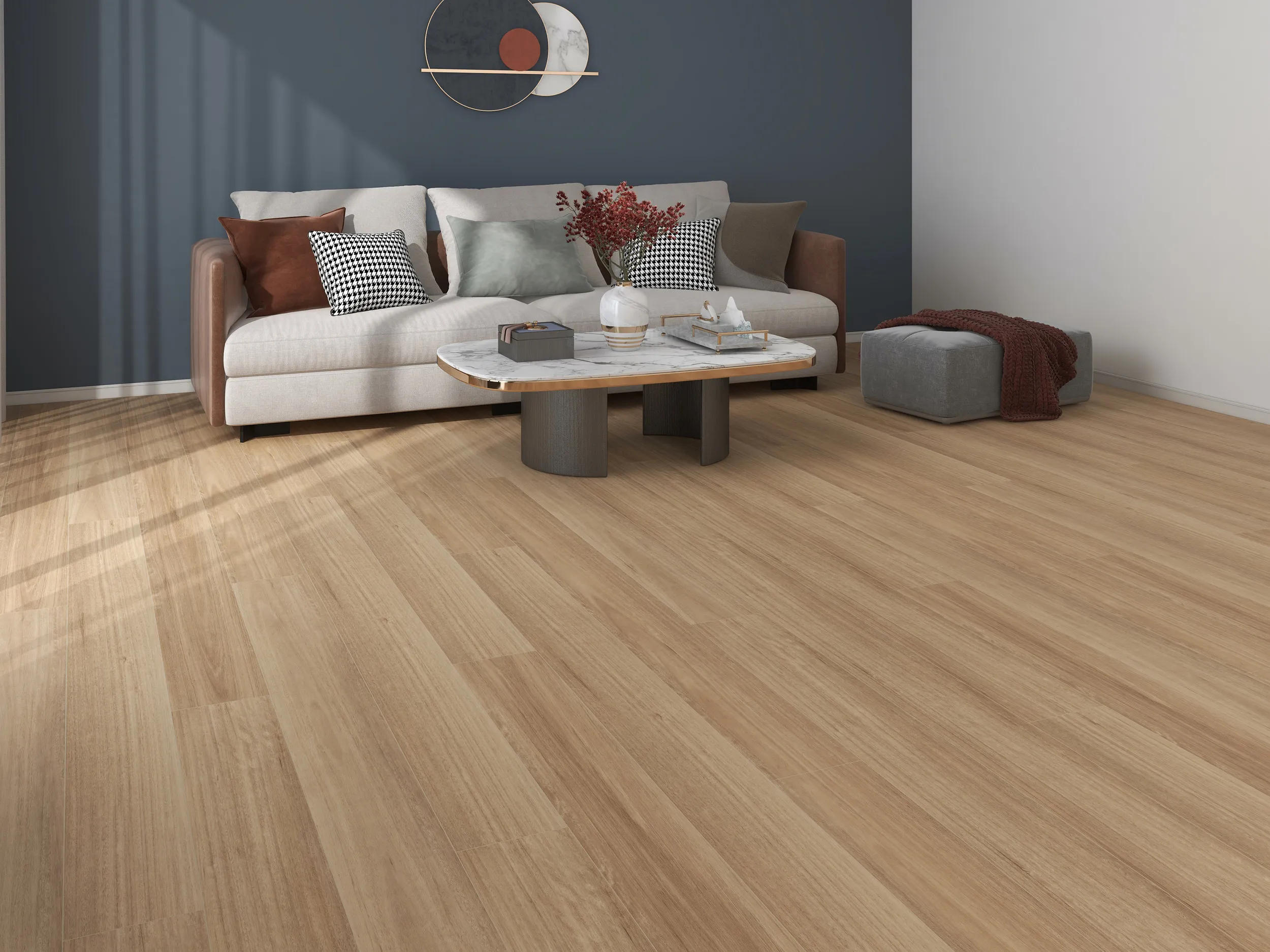
Swish Aqua is the laminate we steer most renovators toward when they want a realistic timber look with proper water-resistance built into the core. AC4 surface, water-resistant HDF, embossed-in-register texture, and a 12 mm plank with a tight micro-bevel. The colour palette covers the tones Australian buyers ask for: Vincentia Oak as the warm, all-rounder mid-tone, Spotted Gum and Spotted Gum Light for the classic Australian timber look, plus deeper character grades for heritage interiors.
Hydrocore
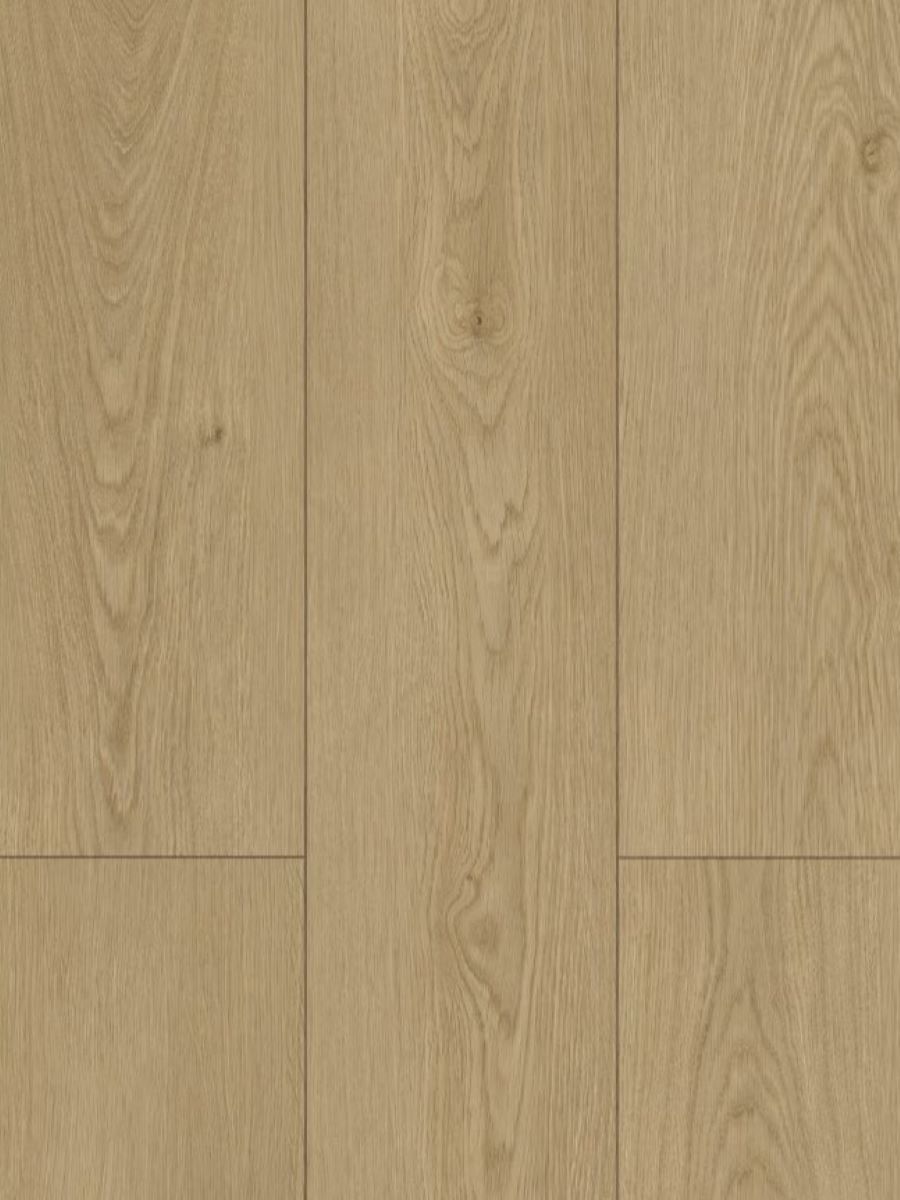
Hydrocore sits in the same waterproof-laminate bracket and is a fair pick if your priority is the look of a richer, character-grade timber. Brandy is the colourway we sell most of — a warm, mid-brown oak that works with both warm-grey paint and the cooler whites that have taken over Australian new builds. The core handles standing water for longer than a standard HDF laminate, which is why it ends up in kitchens more often than a regular AC3 floor would.
How to compare brands without getting lost in marketing copy
Walk into any flooring showroom and ask three questions before you ask about colour:
- What’s the AC rating, and is the core a standard HDF or a water-resistant HDF?
- What’s the warranty against surface wear and joint swelling, and what voids it (standing water, steam mops, heated subfloors)?
- What click system does it use, and what’s the recommended subfloor tolerance — usually 3 mm over a 2 m span?
Two laminate planks at the same shelf price can be very different products. An AC3 plank with standard HDF and a flat print is not the same floor as an AC4 plank with a water-resistant core and embossed-in-register grain, even if the colour photos look identical online.
Where laminate suits, and where it doesn’t
Laminate is the right pick for living areas, hallways, dining rooms and bedrooms. It handles foot traffic, dropped toys and pet claws better than most timber-look products at the same price, and a water-resistant core gives you a buffer in kitchens too. We’ve covered room-by-room picks in the best flooring for bedrooms guide.
Where laminate doesn’t suit: full wet zones (bathrooms, laundries with floor drains) and ground-floor rooms in flood-prone areas. Even a water-resistant core isn’t designed to sit under standing water for hours. For those spaces, a hybrid or SPC floor is the safer call — see our best hybrid flooring brands in Australia roundup and the broader waterproof flooring options guide.
The short answer
For most Australian homes, an AC4 laminate with a water-resistant HDF core, embossed-in-register texture, a micro-bevel and a 5G click system is the sweet spot. Swish Aqua covers the modern oak and Spotted Gum looks; Hydrocore covers warmer, character-grade interiors. Bring a swatch home, look at it under your own daylight, and check it next to your kitchen joinery and skirtings before you commit. We carry these ranges across our Sydney and Brisbane showrooms and are happy to walk you through the spec sheets in person.
What separates a good laminate from a cheap one
Before brand names, three specs decide how a laminate floor will hold up in an Australian home:
- AC rating. The Abrasion Class rating runs AC1 to AC5. We treat AC4 as the minimum for any living area, hallway or open-plan space in a family home. AC3 is fine for bedrooms and studies. Avoid AC1 and AC2 — the wear-layer difference shows within a few years.
- HDF core density. The high-density fibreboard core carries the click-lock joint. A denser core resists dents, holds joints under furniture loads, and shrinks less under humidity. This is where budget brands cut corners that aren’t visible in the showroom.
- Edge sealing. Wax-sealed or hydrophobic edges are what lets a modern laminate shrug off accidental spills. A floor without it will swell at the joints the first time someone leaves a wet mop on it.
If you’re cross-shopping laminate against a waterproof option, the difference between hybrid and SPC flooring is worth understanding before you commit, because the right answer depends on which rooms you’re laying.
Quick-Step: the brand benchmark
Quick-Step is the Belgian-made laminate range we steer most quality-focused buyers toward. It is one of the few major brands still manufactured in Europe rather than China or Southeast Asia, and the consistency of the click-lock tolerance and edge sealing is noticeably tighter than most of the mid-market. Within the Quick-Step lineup, four ranges cover most of the Australian market.
Quick-Step Eligna
Eligna is the all-rounder. 8mm thick, AC4 rated, with Quick-Step’s Uniclic click-lock and Hydroseal edge treatment. The plank format (around 1.38m long, ~156mm wide) suits standard living rooms and hallways without dominating the space. The bevelled V-groove gives a subtle plank definition without looking obviously fake. If you want a Quick-Step floor that does everything competently — living, dining, bedrooms, studies — Eligna is the default pick.
Quick-Step Classic
Classic is the entry into the Quick-Step range. 8mm, AC4, narrower plank, simpler colour palette weighted toward warm and mid-tone oaks. The construction quality is the same as Eligna — same core, same Uniclic system — but the surface texture and design layer are a tier simpler. For a budget-conscious buyer who still wants the Quick-Step manufacturing quality, Classic delivers it.
Quick-Step ReadyFlor
ReadyFlor sits at the upper end of the lineup, with thicker planks (typically 12mm), longer board lengths and the more realistic embossed-in-register textures where the surface grain aligns with the printed pattern. Acoustic performance underfoot is noticeably better — the extra core thickness reduces the hollow click that thinner laminate can have on a concrete slab. ReadyFlor is the range we recommend when a client wants laminate to feel as solid underfoot as engineered timber, and is willing to pay for that feel.
Quick-Step Perspective Nature
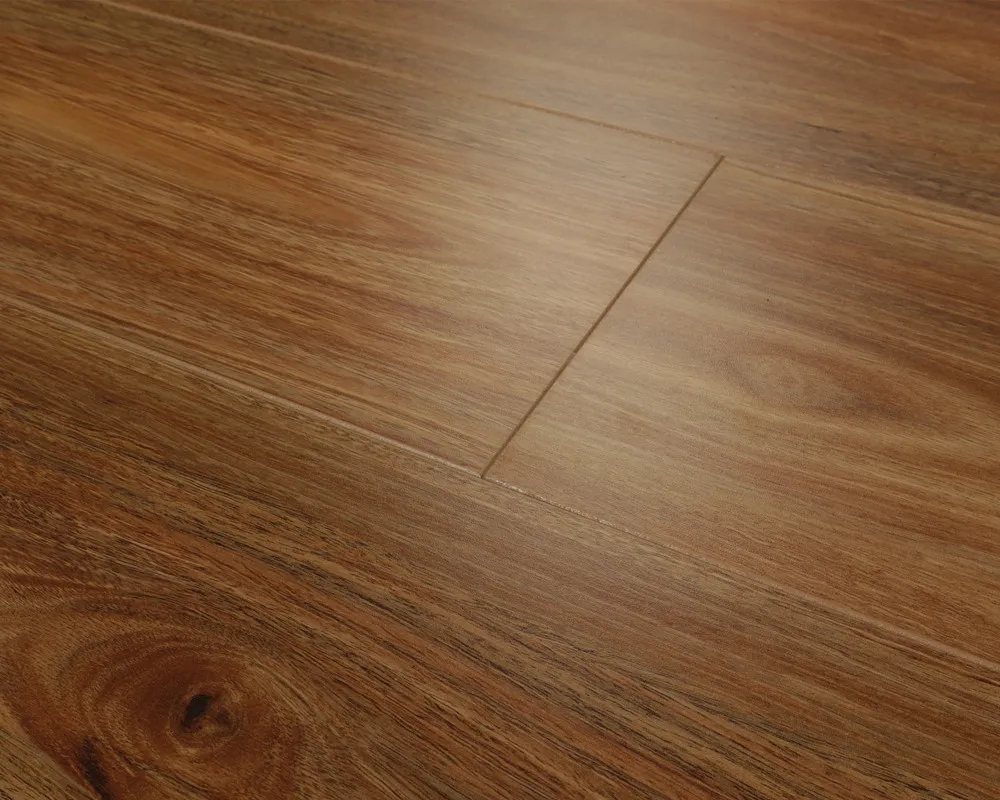
Perspective Nature is the design-led range — 3D-scanned European oak surfaces, deep embossing, bevelled edges on all four sides. Plank length is shorter (around 1.38m) which is a minor practical limitation in long open-plan rooms, but the visual realism at this price point is hard to beat. If you’ve ruled out engineered timber on cost but you want a laminate that genuinely passes for real oak at a glance, Perspective Nature is the closest you’ll get.
What it costs in Australia in 2026
Realistic price ranges per square metre on supply only:
- Budget AC2-AC3 laminate: $20-$32/m². Avoid for living areas.
- Mid-range AC4 (Quick-Step Classic, Swish Aqua, mid Hydrocore): $33-$52/m².
- Premium AC4-AC5 (Quick-Step Eligna, ReadyFlor, Perspective Nature): $53-$75/m² and up.
Professional install typically adds $25-$40/m² depending on the room and subfloor condition, plus underlay at $5-$12/m² (laminate rarely comes with pre-attached underlay, unlike most hybrid). All in, a quality mid-range laminate floor lands at $60-$90/m² installed; ReadyFlor and Perspective Nature push that to $100-$120/m². For a 100m² home, expect $6,000-$9,000 fully installed at the mid tier. If you’re weighing that against a hybrid quote, our hybrid flooring cost guide has the equivalent breakdown.
Install considerations
Three things will make or break a laminate install regardless of how good the plank is:
- Acclimatisation. Stack the unopened boxes flat in the room for 48-72 hours before laying. Skipping this step is the most common cause of post-install gapping or buckling.
- Subfloor flatness. Within 3mm over any 2-metre span. Grind concrete high spots, fill low spots with self-levelling compound. A laminate floor over an out-of-tolerance subfloor will telegraph the dips and pop joints over time.
- Expansion gaps. 8-10mm around every wall, doorframe, pipe and fixed cabinet. Cover with skirting or scotia. Without this, the floor has nowhere to go when it expands and it will buckle.
Quick-Step’s Uniclic, ReadyFlor’s locking system and most modern laminates are 5G-style angle-tap clicks rather than the older 2G angle-angle systems — the difference matters when you’re laying around tight corners or under doorframes. We’ve covered the practical implications in our explainer on 5G vs 2G click systems.
What to verify before you buy
Match the exact range
Check the current data sheet, warranty, care guide and room-suitability statement for the product code you will receive.
Inspect the substrate
Measure moisture and flatness, confirm access and finished height, and price any preparation before installation begins.
Compare complete quotes
Include removal, preparation, waste, trims, stairs, doors, furniture and warranty responsibilities—not only the material rate.
Any prices retained from the original article are indicative examples, not a current project quote. Dated examples may be historical; current product availability, warranties, pricing and approval requirements should be rechecked. Words such as “best” describe a decision for a particular room and budget, not one universally superior product.
Sources and verification
- The Flooring Guys: Laminate flooring articles — related guides and current product questions.
- Flooring installation cost estimator — indicative project inputs and installation scope.
Choose the floor around the room and the complete installation.
Bring room dimensions, subfloor details and any apartment or access requirements. We can help shortlist products and prepare an itemised quote.