
Australian flooring guide · Reviewed 2026
What is Difference Between Hybrid Flooring And SPC Flooring?
Quick answer: SPC is a type of hybrid, not a competing product.

Quick answer: SPC is a type of hybrid, not a competing product. Hybrid is the Australian umbrella term for a rigid plank with a waterproof core; SPC (stone plastic composite) is the limestone-filled version of that core, and WPC is the softer, warmer one. Ask which core a plank uses rather than hybrid or SPC.
The short answer: SPC flooring is one type of hybrid flooring. Every SPC plank is hybrid, but not every hybrid plank is SPC. Hybrid is the umbrella term for any rigid waterproof plank that combines a stone or polymer composite core with a printed wear layer; SPC (stone polymer composite) is the denser, harder, more dimensionally stable version of that core. The rest of this guide explains what that means in practice — for the feel underfoot, the price, the install, and the room you’re laying it in.
Hybrid is the category, SPC is the core
When a salesperson says “hybrid flooring”, they usually mean a rigid plank with a waterproof composite core, a printed timber-look decor layer, a clear wear layer on top, and a click-lock joint on the edges. Inside that category, the core is built one of two main ways:
- SPC (stone polymer composite). Limestone powder mixed with PVC and stabilisers, compressed into a dense, rigid board. Around 1,800-2,100 kg per cubic metre.
- WPC (wood polymer composite). Wood flour mixed with PVC and a foaming agent, producing a softer, lighter, slightly more cushioned board.
The Australian market has shifted heavily toward SPC over the last few years because it’s more stable in the heat, harder to dent, and a touch cheaper to manufacture. Most of the “hybrid” planks you’ll see in showrooms in 2026 are SPC under the hood, even when the brochure just says hybrid. For a wider look at what’s available, our best hybrid flooring brands in Australia guide breaks the ranges down by core type.
What the core actually changes

On a showroom floor, an SPC plank and a WPC-style hybrid plank can look identical. They diverge when you pick them up and walk on them.
- Density and weight. SPC is heavier in the hand. A 1.5 m SPC plank feels noticeably more solid than a WPC plank of the same size.
- Feel underfoot. SPC is hard. It transmits more sound and feels closer to a tile than to timber. WPC and the rare RCB (rigid core board) hybrids feel softer and a touch warmer.
- Heat stability. SPC barely moves with temperature swings, which is why it’s the safer pick for north-facing rooms with big glass and full afternoon sun.
- Subfloor tolerance. SPC needs a flat subfloor — anything outside a 3 mm tolerance over a 2 m span and the joints will telegraph through. WPC and RCB are slightly more forgiving.
- Indent resistance. SPC handles dropped pans, dog claws and stiletto heels better.
If you’re cross-shopping SPC against the softer rigid-core hybrids, our SPC vs RCB comparison goes deeper on the rigidity and acoustics question.
Are they both waterproof?
SPC and many other hybrid cores are not damaged by ordinary water exposure, but the complete installed floor is not automatically watertight. The plank itself won’t swell or delaminate when water sits on it. What can still let water through is the click joint between planks if it’s not laid properly, so a perimeter silicone seal in wet zones (around toilets, vanities, the dishwasher) is still good practice. For the full picture across product types, see our waterproof flooring options guide.
Cost: how the two compare
Pricing in 2026 sits in roughly the same band for both, supplied. Entry-level SPC starts around $35-45 per m² supply-only, mid-range sits at $50-70 per m², and premium SPC ranges with thicker wear layers and pre-attached IXPE underlay run $75-95 per m². WPC and RCB hybrids overlap the same band but tend to cluster slightly higher because the cores are pricier to manufacture. Install adds $30-45 per m² depending on subfloor prep. Our hybrid flooring cost guide has the full breakdown including underlay, scotia and waste allowance.
Which one suits which room
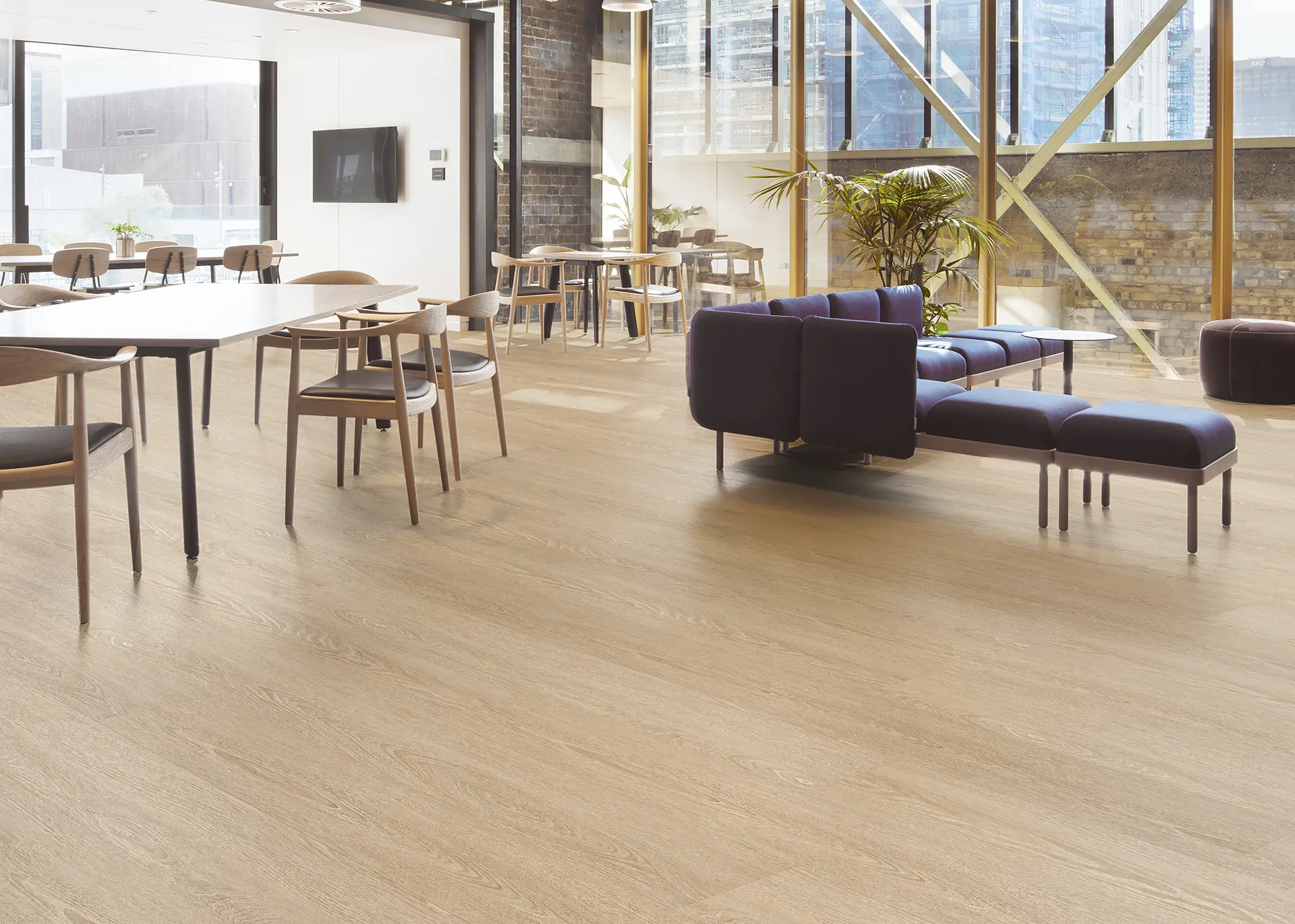
Quick room-by-room call:
- Kitchens, laundries, downstairs on slab. SPC is the safer pick. Hard and dent-resistant, with a core that is not damaged by ordinary water exposure. See our best flooring for kitchens guide for the full shortlist.
- Bedrooms and quiet living rooms. Either works. WPC or RCB feels warmer underfoot if you walk barefoot in winter.
- Upstairs apartments and second storeys. Mind the body-corporate acoustic spec. SPC will need a thicker acoustic underlay than what comes pre-attached.
- Bathrooms. Both are technically suitable, but you need a proper silicone perimeter seal and a level subfloor either way.
- Rooms with big north-facing windows. SPC. Heat stability matters when the floor sits in 35-degree afternoon sun for hours.
Installation: what’s different
Both go down as a floating click-lock floor over a level subfloor. The practical differences come down to subfloor prep and underlay. SPC is unforgiving of high spots — anything outside 3 mm over 2 m needs self-levelling. WPC and RCB will mask small undulation but still benefit from a flat base. Most modern SPC ranges ship with a pre-attached IXPE acoustic underlay; if yours doesn’t, a 1-1.5 mm IXPE or cross-linked foam underlay is the standard choice. Standard expansion gap is 8-10 mm at every wall, doorframe and fixed object.
Common questions
Is SPC better than hybrid?
It’s not a fair comparison — SPC is a hybrid. The real question is whether you want the harder, more stable SPC core or the softer WPC/RCB core. For most Australian homes the answer is SPC, because the heat stability and indent resistance matter more day-to-day than the small underfoot warmth advantage of WPC.
Can I lay SPC over existing tiles?
Yes, provided the tiles are sound, level and the grout lines are no wider than about 4-5 mm. Wider grout lines or any rocking tiles need to be filled or removed first.
Will SPC fade in direct sunlight?
Quality SPC ranges have UV-stable wear layers and won’t fade in normal residential sun exposure. Cheap imports without UV stabilisation can lighten over a few years — check the spec sheet for a UV rating before you buy.
So which should you buy?
For most Australian homes, an SPC hybrid with a 0.5 mm wear layer (residential) or 0.7 mm wear layer (high-traffic or light commercial) is the practical sweet spot: stable, waterproof, and priced fairly against laminate while looking much closer to real timber. Pick a softer WPC or RCB hybrid only if underfoot comfort or acoustics are your top priority and the room isn’t getting hammered by sun or spills. Bring a swatch home and look at it under your own light before you commit — we carry the major hybrid and SPC ranges across our Sydney and Brisbane showrooms.
Sources and verification
- The Flooring Guys: current hybrid flooring range — current products, thickness filters and advertised supply pricing.
Compare the complete floor, not one headline number.
Bring your room dimensions, subfloor details and any strata requirement. We can help shortlist compatible products and prepare an itemised flooring quote.