
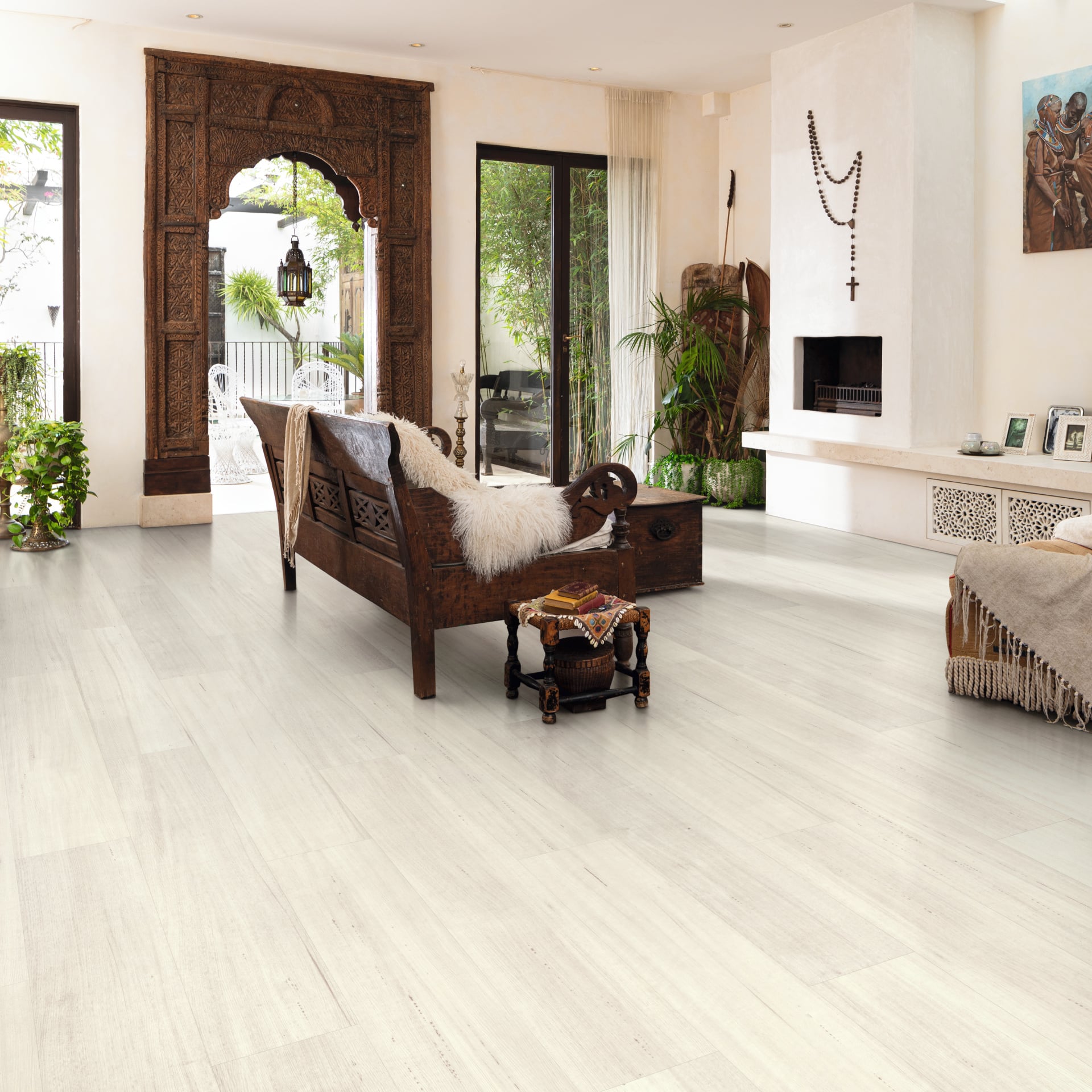
Light floors make a room look bigger, and the reason is simple: a pale surface bounces light back into the room instead of absorbing it, and it softens the line where the floor meets the wall so the eye reads fewer boundaries. Colour is the biggest lever, but plank size, direction and sheen all contribute, and together they make more difference than colour alone.
The colours that work
- Pale oak, washed oak and limed tones. The most reliable choice. They reflect light without looking cold or showing every mark the way a true white floor does.
- Greige. A grey-beige floor keeps the brightness of a pale floor with enough warmth that a south-facing room does not feel chilly.
- Light blackbutt and Tasmanian oak. The Australian species equivalents, pale honey rather than grey, and better in rooms with warm-toned joinery.
- Pale concrete and stone looks. In vinyl and hybrid, light concrete designs give the same effect in a more contemporary style.
What to avoid if space is the goal
Dark floors absorb light and pull the boundaries of a room inwards. They can be stunning in a large, bright space, but in a small or south-facing room they make it read as smaller. Strongly patterned or high-contrast floors do the same thing, because the eye stops at the pattern rather than travelling across the floor. Very glossy floors reflect light unevenly and show every footprint, which fragments the surface.
Plank size and direction
- Long, wide boards mean fewer joins across the room, and fewer lines makes the floor read as a larger single surface. A 1820mm x 225mm plank beats a 1200mm x 180mm one for this.
- Run boards along the longest wall, or towards the main window. The eye follows the lines and reads the room as longer in that direction.
- Keep the same floor through doorways. Stopping and changing at every room boundary chops a home into small boxes. One continuous floor through the living areas is the single most effective thing you can do.
Sheen and texture
A matte or ultra-matte finish diffuses light evenly and hides marks, which keeps the surface looking uninterrupted. Light embossing adds texture without introducing contrast. Save high-gloss for period restorations where it belongs.
The rest of the room
Floor colour works with the walls, not against them. A pale floor with pale walls and skirting painted the wall colour blurs where the floor stops and the wall starts, which is what actually creates the sense of volume. Add a large rug rather than a small one; a rug that is too small chops the floor into pieces and shrinks the room.
Pale options are in our hybrid flooring, vinyl plank and engineered timber ranges, and samples are free so you can see them in your own light.
Frequently asked questions
They show dark marks and pet hair less than a dark floor but scuffs and stains more. A mid-tone pale oak with visible grain is the most forgiving.
It can, because the longest sight line across the floor becomes the diagonal. It also uses 15 per cent more material and costs more to lay.
No. Paint the skirting the wall colour. Matching it to the floor draws a line around the room at floor level and makes it feel smaller.