
Herringbone engineered timber sits at the higher end of the residential flooring market for a reason: the pattern earns its keep visually, but it also adds labour to the install and demands a flatter subfloor than a straight-lay floor. This review walks through what you’re actually buying when you pick a Highcountry-style herringbone engineered timber, where the pattern works, and the trade-offs to weigh before you commit.
What you’re actually buying
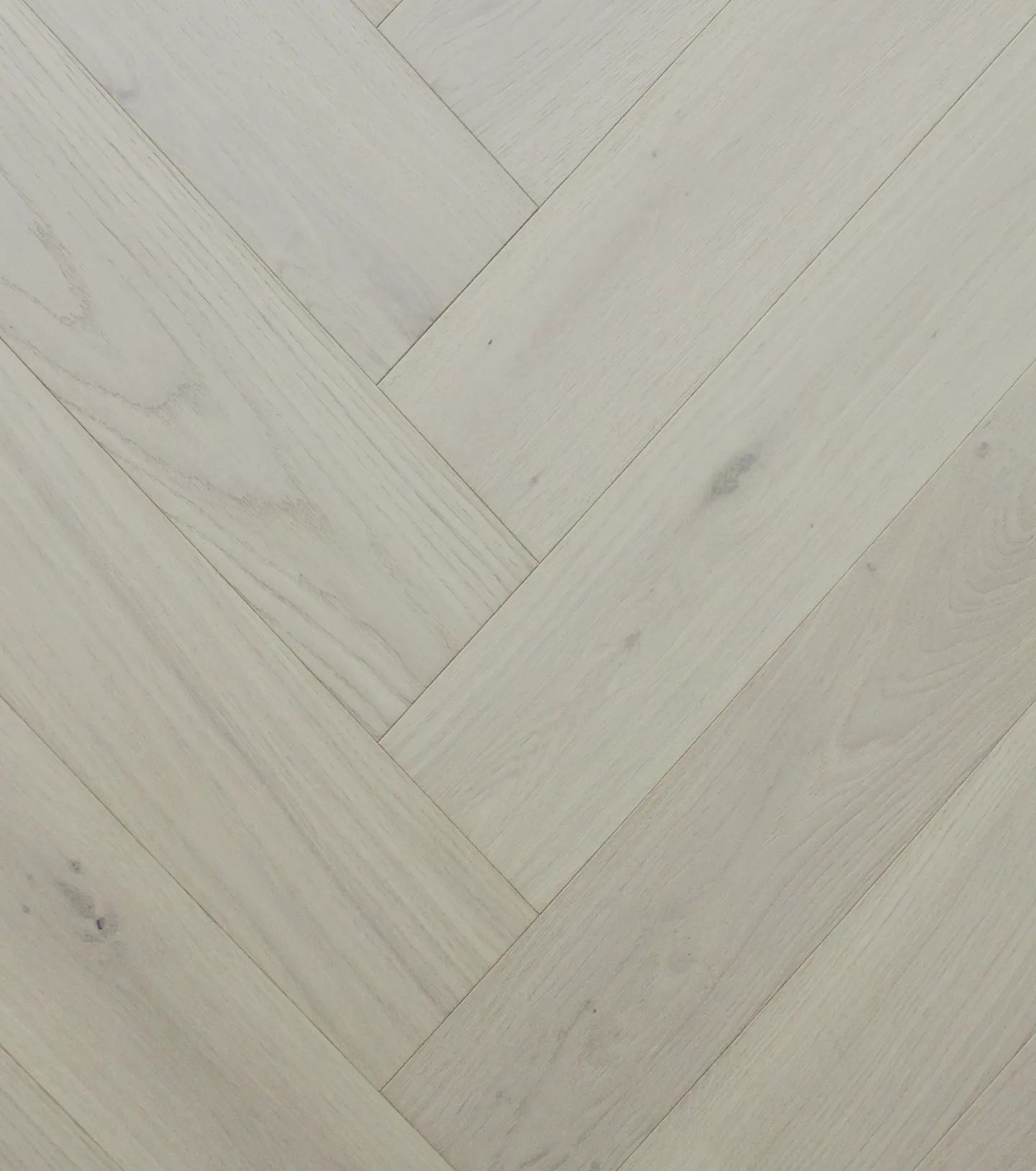
A Highcountry-style herringbone plank is engineered timber cut into shorter, narrower blocks designed to lock together at right angles in the classic V-pattern. The construction is the same as a standard engineered plank: a real-timber wear layer (the lamella) bonded to a multi-ply or HDF core. What changes is the geometry — and the install difficulty.
- European oak lamella, typically 2-4 mm thick, in widths around 90-120 mm and lengths around 600 mm
- Multi-ply or HDF core for dimensional stability over Australian humidity swings
- UV-oiled or matte-lacquered finishes that show grain and brushing texture
- Tongue-and-groove joinery (most herringbone is glue-down, not floating)
- Manufacturer warranty covering residential use, with shorter terms for light commercial
The install reality
Herringbone takes longer to lay than a straight floor — typically 1.5 to 2 times the labour, depending on the room shape. The pattern has to be set out from a centre line and worked outward, so the installer is cutting border pieces against your skirtings rather than running full lengths. Subfloor flatness matters more here than with a floating plank: small undulations show up as gaps along the angled joints. We’d recommend self-levelling anything outside a 3 mm tolerance over a 2 m span before the first board goes down.
Most herringbone engineered timber is installed glue-down rather than floating. The glue-down method gives the floor a more solid feel underfoot and reduces the click-clack you can get with floating engineered. It also means the install is permanent — pulling it up later is a demolition job, not a removal.
Where the pattern earns its keep
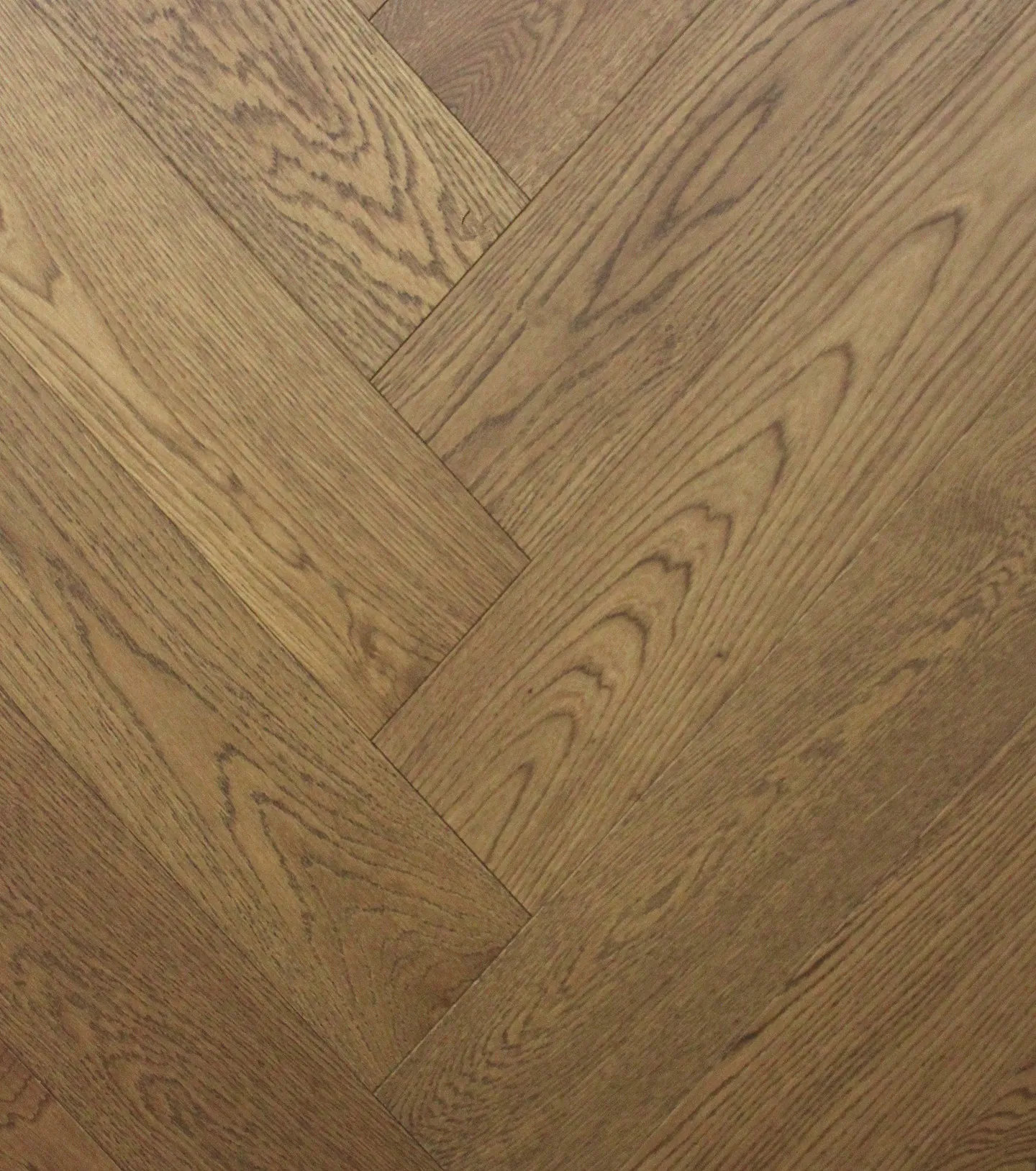
Herringbone makes the most visual impact in rooms where you see the floor as a whole: entries, formal living rooms, dining rooms, and main bedrooms. In open-plan living it can read busy if the room is large and the rest of the palette is also patterned, so we usually pair herringbone with plain joinery and quiet wall colours.
For a longer take on whether to spend the labour premium, our choosing between herringbone and straight flooring guide walks through the rooms where the pattern lifts the space and the rooms where a straight-lay plank does the same job for less.
Where it doesn’t suit
Engineered herringbone — Highcountry included — is a real-timber surface, and real timber doesn’t like standing water. Skip it for bathrooms, laundries, and any ground-floor room with a flood-prone history. For wet zones, a hybrid herringbone like the Ornato range gives you the same look in a fully waterproof core.
Colour range
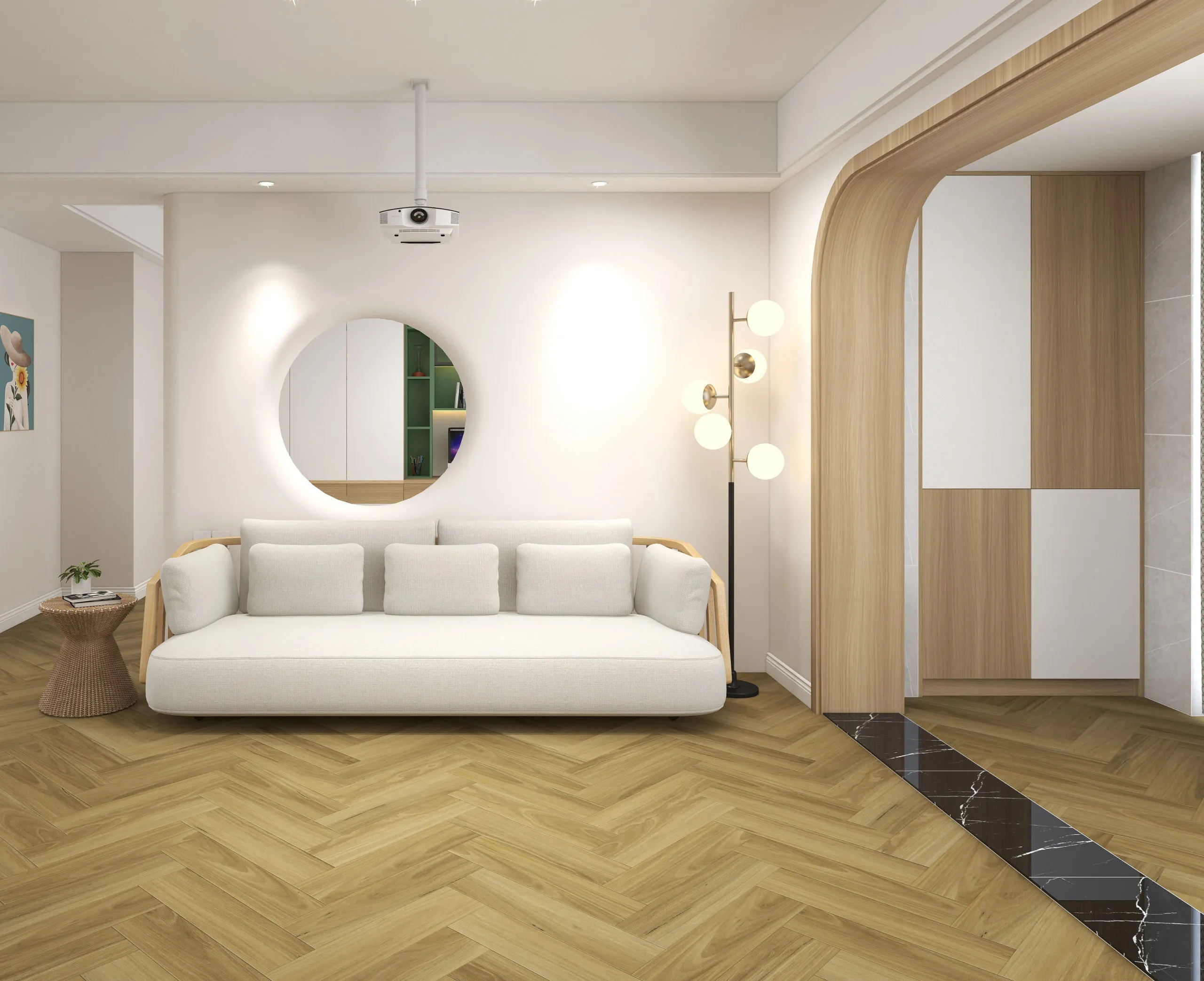
Herringbone engineered ranges typically cover three tonal zones: light naturals (clean, Scandinavian-leaning), warm mid-tones (ambient sands and honeyed oaks that pair well with brass and warm whites), and deeper browns (Fiano-style tones that ground a room with darker joinery). The brushed-and-oiled finishes used on most premium herringbones hide light scratches better than a flat lacquer because the surface texture already breaks up the light.
Maintenance
Day-to-day care is straightforward: dry-sweep or vacuum on a hard-floor setting, and damp-mop with a timber-safe cleaner — never a wet mop. Spot-repair is where oiled finishes earn their reputation: a scuff can be cleaned and re-oiled in the affected area without sanding the whole room. Lacquered finishes hold up harder day-one but can’t be patched the same way.
How it compares
If you’re cross-shopping a Highcountry-style herringbone against other patterns and products, the practical comparison points are: real timber surface or printed look (engineered vs hybrid), wear-layer thickness (2 mm one-time refinish vs 3-4 mm proper sand-back), and floating vs glue-down install. Our herringbone flooring hub has the full range across both engineered and hybrid, and the engineered timber flooring prices guide breaks down where the dollars go on a square-metre basis.
Should you buy it?
Herringbone engineered timber is a fair pick if you want a real-timber feature floor in a living, dining or bedroom, you’re prepared for a glue-down install and a higher labour bill, and your subfloor is flat enough to do justice to the pattern. If you’re laying through wet zones or want a softer install budget, a herringbone hybrid will get you the look without the timber-specific care. Our best flooring for bedrooms guide covers room-by-room picks, and we carry both engineered and hybrid herringbone across our Sydney and Brisbane showrooms — bring a swatch home, look at it under your own daylight, and see how it sits next to your joinery before you commit.
Ready to shop? Browse our full herringbone timber range online, or drop into our Sydney or Brisbane showroom to see the range in person.