
Short answer: engineered timber flooring is water-resistant, not waterproof. The real-timber top layer can shrug off everyday spills if you wipe them up the same day, but the plywood or HDF core underneath will swell and warp if water sits on a seam for hours. That’s why we don’t recommend engineered timber in bathrooms, laundries or any room with a real flood risk — for those, hybrid or SPC is the right call.
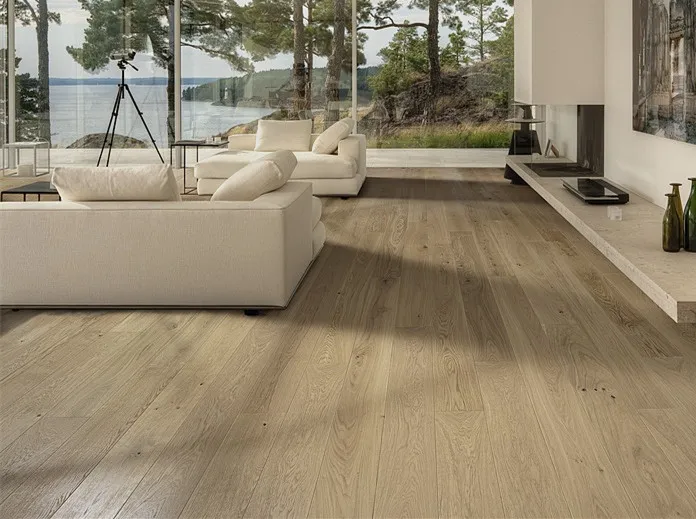
Why “water-resistant” and “waterproof” aren’t the same thing
Water-resistant means the floor handles short, surface-level exposure — a dropped glass of water, a wet paw print, a damp mop. Waterproof means the product itself can sit in standing water without absorbing it or breaking down. Engineered timber sits firmly in the first camp. SPC hybrid and good-quality vinyl sit in the second. If you want a deeper read on what genuinely qualifies, our guide to what flooring is waterproof covers the whole category.
How an engineered plank reacts to water
An engineered plank is built in three parts: a real-timber wear layer (the lamella) on top, a multi-ply or HDF core in the middle, and a balancing veneer underneath. The factory finish — usually UV-cured oil or polyurethane lacquer — is the first line of defence. Water beads on it, and if you mop it up, no harm done.
The weak points are the seams between planks and any cut edge around a kitchen island, doorway or skirting. Click-lock joints have a hairline gap by design. If water pools on that gap and sits, it wicks down to the core. HDF cores absorb water like a biscuit and swell at the edges; multi-ply cores hold up better but still aren’t immune. Once a core has swelled, sanding won’t bring the plank back — it has to be replaced.
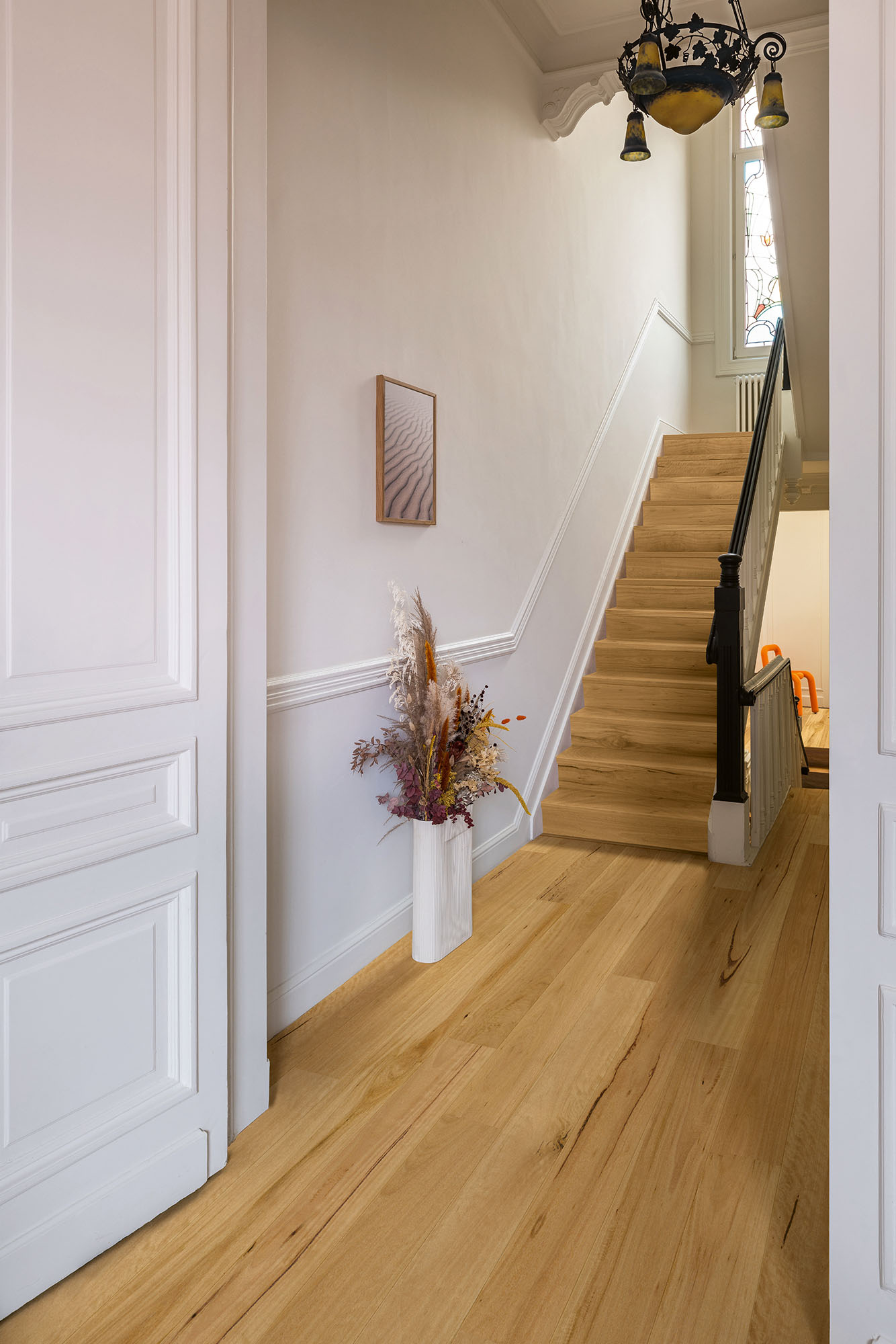
How long can a spill sit before it does damage?
- Under an hour: wipe up with a dry cloth, no damage even on the seam.
- 1-6 hours: surface is fine. The seam might absorb a little; dry it thoroughly and air-circulate the room.
- 6-24 hours: the core is at risk, especially with HDF. You may not see damage immediately — swelling can take another day or two to show.
- 24+ hours, or any standing water from a leak: assume the affected planks need to come up. The longer you leave it, the more planks get involved as water tracks along the seams.
Where engineered timber suits — and where it doesn’t
Engineered timber is the right pick for living rooms, dining rooms, hallways, bedrooms and most home offices. It also handles open-plan kitchen-living zones for most households, provided you’re realistic about wiping spills promptly and using mats at the sink and dishwasher. Our best flooring for kitchens guide covers the trade-offs in detail.
Where it doesn’t suit:
- Bathrooms, ensuites and powder rooms — too much standing humidity, too many splashes around the vanity.
- Laundries — front-loaders leak, hoses fail, and a slow drip under a machine can sit for weeks before you notice.
- Ground-floor rooms in flood-prone areas. We have a separate guide on the best flooring for a flood-prone house if that’s your situation.
- Pool rooms, sunrooms with high humidity swings, or any room with a slab moisture issue.
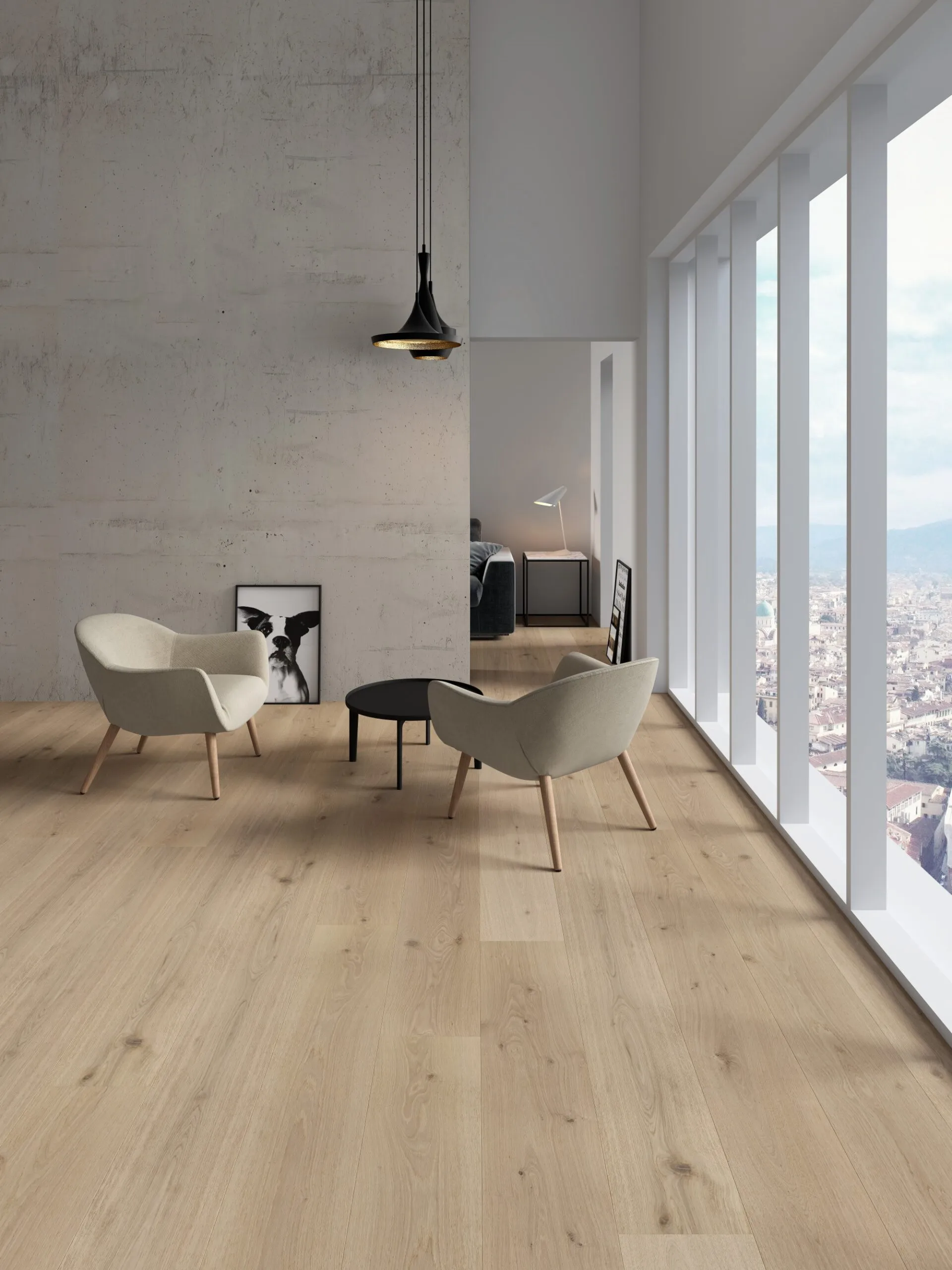
If you want the timber look in a wet zone
SPC hybrid is the honest answer here. The core is a stone-plastic composite that doesn’t swell, the wear layer prints convincingly as oak, blackbutt or spotted gum, and the click-lock joints are tighter than engineered timber. You give up the genuine timber feel underfoot, but you gain a floor you can lay in a bathroom or laundry without worrying about a leak ruining it. For pricing context across the engineered range, see our engineered timber flooring prices guide — that’s a useful baseline before comparing what hybrid costs in the same rooms.
Looking after engineered timber so it lasts
- Wipe spills the same day. Don’t leave a wet towel or pet-water bowl puddle on the floor overnight.
- Use a damp microfibre, not a sopping mop. Aim for ‘just damp to the touch’ — not visibly wet.
- Stick to a pH-neutral timber-floor cleaner. Vinegar and bleach both eat the finish over time.
- Mats at external doors and in front of the kitchen sink. Felt pads on chair legs.
- Keep indoor humidity in a sensible range — engineered timber moves less than solid timber, but it still has a comfort zone.
The verdict
Engineered timber is one of the best-looking, longest-lasting floors you can put in an Australian home — provided you put it in the right rooms. Treat it as water-resistant, not waterproof. Wipe spills promptly, keep it out of bathrooms and laundries, and pair it with hybrid or SPC in the wet zones. We carry both engineered timber and hybrid ranges across our Sydney and Brisbane showrooms, and we’re happy to walk you through samples side-by-side before you commit.
Ready to shop? Browse our full waterproof hybrid range online, or drop into our Sydney or Brisbane showroom to see the range in person.
Looking at real timber? Browse the full engineered timber flooring range at The Flooring Guys — oak and Australian species from 12mm to 21mm, with samples available.