
Australian flooring guide · Reviewed 2026
How Long Do Hybrid Floors Last?
Quick answer: A quality hybrid floor lasts 15-25 years in a normal Australian home, and the wear layer decides where in that range you land: 0.3mm suits bedrooms, 0.5mm a whole house, 0.7mm a busy family or light commercial floor.
Quick answer: A quality hybrid floor lasts 15-25 years in a normal Australian home, and the wear layer decides where in that range you land: 0.3mm suits bedrooms, 0.5mm a whole house, 0.7mm a busy family or light commercial floor. Sunlight, grit at entries and dragged furniture shorten it fastest.
A good-quality hybrid floor will last 20 to 30 years in a normal Australian home, and many manufacturers back that with a 25 to 30 year residential warranty. The actual lifespan you get depends on the plank you pick, the subfloor it sits on, and the routine you use to look after it. Here’s what we’ve seen across hundreds of installs.
The realistic lifespan range
For a household-grade SPC or RCB hybrid plank installed correctly, plan for around 20 to 30 years before the floor needs replacing for wear reasons. Budget hybrids at the lower end of the price bracket tend to land closer to 15 years; premium ranges with thicker wear layers and stronger click systems push past 30. Light commercial-rated hybrids hold up in busy retail or office fit-outs for 10 to 15 years.
Two numbers on the spec sheet do most of the work in predicting longevity:
- Wear layer thickness — measured in mils. A 0.3 mm (12 mil) wear layer is the residential standard. 0.5 mm (20 mil) and above is light commercial.
- Total plank thickness — typically 5 mm to 8 mm including the pre-attached IXPE underlay. Thicker planks resist subfloor imperfections and joint stress better.
If you want a deeper look at how different brands stack up on these specs, our guide to the best hybrid flooring brands in Australia covers the ranges we stock and what each one is built for.
What actually wears a hybrid floor out
Hybrid is waterproof and dimensionally stable, so the failure modes are different to timber or laminate. The things that cut a hybrid’s life short are usually:
- Direct UV exposure. Long stretches of unshaded north or west-facing sunlight will fade the printed decor layer over years. Sheers or blinds make a real difference.
- Grit and sand. Tracked-in grit acts like sandpaper on the wear layer. A doormat at every external door does more for longevity than any care product.
- Furniture point loads. Stiletto heels, unprotected chair legs and heavy castor wheels on a soft underlay can dent the surface. Felt pads and broad castor cups solve it.
- Sub-standard subfloor prep. A high spot or dip outside roughly 3 mm over 2 metres puts stress on the click joints. Over years, that’s where you’ll see lifting or gapping.
- Click-system quality. Cheaper 2G systems are more prone to peaking and gapping over time than newer 5G drop-lock joints. We’ve covered the difference in our 5G and 2G click systems explainer.
SPC vs RCB and how it affects lifespan
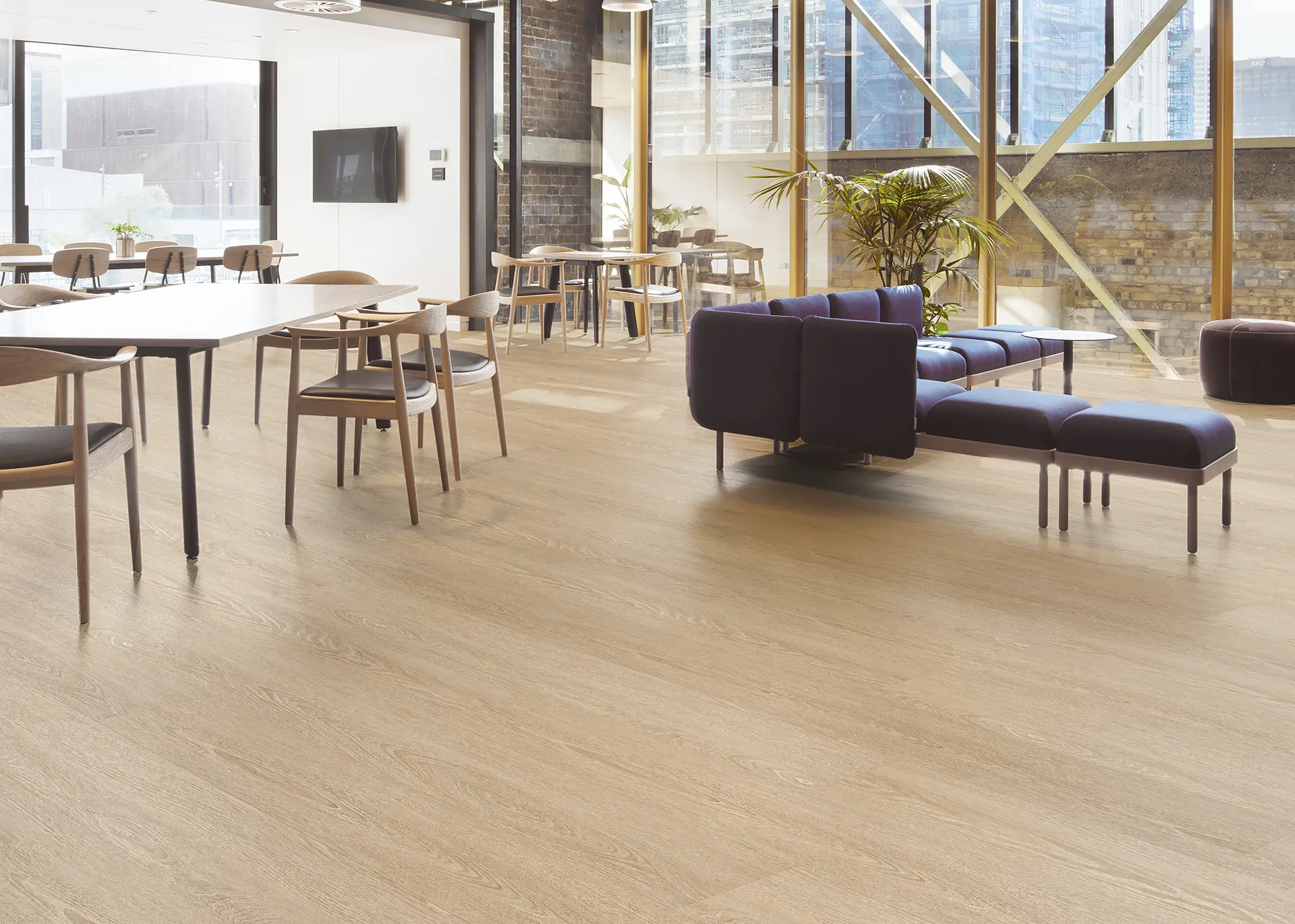
SPC (stone polymer composite) and RCB (rigid core board) are the two main hybrid core types we sell. Both will give you decades of service, but they fail in slightly different ways. SPC is denser and harder, so it shrugs off impact dents but can crack at the edges if dropped during install. RCB is softer underfoot and a bit more forgiving on imperfect subfloors, but it shows point loads more readily. Our SPC vs RCB comparison goes into the practical differences if you’re choosing between them.
Care that actually extends the life
Hybrid is one of the lowest-maintenance floors you can buy, but a few habits stretch the lifespan toward the upper end of the range:
- Sweep or vacuum (with a hard-floor head, not a beater bar) once or twice a week to lift grit off the surface.
- Damp-mop with a pH-neutral floor cleaner. Skip steam mops and any cleaner with wax, polish, or strong solvents.
- Wipe spills within an hour or two — the surface is waterproof, but pooled water can creep into joints over time on cheaper planks.
- Felt pads under all furniture legs, replaced when they wear flat.
- Keep indoor humidity in a normal range. Hybrid handles humidity swings far better than timber, but extreme dryness can still affect joint tightness on long runs.
When does it actually need replacing?
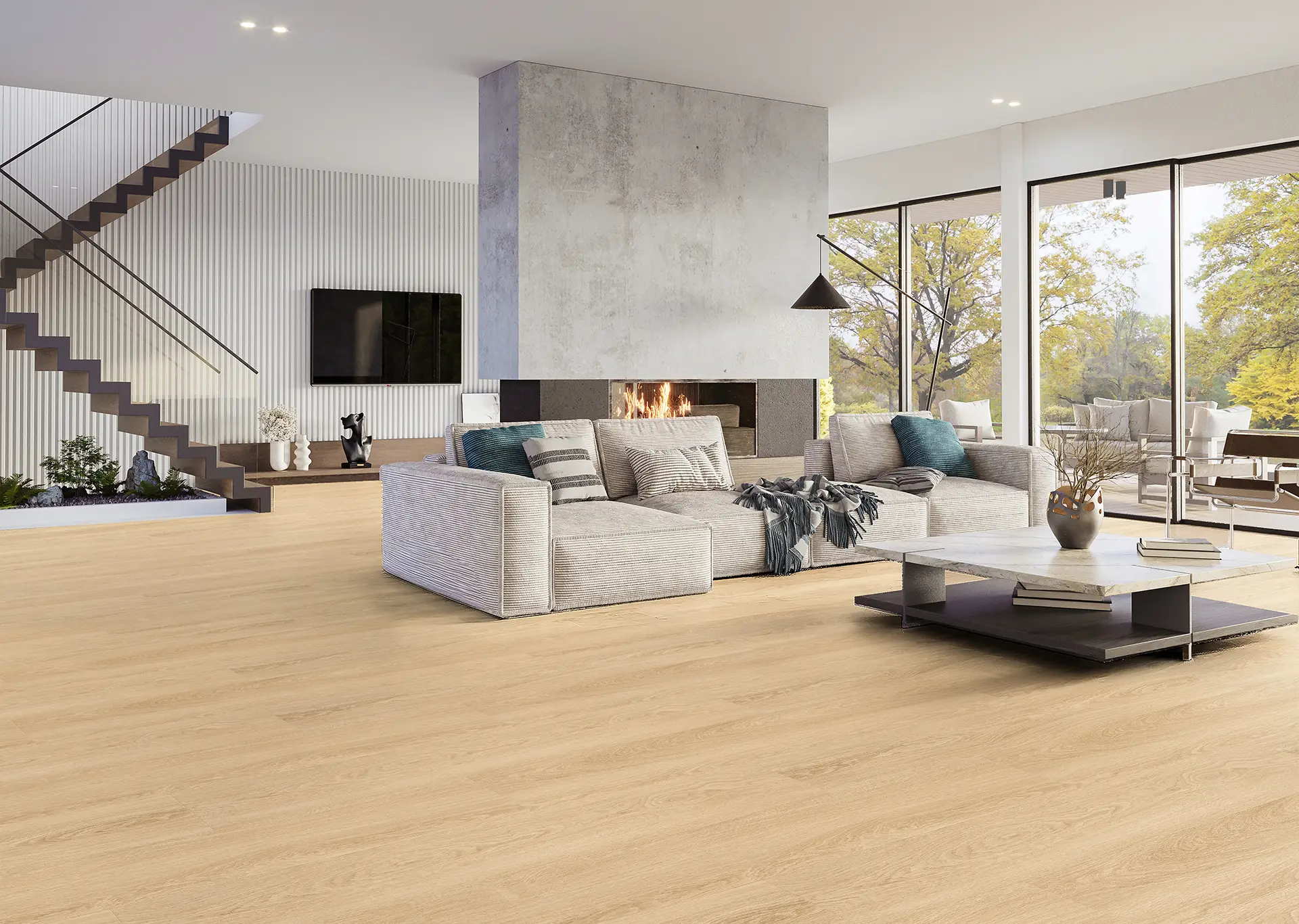
Most hybrid floors get replaced for cosmetic reasons before they fail structurally. The wear layer dulls in walking lanes, the decor fades against pieces that haven’t moved, or fashion shifts and the colour starts to feel dated. Structurally, the core can outlast the surface print by a wide margin, which is why warranties focus on the wear layer rather than the core.
If you’re at the budgeting stage and trying to weigh longevity against cost-per-square-metre, our hybrid flooring cost guide breaks down what you’re paying for at each price tier. Drop into our Sydney or Brisbane showrooms with your room dimensions and a photo of your subfloor and we’ll walk you through which ranges will actually go the distance in your home.
Sources and verification
- The Flooring Guys: current hybrid flooring range — current products, thickness filters and advertised supply pricing.
Compare the complete floor, not one headline number.
Bring your room dimensions, subfloor details and any strata requirement. We can help shortlist compatible products and prepare an itemised flooring quote.