
Australian flooring guide · Reviewed September 2026
Does Herringbone Make a Room Look Bigger or Smaller?
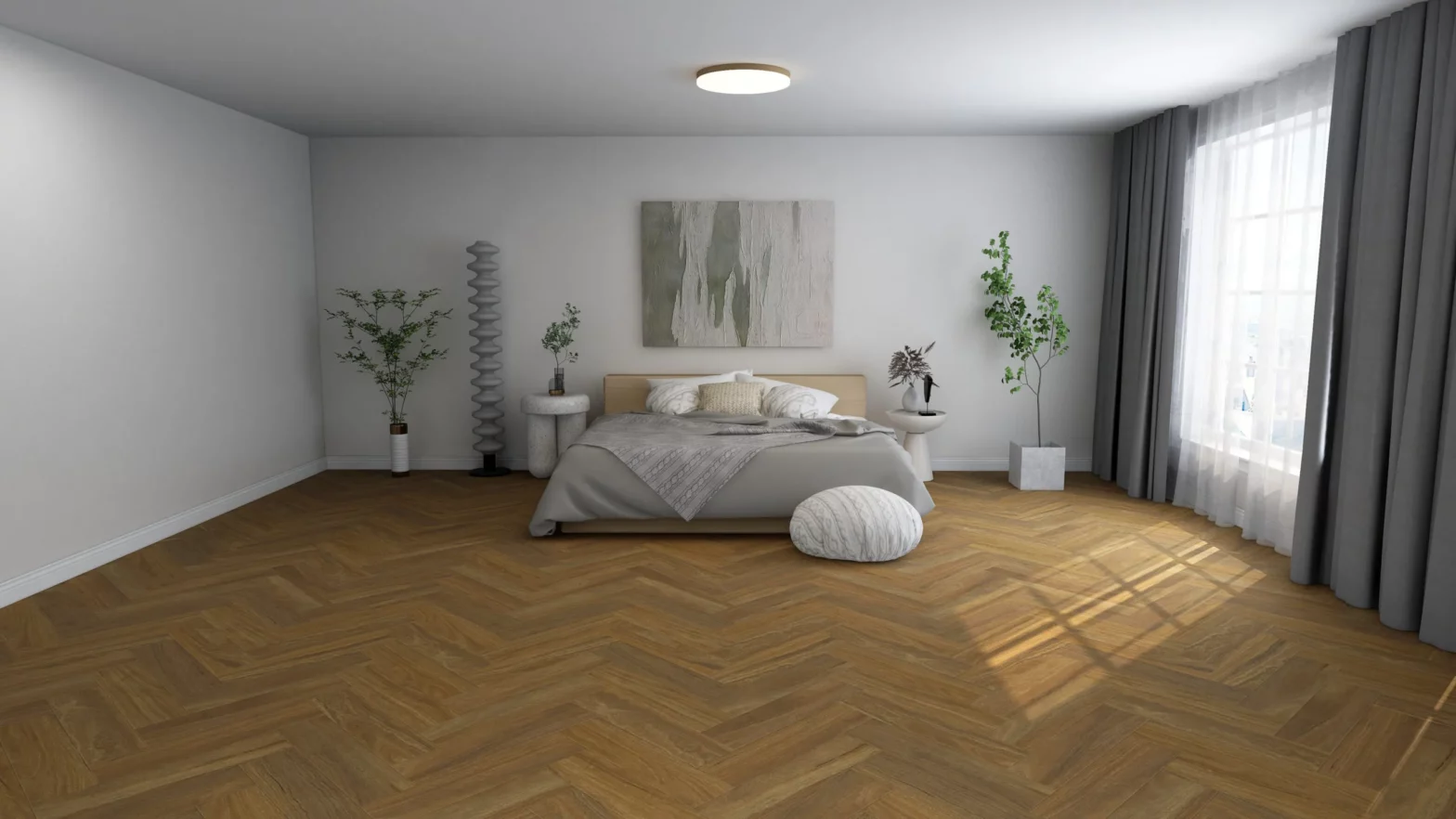
In most rooms, herringbone makes the space feel larger — not smaller — provided the block size, the direction of the pattern and the colour of the timber are matched to the room.
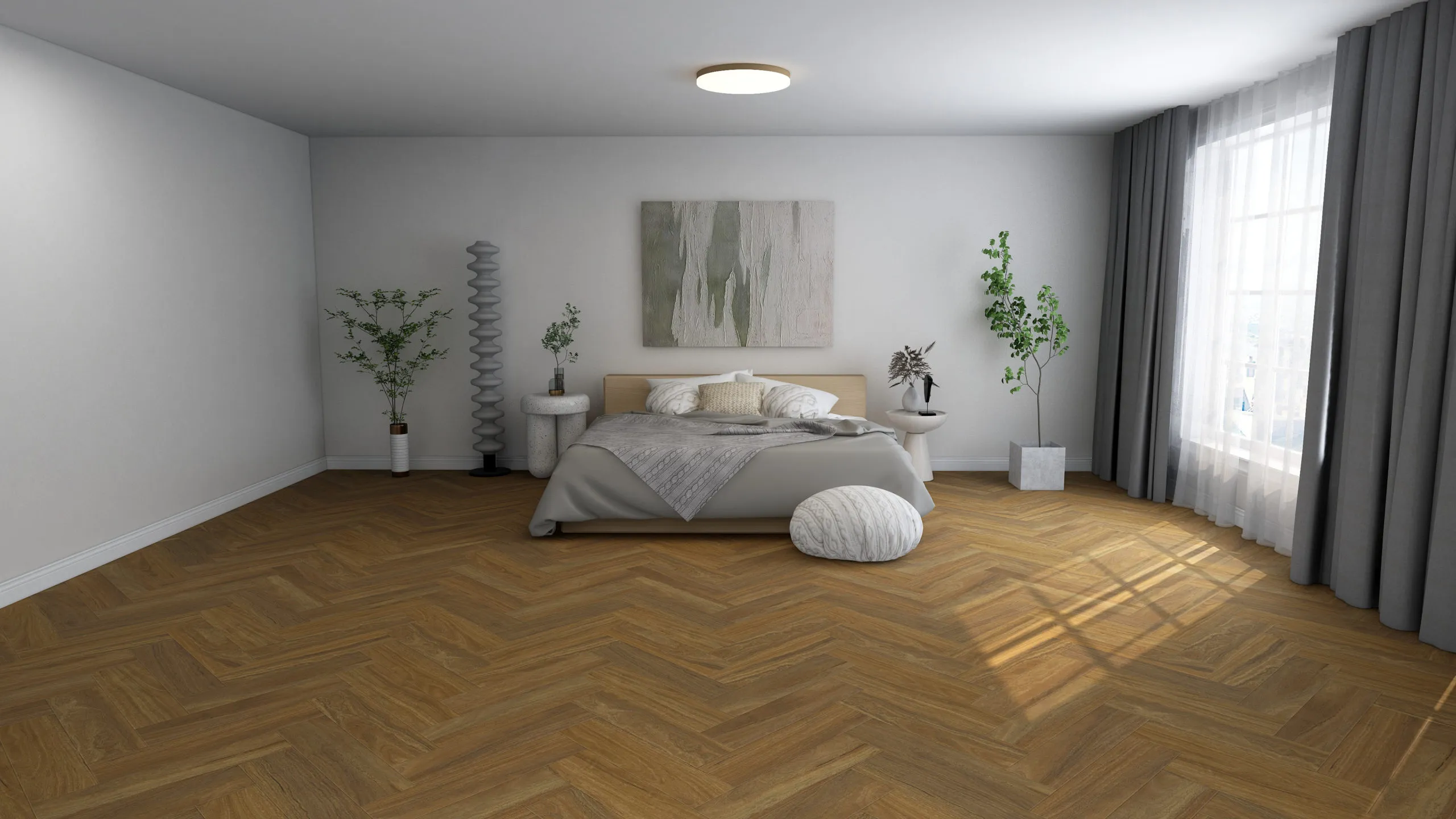
In most rooms, herringbone makes the space feel larger — not smaller — provided the block size, the direction of the pattern and the colour of the timber are matched to the room. The pattern works because the eye reads diagonal lines as longer than straight ones, and that visual stretch is what opens the room up. Get the proportions wrong, though, and a herringbone floor can do the opposite and make a small room feel busy and closed in.
Why herringbone tends to make a room look bigger
A standard plank floor draws the eye in one direction — usually toward the longest wall. Herringbone splits that single direction into two diagonals running at 45 degrees, which the eye reads as a wider field of view. The repeating zig-zag also gives the floor more visual texture, which stops the room from feeling flat. In practice, a kitchen-living room of 30 to 40 square metres laid in herringbone reads as more open than the same room in straight 1800 mm planks.
The other reason herringbone reads larger is that the pattern doesn’t have a strong start or end point. Straight planks have a visible run-out at each wall. Herringbone keeps the rhythm consistent right across the room, so the eye doesn’t stop at the edges.
Block size: the single biggest factor
The single biggest variable is block size. Herringbone blocks come in a wide range — typical sizes are 90 x 450 mm, 120 x 600 mm, and 150 x 750 mm. Pick the wrong size for the room and the pattern fights you.
- Small rooms (under 15 m²). Stick with smaller blocks — around 90 x 450 mm. A larger block in a small room only fits a handful of full repeats, which makes the pattern feel chopped up.
- Medium rooms (15-30 m²). A mid-size block (around 120 x 600 mm) is the safe pick. Enough repeats to read as a pattern, not so big that it overwhelms.
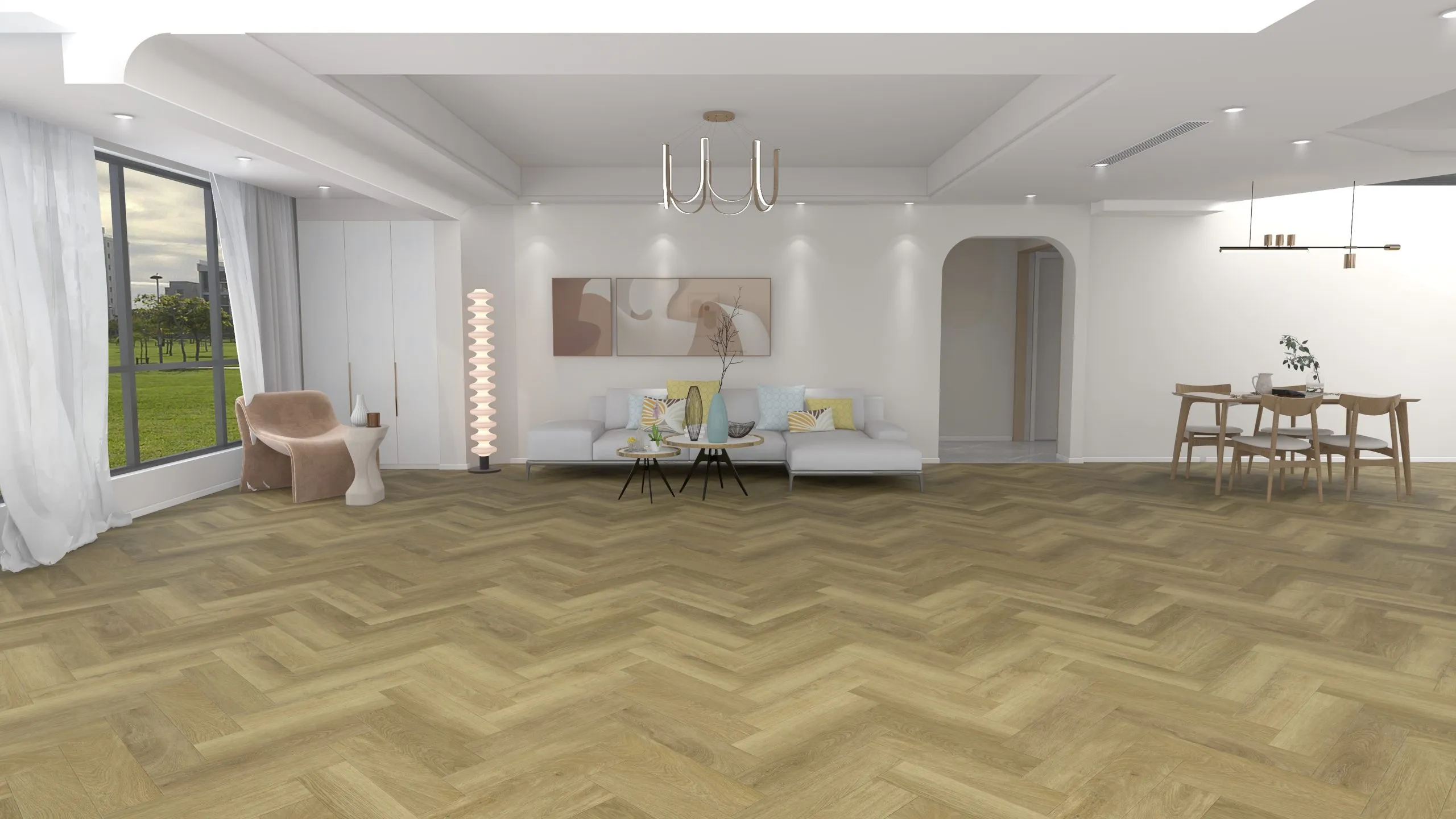
- Large open-plan rooms (30 m²-plus). Larger blocks (150 x 750 mm or wider) suit the scale and stop the floor from looking fussy under the volume of the room.
Pattern direction matters too
You can lay herringbone two ways: with the points of the V running parallel to the longest wall, or with the points running perpendicular. Running the points perpendicular to the longest wall pushes the eye across the narrow dimension, which makes a long, narrow room feel wider. Running them parallel reinforces the room’s existing length. In a square room, either works — pick the direction that points toward the strongest natural light source. We’d recommend setting out from the centre line of the room and snapping a chalk line so the pattern lands cleanly at both ends. The 3-4-5 rule for squaring a room is the install method we use to make sure the centre line is genuinely square before the first block goes down.
Colour does half the work
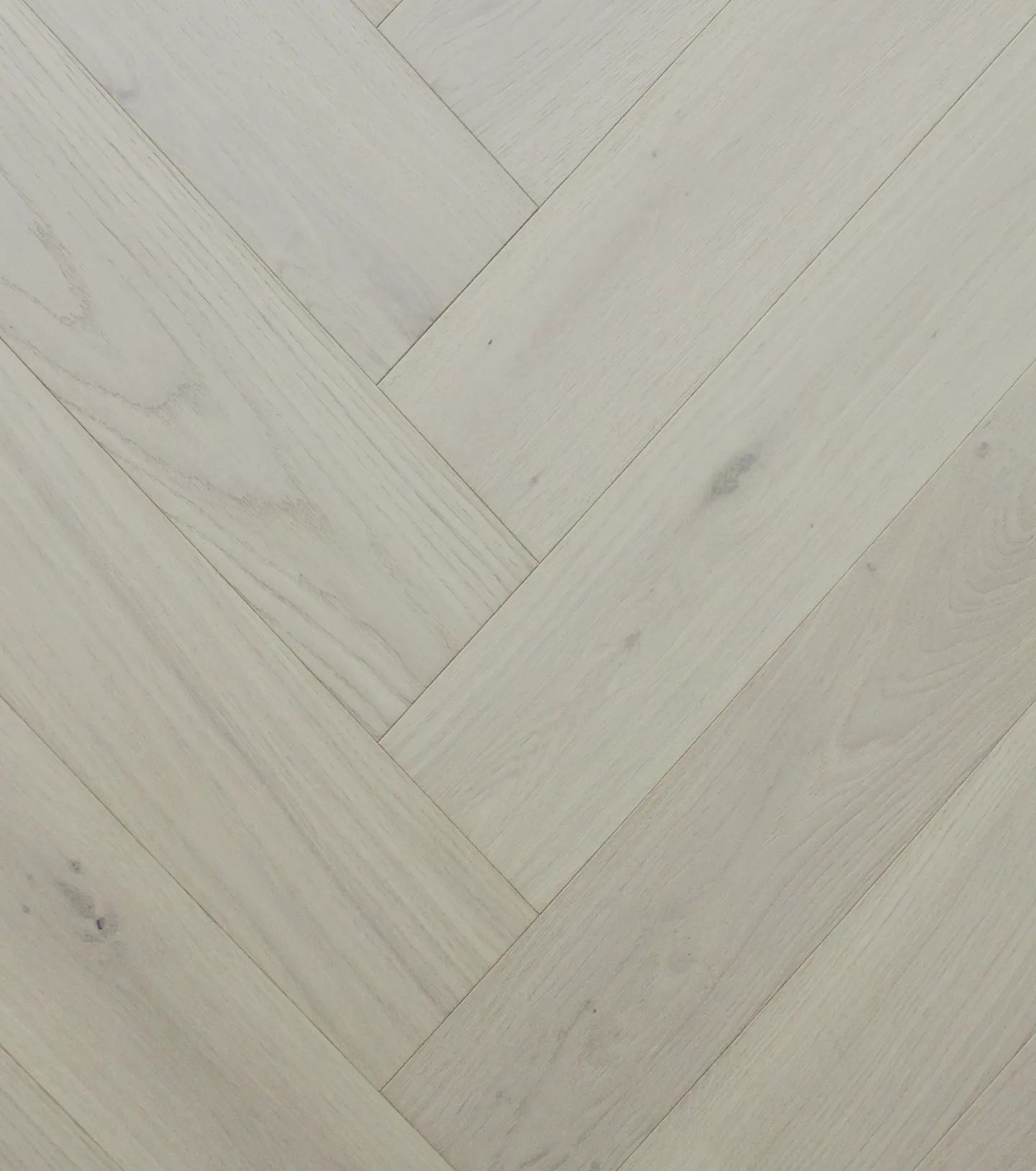
Lighter timbers reflect more daylight, which is the simplest way to make any room feel bigger. A pale European oak in herringbone — Ambient Sand or a similar light tone — bounces light off the floor and onto the walls, which lifts the perceived ceiling height as well as the floor area. A deep walnut or smoked oak herringbone looks beautiful but absorbs light, so in a small or north-facing room it can close the space down. If the room only gets a few hours of direct light a day, lean lighter.
When herringbone makes a room look smaller
There are three situations where herringbone works against you:
- Oversized blocks in a small room. A 150 x 750 mm block in a 3 x 3 m bedroom only fits a few repeats and reads as broken, not patterned.
- Very dark timber in a low-light room. Smoked or charcoal herringbone in a south-facing room with limited windows pulls the walls in.
- Heavy contrast grain in a busy interior. If your kitchen joinery, splashback and cabinetry are already patterned, a high-contrast herringbone adds a fourth visual layer the eye has to process.
Practical install notes
Herringbone takes longer to lay than straight planks — typically 20 to 30 per cent more labour — because every block has to be set out from a centre line, and the install crew checks the diagonals as they work across the room. Allow for a 10 to 12 mm expansion gap at the perimeter (covered by skirting or scotia) and a flatter subfloor than you’d need for straight planks: small undulations show up faster on a herringbone pattern. For the full range of timber, hybrid and engineered herringbone options we stock, see our herringbone flooring hub, and if you’re still weighing the pattern against straight planks, the choosing between herringbone and straight flooring guide covers when the labour premium is worth it.
The short answer
Herringbone makes most rooms look bigger as long as the block size matches the floor area, the pattern direction is set across the narrow dimension, and the timber tone leans light enough for the room’s natural light. Get those three calls right and the floor will open the space up. Get them wrong and you’ll feel the walls close in. We carry herringbone in engineered timber and hybrid across our Sydney and Brisbane showrooms — bring a swatch home and look at it under your own daylight before you commit.
What to verify before you buy
Match the exact range
Check the current data sheet, warranty, care guide and room-suitability statement for the product code you will receive.
Inspect the substrate
Measure moisture and flatness, confirm access and finished height, and price any preparation before installation begins.
Compare complete quotes
Include removal, preparation, waste, trims, stairs, doors, furniture and warranty responsibilities—not only the material rate.
Sources and verification
- The Flooring Guys: Flooring design articles — related guides and current product questions.
- Flooring installation cost estimator — indicative project inputs and installation scope.
Choose the floor around the room and the complete installation.
Bring room dimensions, subfloor details and any apartment or access requirements. We can help shortlist products and prepare an itemised quote.