
Australian flooring guide · Reviewed 2026
Can You Steam Mop Hybrid Flooring?
Quick answer: No. Steam drives moisture into the click joins and can lift or cloud the wear layer, and most manufacturers void the warranty if you use one.

Quick answer: No. Steam drives moisture into the click joins and can lift or cloud the wear layer, and most manufacturers void the warranty if you use one. Clean hybrid with a barely damp microfibre mop and a pH-neutral floor cleaner instead.
Short answer: no — most hybrid flooring manufacturers don’t recommend steam mops, and using one will usually void your warranty. Hybrid is waterproof, but waterproof isn’t the same as steam-proof. The heat and pressure can break down the click-lock seams, soften the wear layer, and push moisture into the joins. A damp microfibre mop with a pH-neutral cleaner does the same job without the risk.
Why steam mops and hybrid flooring don’t mix
A steam mop pushes water vapour onto the floor at around 100-120 degrees Celsius. That’s well above the temperature most hybrid wear layers and click-lock systems are tested for. Three things go wrong over time:
- The wear layer softens. The clear urethane top coat that protects the printed decor film is designed for room-temperature cleaning. Repeated steam exposure can cloud it, dull the finish, or cause it to lift in patches around traffic lanes.
- The click-lock joints open up. Hybrid planks expand and contract slightly with temperature. Forcing localised heat into a join cycles that movement faster than normal, and over months the seams can develop hairline gaps where moisture and grit collect.
- The SPC or composite core can warp at the edges. The core itself is waterproof, but the bevelled edges and printed surface aren’t sealed against pressurised steam. Edge swelling and lifted corners are the most common failure we see.
None of this happens after one use. It happens after months of weekly steam cleaning, and by then the damage isn’t covered. Check the care guide that came with your floor — almost every brand we stock specifically excludes steam mops from their approved cleaning methods.
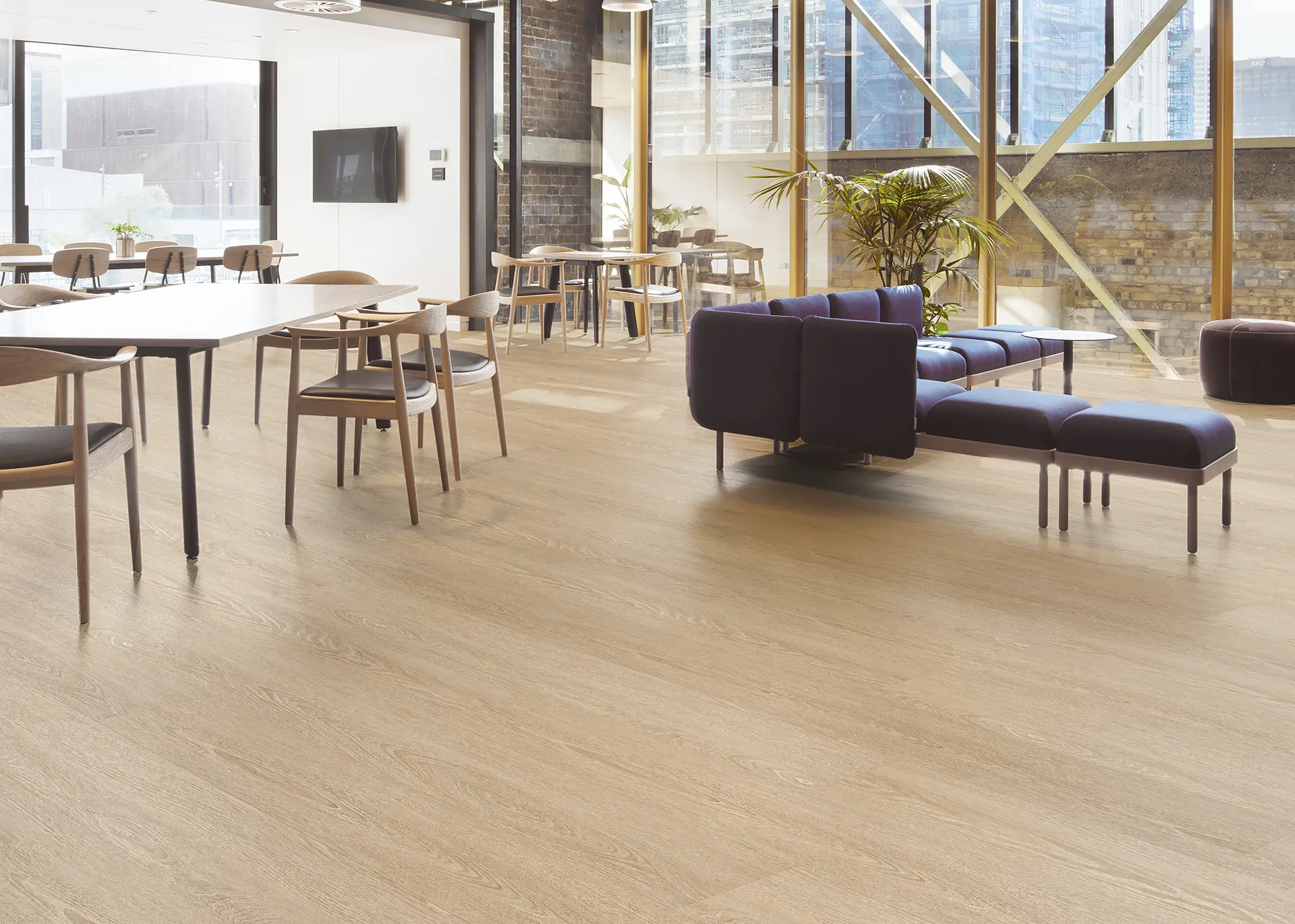
Waterproof vs steam-proof — what the spec actually says
Hybrid is rated waterproof because the SPC or limestone-composite core won’t swell when liquid sits on top. That’s a different test to running a steam mop over the surface for 20 minutes a week. The marketing copy on the box and the technical spec are doing different jobs. If you want the full picture of what waterproof actually means in practice, our waterproof flooring options guide covers it, and the difference between hybrid and SPC flooring piece is worth a read if you’re not sure which core you’ve got underfoot.
The cleaning routine we recommend
- Sweep or vacuum first. Use a soft-bristle broom or a vacuum on the hard-floor setting. Grit is the main thing that scratches a hybrid wear layer, so this step matters more than the mopping.
- Damp microfibre mop, not soaking wet. Wring the mop out until it’s barely damp. You’re picking up film, not flooding the floor.
- pH-neutral floor cleaner. A capful in a bucket of warm water. Avoid bleach, ammonia, vinegar (acidic over time), wax-based polishes, and anything labelled for timber floors — most of those leave a residue on hybrid.
- Dry-buff if streaks appear. A second pass with a dry microfibre pad sorts most streaking on darker hybrid colours.
For weekly cleaning that’s the whole routine. Spills get blotted with a paper towel as they happen — not steamed, not scrubbed.

What about low-steam or “hard floor” steam mops?
A handful of steam mops have a low-steam or hard-floor setting that drops the output. They’re less aggressive than a standard model, but they still push heat and moisture at the surface, and we’d still steer you away from them on hybrid. If your warranty says no steam mops, the brand isn’t carving out an exception for the low setting. The risk-to-reward isn’t there when a damp mop already cleans the floor properly.
Sticky messes, scuffs and the occasional deep clean
- Sticky residue (food, drink): warm water on a microfibre cloth, work in small circles. If it’s stubborn, a drop of dishwashing liquid in the water.
- Black scuff marks (rubber soles, furniture): a tennis ball or a melamine eraser sponge used lightly. Don’t grind — the eraser is mildly abrasive and will dull the finish if you lean on it.
- Pet accidents: blot, then clean with an enzymatic pet cleaner. Same reasoning as on vinyl — the wear layer is fine, but you don’t want anything sitting in the seams.
- Quarterly deep clean: a proper hybrid-safe floor cleaner (your retailer can recommend the brand that suits your range), applied with a damp microfibre and worked in. Still no steam.
The bottom line
Hybrid flooring is one of the easiest floors in Australia to keep clean — but only if you treat it the way the manufacturer intended. Skip the steam mop, stick to a damp microfibre and a pH-neutral cleaner, and your floor will look the same in ten years as it did the day it went down. If you’re still picking the right hybrid for a kitchen, laundry, or open-plan living area, our best hybrid flooring brands in Australia guide covers the ranges we stock, and the best flooring for kitchens piece is the natural follow-up read for the wettest room in the house.
Ready to choose? Browse the full hybrid flooring range at The Flooring Guys — every core type, thickness and finish we stock, with samples available.
Sources and verification
- The Flooring Guys: current hybrid flooring range — current products, thickness filters and advertised supply pricing.
Compare the complete floor, not one headline number.
Bring your room dimensions, subfloor details and any strata requirement. We can help shortlist compatible products and prepare an itemised flooring quote.