
Australian flooring guide · Reviewed 2026
Can You Put a Kitchen on Hybrid Flooring?
Quick answer: Yes, and it is one of the most common installs.
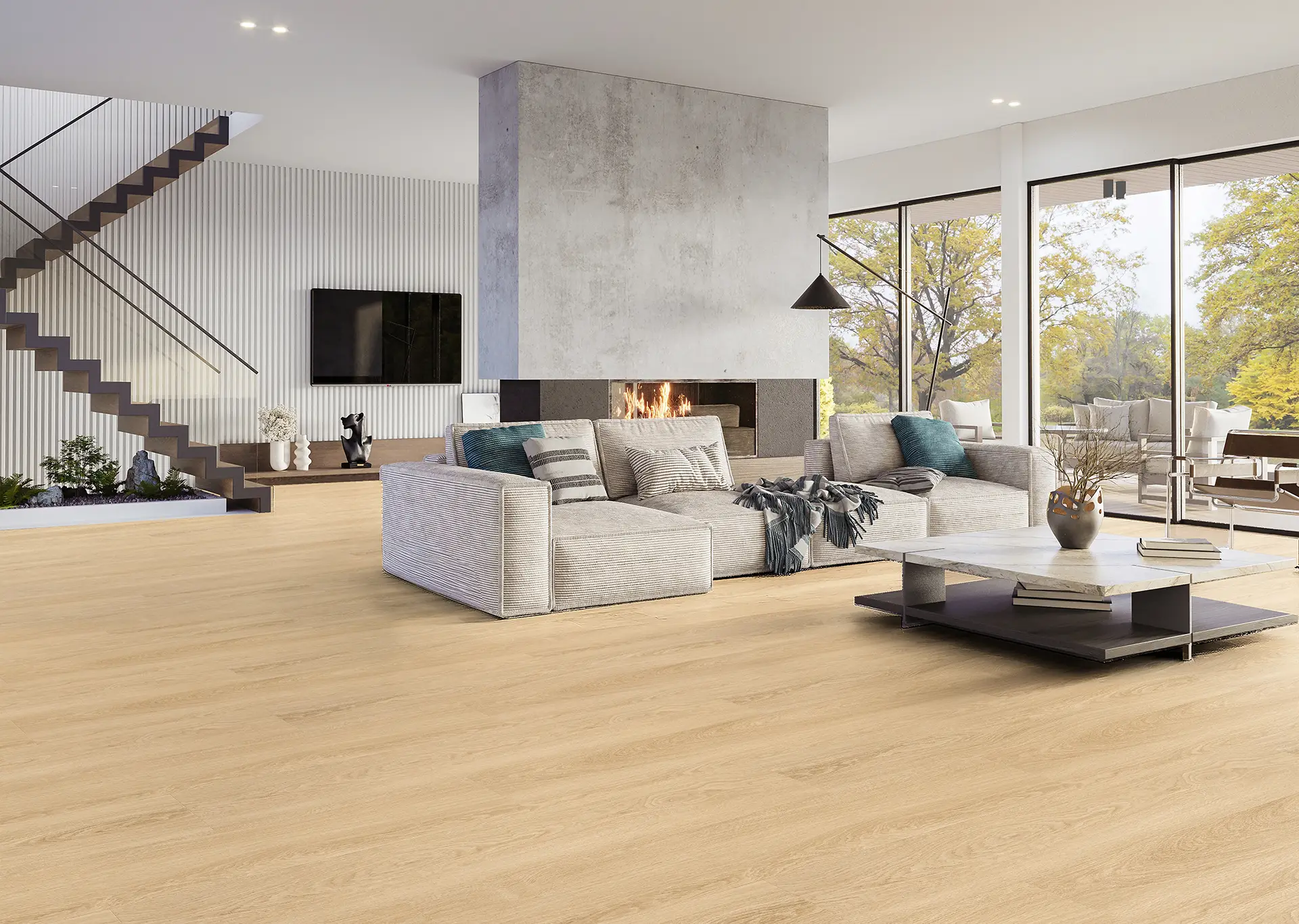
Quick answer: Yes, and it is one of the most common installs. The waterproof core handles spills and a click-lock plank can run straight through from the living area. Lay the floor around the cabinets rather than under them, so the floating floor stays free to move and the cabinets are not pinning it.
Yes — hybrid flooring is a sensible pick for a kitchen, and it’s one of the most common installs we do. The core is waterproof, the wear layer handles dropped pans and dog claws, and a click-lock plank can run uninterrupted from the kitchen through the living and dining zones for a single unbroken floor. The detail that matters is which hybrid you choose and how the install handles the spots that get wet — under the dishwasher, around the fridge, and at the perimeter against the cabinetry.
Why hybrid suits kitchens
Hybrid flooring uses a rigid core (SPC or RCB) sandwiched between a printed timber-look decor layer and a clear wear layer, with a pre-attached IXPE acoustic underlay on most ranges. The core doesn’t swell when it gets wet the way laminate’s HDF core does, and it’s dimensionally stable across the temperature swings a kitchen sees between a cold morning and a hot oven on a 35-degree day.
Practically, that means three things in a kitchen:
- Spills from the sink, dishwasher or kettle wipe up without staining or swelling the plank.
- The wear layer (typically 0.3 mm to 0.55 mm on the ranges we stock) shrugs off dropped cutlery and pet claws.
- A click-lock install lets you run one floor across kitchen, dining and living without a transition strip every time the room changes.
For a wider room-by-room view of what works in a wet zone, see our best flooring options for kitchens guide.
What to check on the spec sheet
Not every hybrid plank is built the same. Before you commit, look at four things:
- Core type. SPC (stone polymer composite) is denser and more stable. RCB (rigid core board) is slightly softer underfoot and a bit more forgiving on imperfect subfloors. Both use water-resistant rigid cores, but the installed click floor is not a waterproofing membrane.
- Wear-layer thickness. 0.3 mm is the residential entry point. 0.5 mm and above gives you better scratch resistance and a longer life under a kitchen’s daily traffic. Anything thinner, we’d skip for a busy kitchen.
- Click system. 5G-style drop-lock joinery is faster to install and holds the joint tight under pan drops. 2G is older and a touch more fiddly, especially around cabinetry cut-outs.
- Total plank thickness. 6 mm to 8.5 mm is the working range. Thicker planks can feel more substantial, but they do not compensate for subfloor undulation outside the manufacturer’s tolerance.
If you want a brand-by-brand view, our roundup of the best hybrid flooring brands in Australia covers the ranges we stock and where each one fits.
Installation details that matter in a kitchen
Lay the floor before the cabinets — usually
For a new kitchen, we’d recommend laying the hybrid first and then setting the cabinetry on top. It gives you a continuous floor under the kickboards and means a future cabinet refresh doesn’t leave a gap where the plank stops. The exception is a heavy stone benchtop on a tall island — if the island is taking serious load, lay the floor up to the island footprint, not under it, so the click joints aren’t carrying weight they aren’t designed for.
Expansion gap at the perimeter
Hybrid is dimensionally stable but not inert. Leave a 8-10 mm expansion gap at every wall, around every column, and at door thresholds. In a kitchen, that gap gets covered by the kickboard or a quad — but it has to be there, or the floor has nowhere to move and the joints will telegraph at the long runs.
Dishwasher and fridge cut-outs
The dishwasher cavity is where most kitchen floor failures start, regardless of material. With hybrid, run the plank under the dishwasher and silicone-seal the perimeter where the plank meets the cabinetry, so any slow leak from a hose fitting can’t track sideways under the kicks. Same approach at the fridge cavity — and leave enough plank under the fridge that you can slide it out without the wheels dropping off the edge of the floor.
Subfloor flatness
Hybrid won’t hide undulation. A high spot in the slab will telegraph through and stress the click joint until it pops. We’d recommend self-levelling anything outside a 3 mm tolerance over a 2 m span before install — particularly in older homes where the slab edge near the back wall has often dropped a few millimetres.
Where hybrid doesn’t suit a kitchen
If your kitchen is a true wet zone with a drain in the floor (an outdoor or alfresco kitchen, for example), tile is still the better call. Hybrid is waterproof on the surface, but the click joints aren’t a sealed system — pooling water that sits for hours can find its way through. Hybrid is built for spills and quick clean-ups, not for standing water.
Heavy commercial kitchens and high-heat zones directly under a free-standing oven also push hybrid past its design brief. For a normal residential kitchen — even a busy family one — it’s well inside spec.
Cost expectations
Hybrid pricing in Australia typically runs from around $35 per m² at the residential entry point through to $75-plus per m² for thicker SPC ranges with a 0.55 mm wear layer. Installation is usually quoted separately, and a kitchen install will sit at the higher end of the labour range because of the cabinetry cut-outs and the silicone detail at wet appliances. The hybrid flooring cost guide breaks the numbers down range by range.
The short answer
Hybrid flooring is one of the better picks you can make for an Australian kitchen — waterproof core, hard wear layer, and a single floor that runs through to the rest of the open-plan zone. Pick a plank with a 0.5 mm wear layer or better, leave the expansion gap, silicone the dishwasher perimeter, and lay it on a flat subfloor. For a wider view of what else passes the wet test, see our guide to waterproof flooring options. We carry hybrid across our Sydney and Brisbane showrooms — bring a swatch home and look at it next to your joinery before you commit.
Sources and verification
- Karndean Australia/NZ 2G rigid-core installation guide — example of product-specific flatness, conditioning and heating limits.
- NCC 2022 Housing Provisions, Part 10.2 — wet-area waterproofing and water-resistance requirements.
Compare the complete floor, not one headline number.
Bring your room dimensions, subfloor details and any strata requirement. We can help shortlist compatible products and prepare an itemised flooring quote.