
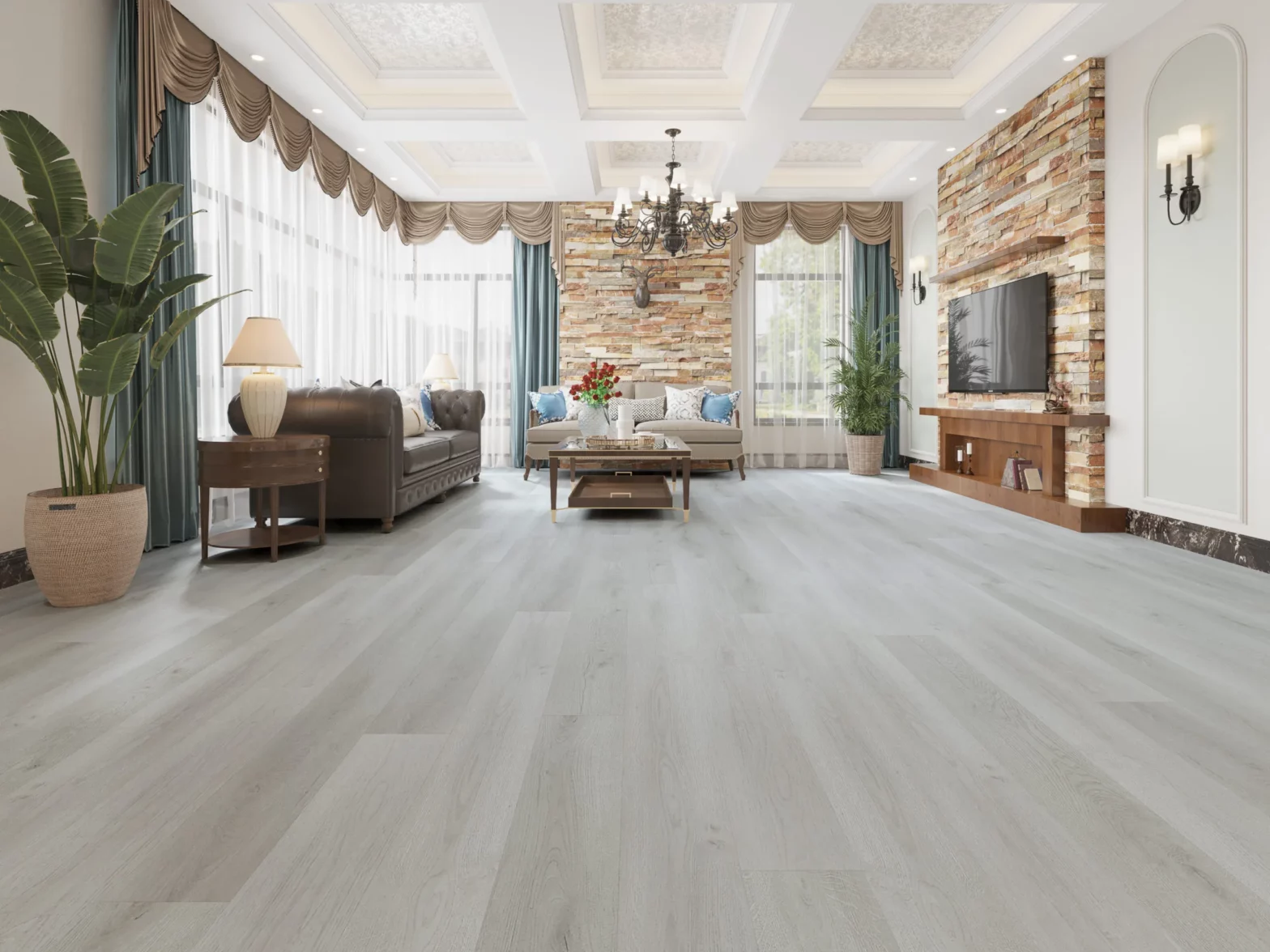
For most Australian homes, an 8 mm laminate plank with an AC4 wear rating is the sweet spot — stable enough to lay over a typical timber or concrete subfloor, hard-wearing enough for kitchens and hallways, and priced sensibly. Thinner 6-7 mm boards suit bedrooms and low-traffic rooms; 10-12 mm is worth the upgrade if you want a more solid feel underfoot or you’re laying in a busy household with kids and pets.
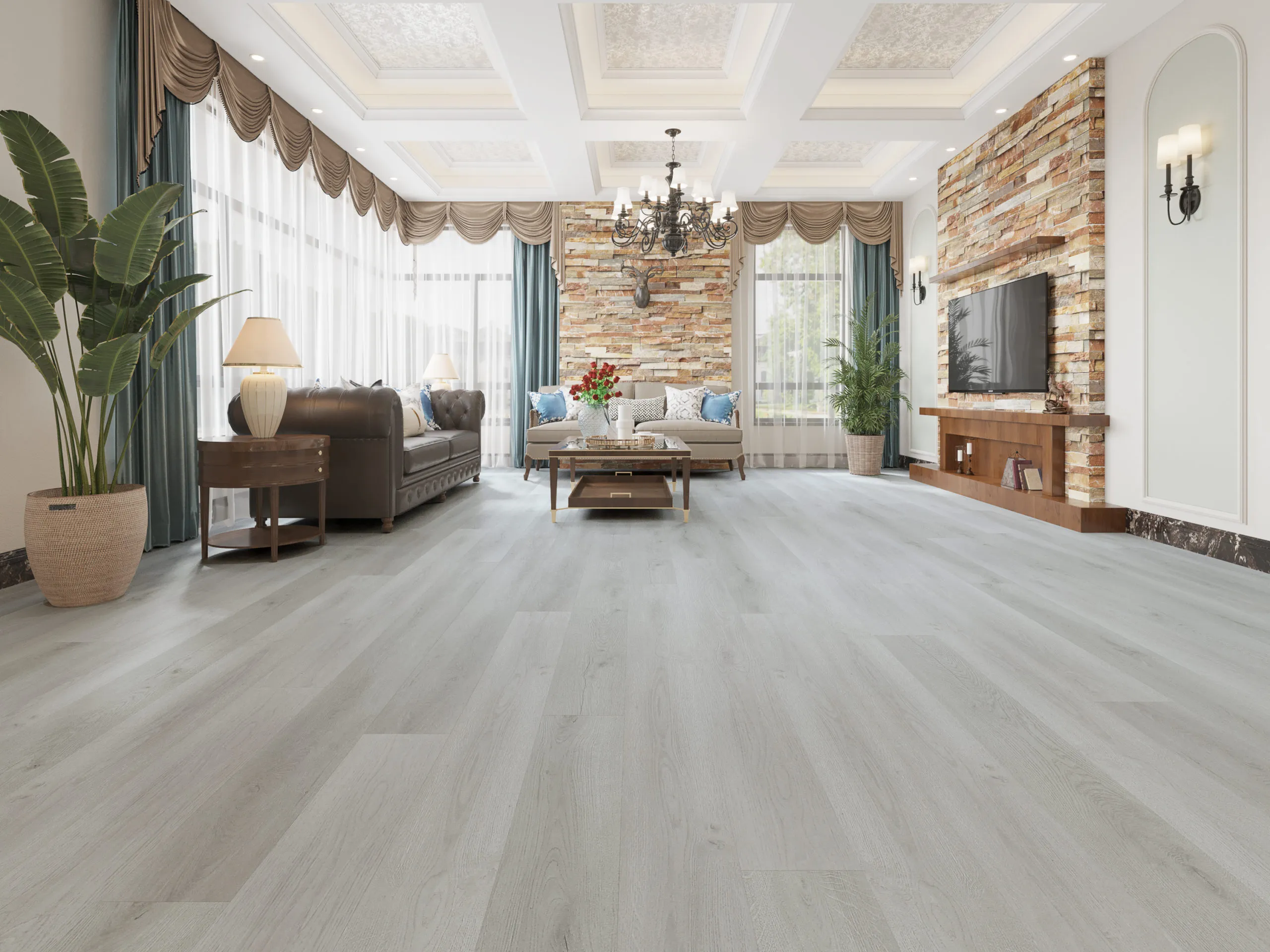
What laminate thickness actually measures
When a brand quotes a laminate plank as 8 mm or 12 mm, that’s the total thickness of the board: the HDF core, the printed decor layer, the clear wear layer on top and the balancing layer underneath. It does not include any pre-attached underlay — if the spec sheet says “8 mm + 2 mm IXPE”, that’s an 8 mm plank with a 2 mm acoustic pad bonded to the back.
Most laminate sold in Australia falls into one of three thickness brackets:
- 6-7 mm. Budget end. Works for bedrooms, studies and rental refurbs where foot traffic is light and the subfloor is already flat.
- 8-9 mm. The mainstream choice. Stable, quiet enough with a decent underlay, and forgiving on minor subfloor variation.
- 10-12 mm. Premium. Feels closer to engineered timber underfoot, hides small subfloor imperfections better, and the click joints tend to be deeper and more durable.
Why the wear-layer rating matters more than the thickness
Plank thickness gets all the attention, but the AC rating on the wear layer is what determines how the floor actually looks after five years. The AC scale runs from AC1 (light residential) up to AC6 (heavy commercial). For an Australian family home, AC4 is the practical minimum and AC5 is worth paying for if the floor is going through a kitchen or main entry.
- AC3 — light residential, suits bedrooms only.
- AC4 — heavy residential or light commercial; safe for living areas, hallways, kitchens.
- AC5 — heavy commercial; the choice if you have large dogs, high-traffic entries, or you’re laying through a home office that gets used as a showroom.
A 12 mm plank with an AC3 wear layer will scratch faster than an 8 mm plank rated AC5. Look at both numbers, not just the millimetres.

Picking a thickness room by room
Bedrooms and studies
7-8 mm is fine here. Foot traffic is low, furniture is mostly static, and you’ll save the budget for the rooms that need it. We’ve covered the broader pick in the best flooring for bedrooms guide.
Living, dining and hallways
Go to 8 mm minimum, AC4 minimum. These rooms see daily use, dragged chairs and the bulk of foot traffic. The extra few millimetres also help with acoustic comfort over a concrete slab.
Kitchens and entries
10-12 mm with an AC5 wear layer if the budget allows. Kitchens cop dropped pans, dragged stools and water from the sink area. If a fully waterproof core matters more to you than the laminate look, hybrid is the better call — see our best hybrid flooring brands in Australia guide.
Wet zones
Don’t lay laminate in bathrooms or laundries, regardless of thickness. Even “water-resistant” laminate has an HDF core that will swell if water sits in the joints. For a full breakdown of what does and doesn’t suit wet rooms, see our waterproof flooring options guide.
What else affects how the floor performs
Thickness is one variable. The other three that change the day-to-day feel of a laminate floor:
- Underlay. A 2-3 mm acoustic underlay under an 8 mm plank can feel quieter and warmer than a 12 mm plank laid directly on slab.
- Click system. Newer 5G drop-lock systems are quicker to install and tend to hold tighter than older 2G angle-only systems. We’ve covered the trade-offs in our guide to 5G and 2G click systems.
- Subfloor flatness. Laminate is unforgiving of high spots. Anything outside a 3 mm tolerance over a 2 m span needs self-levelling before install — and a thicker plank will not fix this.
The short answer
Most Australian homes are well served by an 8 mm laminate plank with an AC4 wear layer and a quality acoustic underlay. Step up to 10-12 mm and AC5 if the floor is going through a kitchen, an entry, or a busy family living area. Step down to 7 mm only for bedrooms with light traffic. We carry the full range across our Sydney and Brisbane showrooms — bring your subfloor measurements, take a sample home, and we’ll match the thickness to the room rather than the price tag.
Ready to shop? Browse our full laminate flooring range online, or drop into our Sydney or Brisbane showroom to see the range in person.