
Timber flooring in Australia is governed by a handful of standards that cover how boards are milled and graded, how moisture content is measured, how the floor structure is built and how the finished floor is installed and assessed. Most homeowners never read them, but knowing which one covers what helps when you are comparing products or dealing with a warranty claim.
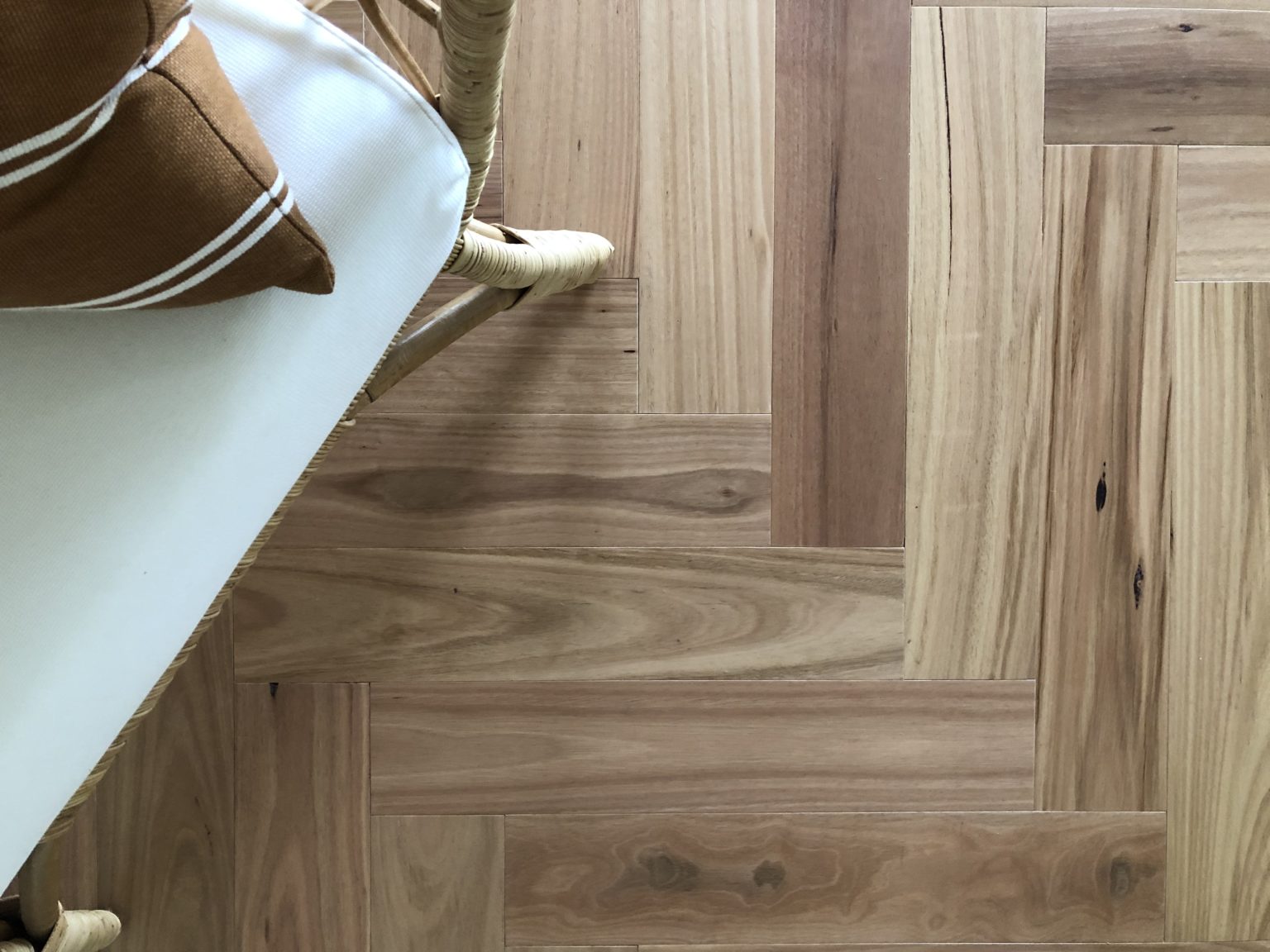
AS 2796: hardwood boards
AS 2796 (Timber – Hardwood – Sawn and milled products) is the standard that solid hardwood flooring is milled to. Part 1 sets the product requirements, Part 2 covers grading, and Part 3 covers the profiles and dimensions of tongue-and-groove boards. It defines the grades you see on a spec sheet, Select, Standard (or Medium Feature) and High Feature, by how many natural features such as gum veins, knots and borer holes are allowed. It also sets the moisture content range at manufacture, typically 9 to 14 per cent for flooring.
AS 4785: softwood boards
AS 4785 is the equivalent for softwood flooring such as cypress and radiata pine, covering grading, moisture content and dimensions.
AS/NZS 1080: test methods
AS/NZS 1080 sets out how timber is tested, and Part 1 is the moisture content test that installers use to check boards and subfloors before laying. A moisture reading taken to this method is what a supplier will ask for if a floor moves after installation.
AS 1684: the structure underneath
AS 1684 (Residential timber-framed construction) covers joists, bearers and subfloor ventilation for timber-framed homes. It matters for flooring because joist spacing determines the minimum board thickness that can be laid directly over joists, and subfloor ventilation determines whether the boards will stay stable.
Engineered timber and floating floors
There is no single Australian standard for engineered timber boards. Reputable manufacturers reference the European standard EN 13489 for multi-layer parquet, the Australian slip test AS 4586 for P ratings, and for apartments the National Construction Code’s acoustic requirements. Installation practice follows the Australasian Timber Flooring Association (ATFA) industry guides, which suppliers write into their warranties, and AS 1884 applies to resilient floating floors such as hybrid and vinyl. Our note on standards for floating floors covers that side.
What this means when you buy
- Ask which grade the board is under AS 2796 if it is solid hardwood; “feature grade” is not one grade.
- Expect the installer to take moisture readings of both boards and subfloor and record them.
- Check that an engineered board states its slip rating (P3 is usual for a matte timber floor) and its acoustic data if you are in a strata building.
- Warranties normally require installation to the ATFA guidelines and the manufacturer’s instructions; a floor laid outside them may not be covered.
Every board in our engineered timber flooring range lists its species, thickness, lamella depth, slip rating and warranty on the product page so you can check it against these requirements.
Frequently asked questions
Not a dedicated one. Manufacturers reference EN 13489 for construction, AS 4586 for slip and the ATFA guides for installation.
Solid boards are milled at 9 to 14 per cent. On site the boards and subfloor should be within a few per cent of each other and of the expected in-service moisture for the region.
They are called up through warranties, building contracts and, for structural elements, the National Construction Code. Disputes are usually assessed by an ATFA inspector against the relevant standard.