
Lifeshield is a long-running Australian laminate range that you’ll see in plenty of mid-budget renovations and rental refurbs. It earns its place by being honest about what it is — a printed timber-look floor with a tough wear layer over an HDF core — at a price point well below engineered timber or hybrid. This review covers what’s actually in the plank, where Lifeshield suits, where it doesn’t, and how it compares to the waterproof laminate and hybrid options now sitting next to it on the showroom floor.

What you’re actually buying
Lifeshield is a high-density fibreboard (HDF) core plank with a printed decor paper and a melamine wear layer pressed over the top. Most planks in the range are 8-12 mm thick with an AC4 or AC5 abrasion rating, which is the spec you want for residential and light commercial traffic. The decor paper is what gives you the timber look — Spotted Gum, Blackbutt, oak — and the wear layer is what stops it scuffing through to the print.
- HDF core, around 8-12 mm thick depending on the range
- AC4-AC5 wear-layer rating (residential plus light commercial)
- Click-lock joinery, glueless install over a level subfloor
- Embossed surface texture in most ranges for a more realistic timber feel
- Manufacturer warranty against fading, staining and surface wear under residential use
Where Lifeshield works well
Lifeshield is a fair pick for living rooms, hallways, and bedrooms in homes where the budget won’t stretch to engineered timber but the look needs to read as a real timber floor. The AC rating means it shrugs off chair-leg scratches and the daily knock-about of a busy household. It’s also a sensible choice for investment properties — the install is fast, the colour range is broad, and replacing a damaged plank later is straightforward if you’ve kept spares from the original lot.

Where it doesn’t suit
Standard laminate is moisture-sensitive. The HDF core swells if water gets in through the joints and sits there, and that swelling doesn’t reverse — once an edge has lifted you’re replacing planks. So Lifeshield isn’t the right call for bathrooms, laundries, or any room where standing water is a real risk. Kitchens are a judgement call: a household that wipes spills quickly will be fine, a household with a leaky dishwasher won’t. If you want a timber-look floor that handles wet zones properly, look at hybrid or a waterproof laminate range instead — we’ve covered the full picture in the waterproof flooring options guide.
Lifeshield also won’t hide an uneven subfloor. Laminate needs the slab or particleboard underneath to sit within about 3 mm over a 2 m span, otherwise the click joints flex and pop apart over time. Self-level anything outside that tolerance before install.
The range and colours
The Lifeshield range covers the colours most Australian buyers ask for: Natural Oak, Limed Oak, Spotted Gum and Blackbutt-leaning tones. The lighter oaks suit bright, north-facing open-plan layouts and pair well with white kitchen joinery. The deeper Spotted Gum reads warmer and works in heritage-leaning interiors. Width and length vary by sub-range, but most planks sit in the 190-220 mm width band that’s standard for Australian laminate today.
Installation notes
Lifeshield uses a click-lock joint, so it goes down as a floating floor over a foam or rubber underlay. A few things make the difference between a clean install and a noisy one:
- Acclimatise the boxes in the room for at least 48 hours before install — laminate moves with humidity.
- Leave a 10-12 mm expansion gap at every wall and around fixed cabinetry.
- Use the right underlay: a 2-3 mm acoustic-rated foam under most rooms, a moisture-barrier underlay if you’re laying over concrete slab.
- Stagger end joints by at least 300 mm so the pattern doesn’t telegraph.
If you’re not sure which click profile your range uses, our 5G and 2G click systems explainer covers the difference and what each means for install speed.
How it compares to hybrid and waterproof laminate
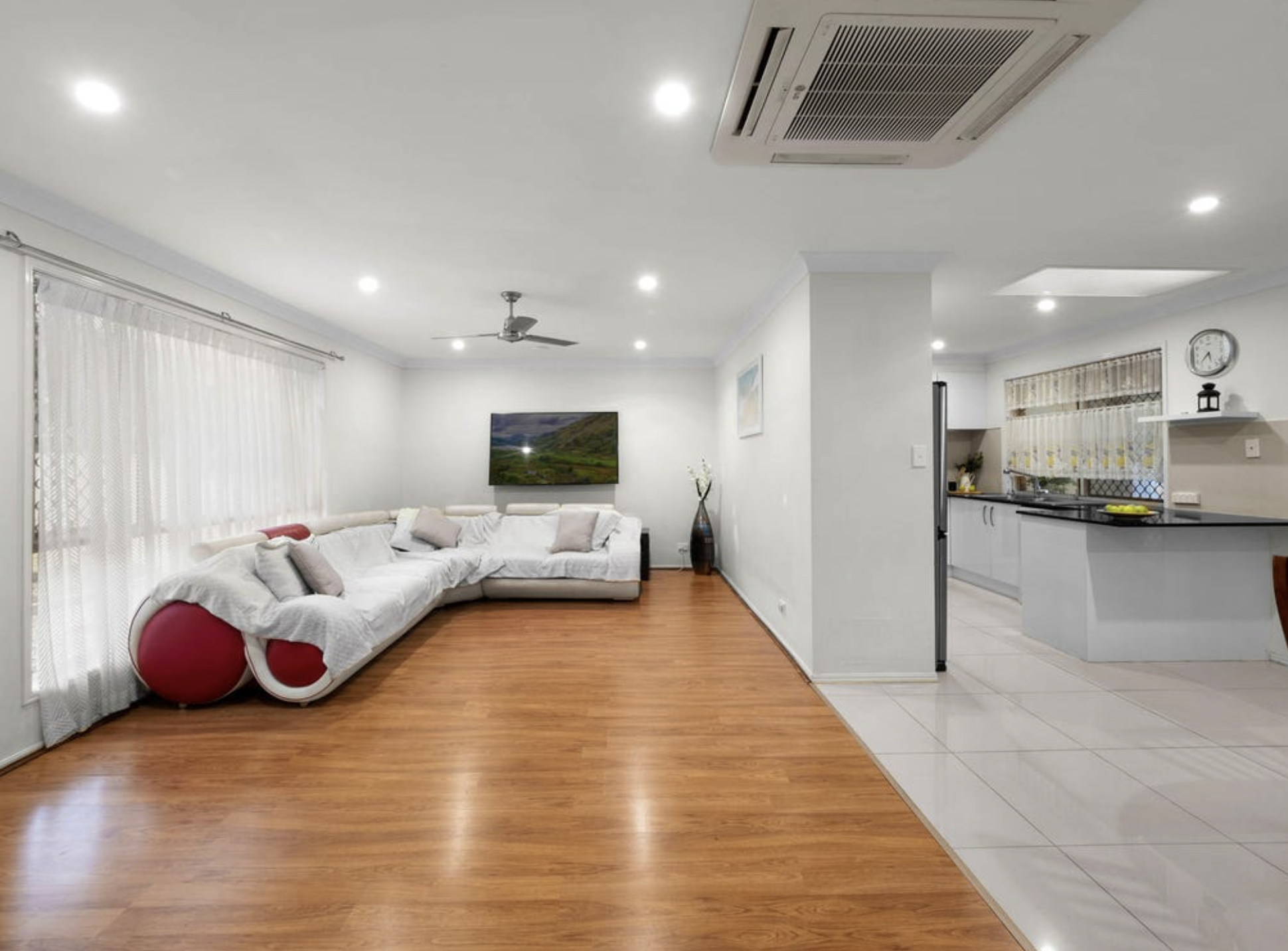
Lifeshield is standard HDF laminate. Two newer categories now sit alongside it on the showroom floor and are worth understanding before you commit:
- Waterproof laminate uses a treated or composite core that won’t swell when water sits on it. Costs more than standard laminate but suits kitchens and laundries where standard laminate would fail.
- Hybrid (SPC) swaps the HDF core for a stone polymer composite core. Fully waterproof from top to bottom, harder underfoot, and rated for wet zones including bathrooms. We’ve ranked the brands worth buying in the best hybrid flooring brands in Australia guide.
If your install is dry-zone only and the budget matters, Lifeshield is still a fair call. If any part of the install touches water — kitchen, laundry, downstairs slab — step up to waterproof laminate or hybrid and save yourself the rework.
Should you buy it?
Lifeshield earns its spot for budget-conscious renovations, rental refurbs, and bedroom or living-room replacements where the look matters more than the wet-zone spec. Pick an AC4 or AC5 board, factor in the underlay and acclimatisation properly, and it’ll give you years of service. For bedroom-specific picks see our best flooring for bedrooms guide. We carry Lifeshield and the alternative laminate and hybrid ranges across our Sydney and Brisbane showrooms — bring a swatch home, look at it under your own light, and check it next to your skirtings before you commit.
Ready to shop? Browse our full laminate flooring range online, or drop into our Sydney or Brisbane showroom to see the range in person.