
Australian flooring guide · Reviewed September 2026
Does Laminate Flooring Look Cheap?
Quick answer: Modern laminate does not look cheap — what gives a floor away is a flat, repeating surface, not the material.
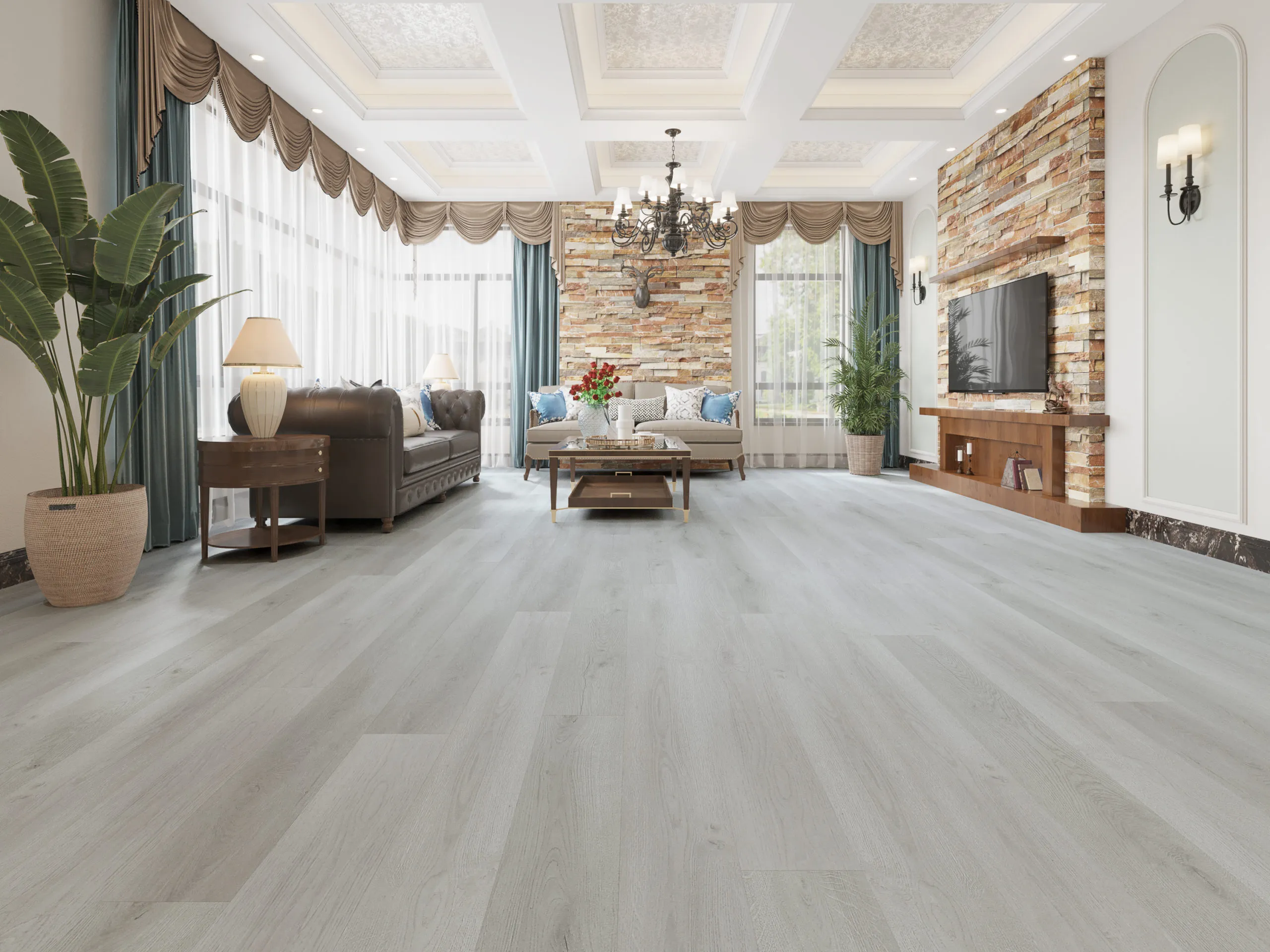
Quick answer: Modern laminate does not look cheap — what gives a floor away is a flat, repeating surface, not the material. Embossed-in-register texture that follows the grain, genuine bevelled edges and long, wide boards with a high pattern count are what separate a convincing floor from an obvious one.
Short answer: good laminate doesn’t look cheap. Cheap laminate does — and the reason is almost never the material itself, it’s the spec. A 7 mm AC3 plank with a flat surface, a four-pattern print repeat and square edges will read as plastic from across the room. A 12 mm AC4 or AC5 plank with embossed-in-register texture, a longer print cycle, micro-bevelled edges and a wider format reads as timber until you crouch down and tap it. This guide covers what to actually check on the spec sheet so the floor you pick lands in the second category.
Why some laminate looks plastic
Laminate is a printed décor paper sealed under a clear melamine wear layer, glued to an HDF core. The look-cheap problem comes from four spec choices the manufacturer made before the plank ever reached the showroom:
- Flat surface, no embossing. Budget laminate prints a wood-grain image on a smooth plank. Light bounces evenly and the eye reads it as printed plastic. Quality laminate uses embossed-in-register (EIR) texture — the surface bumps line up with the print, so a knot has a dip and a grain line has a groove.
- Short print repeat. Cheap ranges only have three or four unique plank prints, so you get the same knot repeating three times in a hallway. Better ranges run 12-plus prints per box, and the floor reads as a real timber install.
- Square edges. No bevel between planks means the floor looks like a printed sheet rather than a series of boards. A V-groove or micro-bevel on all four edges creates the shadow line your eye expects from real timber.
- Narrow, short planks. 1215 x 192 mm is the old default. Modern laminate runs 1380 x 244 mm or wider, which scales properly in open-plan rooms and stops the floor looking busy.
The spec sheet checklist
Walk into a showroom and ask the salesperson five questions before you ask about colour:
- What’s the AC rating? AC3 is the residential minimum. AC4 is what we’d recommend for hallways and living rooms. AC5 is light commercial — overkill for most homes, but the surface holds up to dog claws and dragged dining chairs.
- What’s the plank thickness? 8 mm is the budget tier. 10-12 mm is where the surface texture, print quality and underfoot feel all step up.
- Is the surface embossed-in-register? If the showroom sample feels flat under your fingertips, walk away. EIR is the single biggest reason quality laminate doesn’t read as plastic.
- What’s the bevel detail? Four-sided micro-bevel is the modern look. No bevel on the short ends is a tell that the range was designed down to a price.
- What’s the click system? 5G drop-lock systems are quicker to install and hold tighter long-term than older 2G angle-tap systems. We’ve covered the difference in 5G and 2G clicking systems.
Where laminate genuinely looks like timber
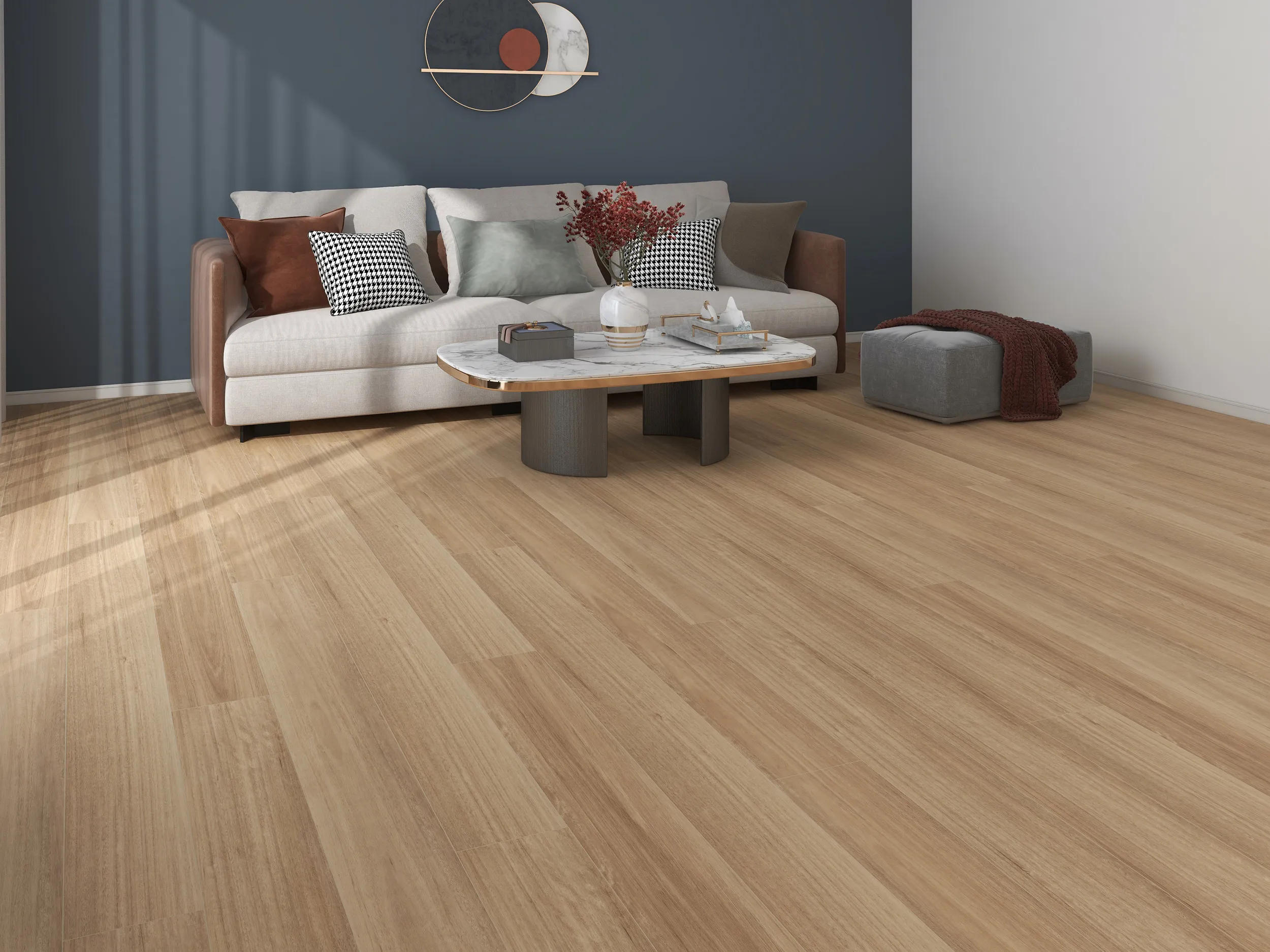
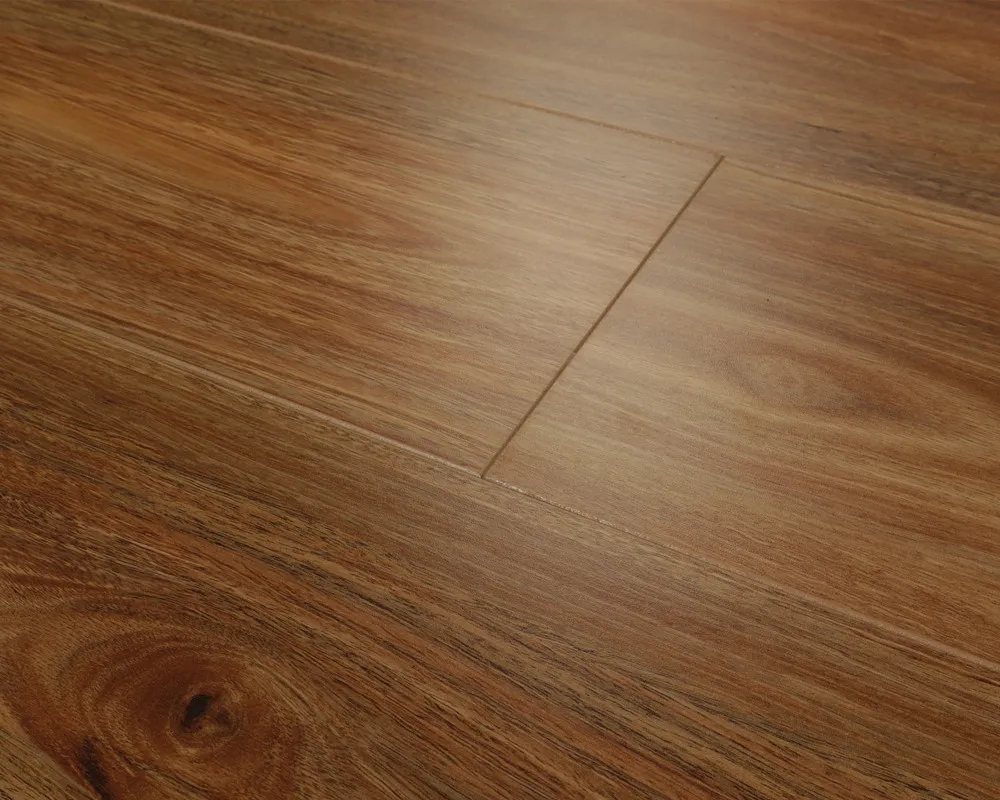
Australian-species laminates are where the gap to real timber closes most. A Spotted Gum or Blackbutt print on a 12 mm AC4 plank with EIR and micro-bevels will fool most visitors until they crouch down. We sell a lot of the Swish Aqua range in this category — the Vincentia Oak and Spotted Gum colourways are the two that get reordered most for renovations and new builds.
Where laminate still loses to engineered timber and hybrid
Two situations where we’d point you to a different product:
- Wet zones and pet households. The HDF core in laminate doesn’t love standing water. For kitchens, laundries or houses with puppies, hybrid SPC is the safer pick — the core is designed to resist ordinary water exposure at product level. The differences are covered in hybrid flooring vs SPC, and our best hybrid flooring brands guide is the natural next read.
- When you want a floor you can sand back in 20 years. Laminate is a print, not real timber — once the wear layer goes, the plank is replaced, not refinished. If sandable longevity matters, that’s the case for engineered timber.
How to make laminate look its best at home
- Run planks parallel to the longest wall in the room. Cross-laying narrow rooms makes the print repeat more obvious.
- Lay the floor through the doorway in continuous boards rather than breaking it at every threshold. Thresholds are where cheap laminate installs look cheap, not the boards themselves.
- Pair with proper skirting (not quad over the top of existing skirting) and a flush threshold to wet zones. The detailing around the edges does as much for the finished look as the plank itself does.
- For bedrooms, the best flooring for bedrooms guide covers when laminate is the right call versus engineered timber or carpet.
The verdict
Laminate doesn’t look cheap when the spec is right. Pick a 10-12 mm AC4 plank with embossed-in-register texture, four-sided micro-bevels, a long print repeat and a 5G click system, and the finished floor is hard to distinguish from engineered timber from standing height. Pick the cheapest 7 mm AC3 plank with a flat surface and square edges, and yes, it’ll look like what it costs. The material has a much wider quality range than people realise — your job is to ask the right questions before you commit. Drop into our Sydney or Brisbane showrooms if you want to see the spec differences side by side.
What to verify before you buy
Match the exact range
Check the current data sheet, warranty, care guide and room-suitability statement for the product code you will receive.
Inspect the substrate
Measure moisture and flatness, confirm access and finished height, and price any preparation before installation begins.
Compare complete quotes
Include removal, preparation, waste, trims, stairs, doors, furniture and warranty responsibilities—not only the material rate.
Words such as “best” describe a decision for a particular room and budget, not one universally superior product.
Sources and verification
- The Flooring Guys: Laminate flooring articles — related guides and current product questions.
- Flooring installation cost estimator — indicative project inputs and installation scope.
Choose the floor around the room and the complete installation.
Bring room dimensions, subfloor details and any apartment or access requirements. We can help shortlist products and prepare an itemised quote.